“Just write every day of your life. Read intensely. Then see what happens..."Ray Bradbury on writing Ok, so there won't be a post everyday, but this is where I'll be sharing short stories about my adventures as an artist and student. Check back here for the latest updates by clicking the subscribe button below. The Importance of MethodWhen I was a kid, one of my favourite subjects at school was physics. There was something about the need to be able to explain the tiniest physical actions, cause and effect, transfer of energy etc that appealed to me. More importantly, we had the chance to try things out to test a theory or demonstrate learning. Thing is, the experiments weren’t just random ‘playtime’, they had a system or method to them. This shouldn’t come as a surprise to anyone, but what might do is the realisation that in photographic art, the same is true. I’m not talking about the technical here, but instead exploring a creative idea within some form of structure. I first learned this lesson in 2020 when I had a university assignment to complete which was about ‘photographing the unseen’. I essentially had to create narratives using contextual elements rather than including the actual subject of the story. My idea was to include pictures and text to describe the random, often bizarre thoughts that people have immediately after they suffer a trauma of some kind. I’d asked friends and family to contribute the thoughts as they remembered them, but planned to leave out their descriptions of the trauma itself in order to let the viewer make up their own mind. Emboldened with my idea, I went out looking for subjects and scenes to shoot and that was when the trouble started. Wandering around with a camera looking for inspiration is, it turns out, very stressful. The more you try to will a picture into existence, the harder and more frustrating it gets. This also has the effect of making you lose concentration when it comes to looking at a scene, which is kind of important in photography. When a close deadline was added to the mix, it all got a bit messy. With perseverance, I eventually managed to create the series and discussed my problems with my tutor. She pointed out that having a plan, far from being restrictive to the creative process, actually helps take care of the practical logistics. If you can plan these, there is less pressure on the creative phase of making the work. She told me of a wonderful series called Geolocation (2007)[1], where artists Nate Larson and Marni Shindelman took a number of very emotional tweets from Twitter and made a note of their geotag data, i.e. the location where they were posted. They then visited the locations and made a photograph for each tweet. Combining the tweets with their images tells compelling, albeit fictional stories about the people who posted them (who remained anonymous) which are driven by the what the viewer brings to them.
From Geolocation by Nate Larson and Marni Shindelman[1] The point my tutor made was reflected in this series as the artists had the ‘where’ nailed down – something at that location would make the picture. They could still be creative, but the structure meant that they spent more time thinking about what they wanted to say. This idea of having some form of plan has stayed with me in every constructed tableau or documentary image I’ve shot since, and was just as important when making my latest work for my course. The objective was to re-create a famous image using the conventions of the genre it belonged to. I chose a portrait image from legendary photographer Elliott Erwitt’s book Dogs, which is one of my favourites.
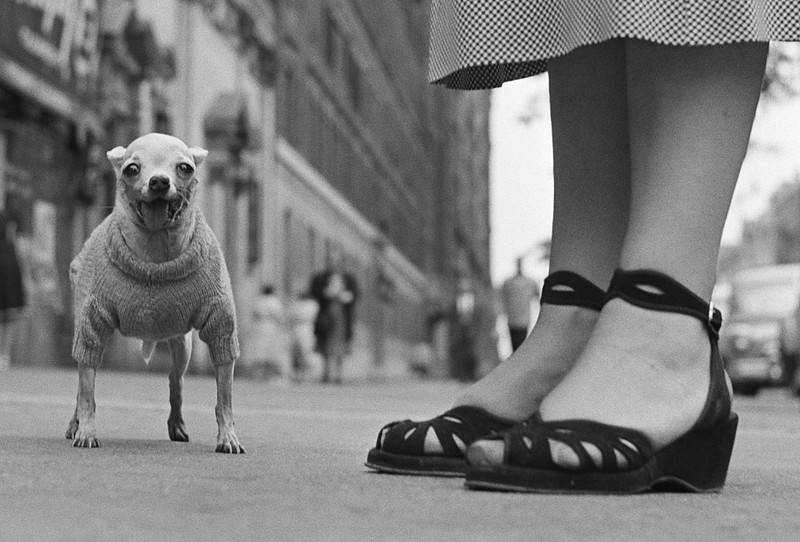
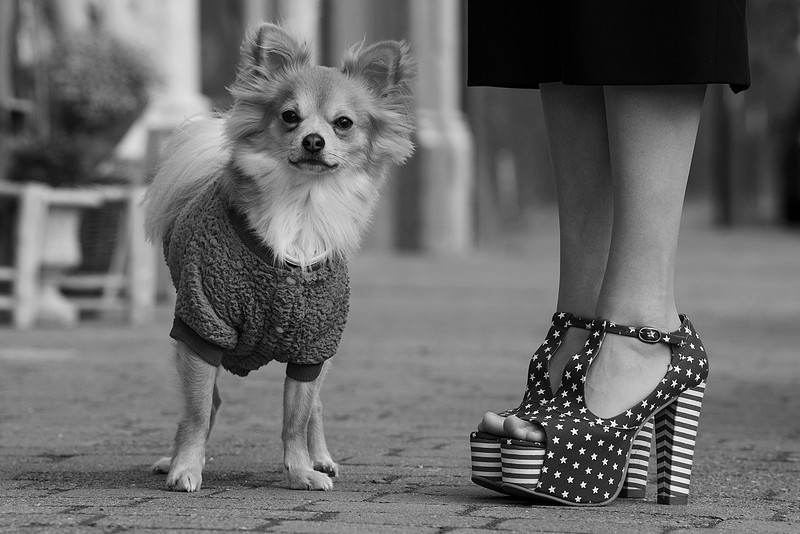
Chihuahua, New York City (1946), from the book Dogs, by Elliott Erwitt[2] If ever I needed a plan, now was it. Working with a very excitable chihuahua on a busy street? Once I’d planned out in advance the location, angle and the props (my wife’s shoes), it was simply a matter of getting the model to stay still. He was great, giving me a whole range of expressions and reactions to hearing his name etc. Taking out the practical considerations to begin with kept my blood pressure down as I tried to get his best side. We all want to make our lives easier, right?
After Elliott Erwitt (2022), by Richard Fletcher Interested in taking up photography or just starting out with your camera? Why not have some beginners’ tuition? I offer a structured series of one-to-one sessions aimed at getting you off Auto mode and taking better pictures. For more details, drop me a line at [email protected] or visit www.richperspective.co.uk. Bibliography [1] Geolocation: Two Photographers’ Heartbreaking Visualization of Tweets (s.d.) At: http://hafny.org/blog/2016/geolocation-two-photographers-heartbreaking-visualization-of-tweets [2] Chinese Year of the Dog • Elliott Erwitt • Magnum Photos Magnum Photos (s.d.) At: https://www.magnumphotos.com/arts-culture/art/elliott-erwitt-dog-dogs/ (Accessed 13/03/2022).
The Comfort ZoneI was talking to a friend of mine recently about a genre of photography that neither of us had really explored to date. We were trying to work out whether this was just a lack of interest or something else more rooted in our similar personalities. In the end, we concluded that it was just not in our ‘comfort zones’. It later dawned on me that this expression neatly describes what it is like for most people when they are trying to justify not doing something difficult and I realised that it’s actually pretty awful thing to say. The idea that we only ever do things that we are comfortable with inside some mythical boundary implies, for me, existing rather than living. It doesn’t lend itself to learning or making mistakes, discovering new interests or hobbies, instead just the notion of ‘same old same old’. This isn’t a particularly insightful thought, nor can it be considered a eureka moment, but it did get me thinking about what I am currently avoiding in order to stay ‘comfortable’. It was always my intention to do three things when I changed career. The first was to pursue my artistic development through my continued studies on my degree course, the second was to help people get into photography through beginners’ tuition and courses and the third was to create a YouTube channel where I could share my experiences as a camera collector. The first two have had degrees of success, but the last one has been something I’ve almost completely avoided for the past 12 months. The reason? - appearing and speaking on camera has never been something I’ve been comfortable with. In my previous life I had no problem standing in front of large groups of people and speaking, whether delivering scripted training or ad-libbing a short-notice presentation, so I wasn’t sure why the camera made any difference. The answer, of course is that the camera presents us with a view of ourselves that we wouldn’t ordinarily see beyond looking at a reflection in the mirror. With video, we also get to hear our own voice in a way that differs from what it sounds like in our heads. If there is any level of self-consciousness about how we perceive both, it isn’t likely that we’d knowingly make such a recording of ourselves. In my case, I am an introvert so the idea of sharing my thoughts and ideas in a way that I can be seen and heard is a pretty scary thing. Add to that the way that social media platforms have given everyone a voice that some often use without any restraint or consideration, and the whole idea of ‘putting myself out there’ goes beyond scary and on to terror. This free will to comment and criticise was brought home recently to me when I noticed a post by the RNLI which was, quite reasonably, trying to raise money. The comments below the post ranged from the admiration such an organisation deserves to the blatant trolling of their perceived ‘stance’ on rescuing immigrants from the Channel. I initially couldn’t believe what I was reading, but then it occurred to me that since all ‘subjective’ opinion is just that, needs no evidence to back it up etc., such people will always be there. In this case, though I was pretty sure they would be extremely grateful to be rescued by that fine organisation should they get into trouble at sea. We can’t really control what people say, just accept or argue the point with them if we can be bothered. For me, remaining isolated from opinions that I might find hurtful or offensive isn’t conducive to building my tuition business, nor does it satisfy my need to pass on my knowledge and passion for photography and vintage cameras to others. I decided to think of things like YouTube as not being outside of some mythical bubble I live in called ‘comfort’, but instead something that I’d have a go at and, if I didn’t the result, move on to the next thing. There will likely be people who know more than I do, will pedantically point out any mistakes and generally not enjoy what I’m trying to do. However, there will also hopefully be some who connect with it. My perception of how people might react really shouldn’t hold me back. All of this reflection led to me posting my first video, which you can find at the link below. Sure, it’s a little rough around the edges and yes, I don’t actually appear on camera… but it’s a start. I’d be interested in what you think of it, good or bad – I just won’t take it personally.
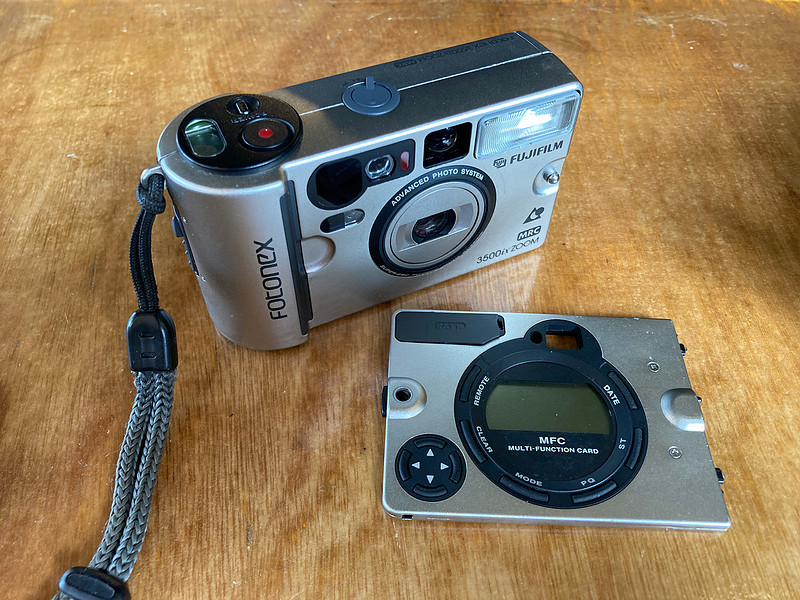
Advanced Photo System – The Last Roll of the DiceI was recently helping a friend sort out her late father’s extensive camera collection so that it could be sold. Like many keen photographers (including yours truly), the acquisition of new gear is something that goes hand in hand with discovering a new area or genre of interest. For example, my recent interest in wildlife photography led to the purchase of a super-telephoto lens, which means that I now frequently go looking for opportunities to shoot wildlife and make the most of my investment. The collection that we were sorting out was comprised of many modern cameras and lenses but in amongst them were a few ‘specials’. Of these was a peculiar compact camera from the 1990s called the Fujifilm Fotonex 3500ix Zoom. In fact, the first thing that struck me wasn’t related to the camera itself, but the fact that manufacturers had a lack of imagination when it came to naming cameras for some reason. The same is true today; more Z7 than ‘Super Ikonta’. However, my interest in this unusual little camera was wider than that. It took APS film.
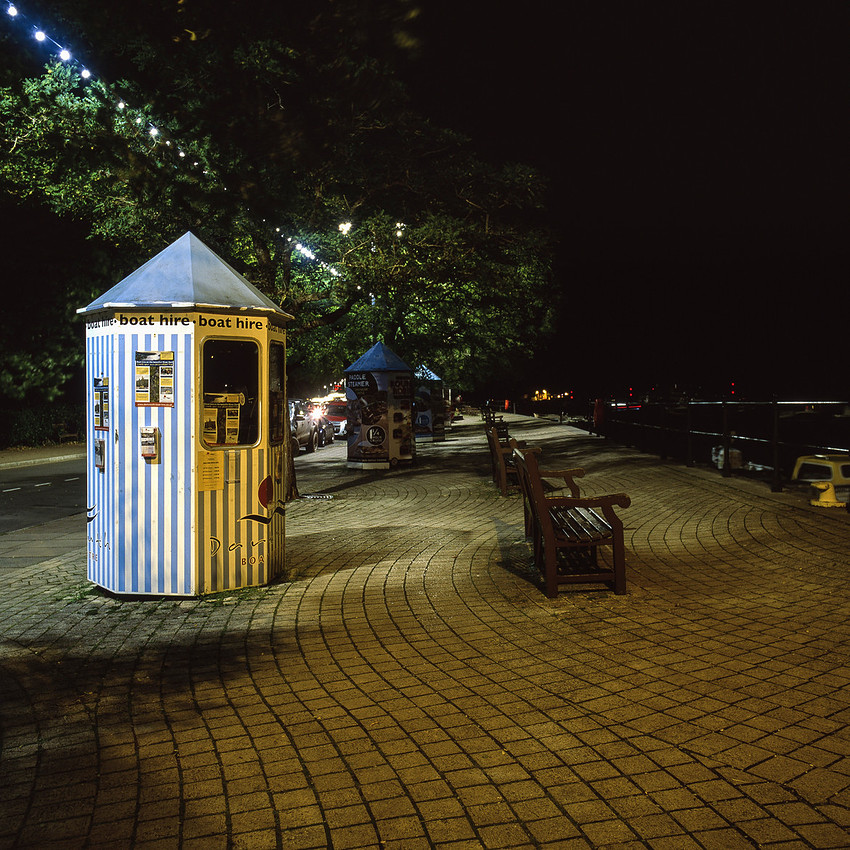
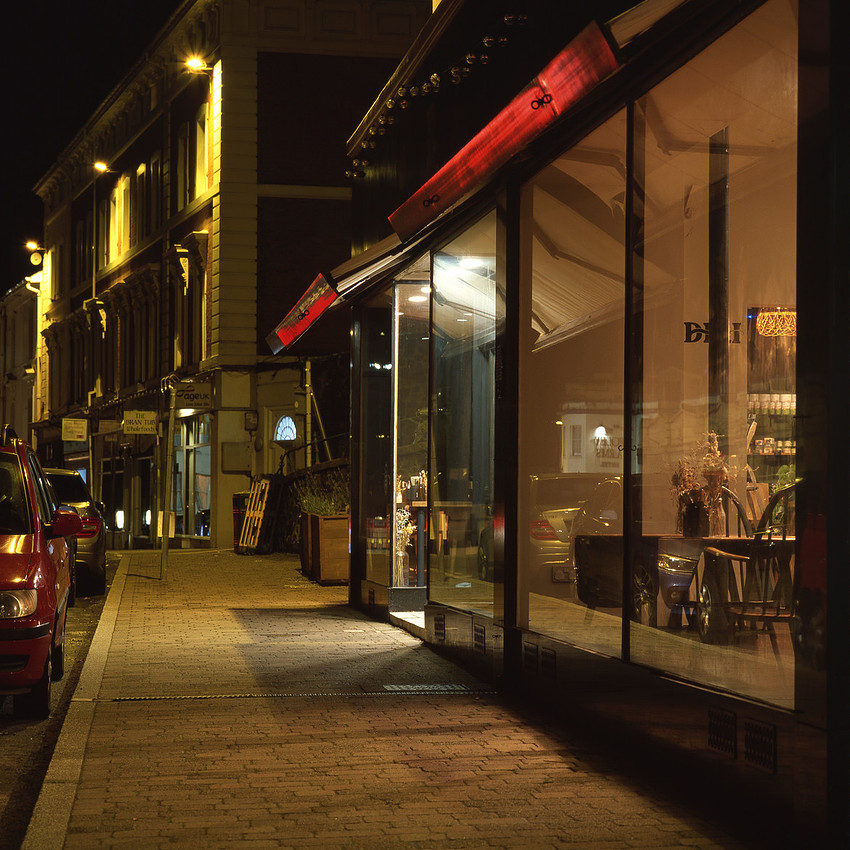
The Fuji Fotonex with its clever remote control that doubles as a lens cap APS, or Advanced Photo System to give it its proper handle, was a system conceived by the major film and camera manufacturers in the 1990s. At this time Kodak still had its stuck in the ground about the emerging digital camera technology, but like the other film and camera manufacturers they were clear that in order to strengthen their position and keep film photography fresh, something new and exciting was needed. Kodak had been burned in the 1980s by the awful Disc format, for which they used the laughable tagline “Picture a Brand New World” (check out the link to the Kodak advert on Youtube below). It was short-lived when people realised that their old compact 110 format cameras shot better photographs, despite the disc cameras being technologically advanced. After this disaster, Kodak went back to 135 which is what we know and love as 35mm. The collaboration with the other major manufacturers had to work, and it actually did. The APS format was the result. APS used a new self-loading cartridge system which simplified the user experience from 35mm. It also served as the home for the unexposed film when new and the exposed negatives once developed. The idea was that the photographer would shoot the roll and the lab would send the film back in its cartridge along with prints made from the negatives. If they subsequently wanted other prints, they could take the cartridge to any film developer who had an APS processor, and the film would tell the machine which prints to make. More interesting was that the photographer could also shoot different formats one one roll and the film would record this information too. The frame on the negative would be full size but when the photographer wanted to print a different, the machine would read what the camera was set to at the time and make the print accordingly. Another benefit was that the film recorded partially shot film, which meant in the higher end cameras, that a cannister could be wound back in mid-roll, replaced for different conditions (light etc) and then reinserted for the rest of the roll to be shot. The whole shooting experience was simplified for the photographer while simultaneously demonstrating a significant advance in the equipment. Cameras had to be smarter and the processing machines were also different from traditional 135. The processing machines locked the developing houses into the technology, which was fairly common with film manufacturers of the day. All in all, it looked like a great idea. However, the digital age was dawning and as cameras improved in image quality and the price came down, APS and film in general started to become obsolete. Reciprocity Failure and the Silver LiningBack in 2016, I had a momentary loss of control of my faculties and thought ‘why not have a go at shooting some film?’ It was a peculiar idea, given that I had a great digital camera and collection of high-quality glass for it. I’d learned a great deal about exposure, composition, use of filters and tripods etc through academic study and trial-and-error, which is easy when you shoot with ‘didge’. Why on Earth would I want to return to the days of anxiously waiting for my film to come back from the developers, or in my case growing up, a well- known High Street chemist? Well, it started with a chance meeting with one of my photographic heroes, a pioneer in street photography in the 1960s. His recommendation during our brief 2 minutes together, most of which involved me awkwardly trying to think of questions to ask, was to have a go with an old film camera. The rationale was that film make us slow down. We want to make the best image as possible on the film because, amongst other things, it costs real money. On his advice, I went straight out and bought a Hasselblad 500c/m, which the word ‘iconic’ doesn’t begin to cover. Fast-forward 5 years and I have a collection of 42 film cameras from the past 100 years or so. My rapid development (pardon the pun) of a love for film has been largely down to the fact that it is a predictable but varied medium. What I mean by this is that by and large we can work film to achieve the photograph that we want, but there will always be subtle variations in the emulsion being used and, more crucially, our choice of stock will have its own aesthetic quality. The fancy digital filters that we have for our phones and social media apps often mimic the variability of film, but personally I prefer the real effect over any of those. I’m not alone it would appear, as the film industry has been enjoying a mini revival over the past few years. More and more stocks are being discovered and rebranded, some are being reintroduced and shooting expired film has become a genre in its own right. When it comes to using film over digital, there are some key differences when it comes to metering and development. The reaction of the film to light is, unsurprisingly, different to that of a digital sensor. A good example would be the old adage about “exposing for the shadows and developing for the highlights”, which refers to the fact that the development of film starts with the details in the shadows and progresses to the highlights over time. If there isn’t sufficient light exposing the shadow regions, the negative will effectively look clear in those areas. No information in the shadows means no recovery when it comes to scanning or printing. As the development progresses to the highlight regions, we have the ability to shorten the developing time to keep them under control if needed. Understanding the process that the film goes through when it’s exposed to light and then developing chemicals is crucial to making the best negative possible. In the 1940s, legendary photographers Ansel Adams and Fred Archer developed The Zone System, which helps the photographer understand the scene and choose the right exposure for the negative. Adams’ book series The Camera, The Negative and The Print are arguably the most important documents of the photographic process ever written. When it comes to shooting film, though there is another phenomenon that many people starting out have discover by accident: Reciprocity Failure. This is the name given to the non-linearity of the film’s reaction to light over time, specifically when the exposure is a long one measured in seconds. What happens is that the film sensitivity decreases with the amount of time it is exposed to light, meaning that it doesn’t react as quickly after a second or so as it does when the shutter first opens. When Reciprocity Failure becomes a factor, the exposure that we think we have metered correctly, suddenly results in underexposure, wasted money and occasionally, tears. I first encountered it not long after I bought the ‘Blad. I was out shooting a derelict barn on a cloudy day. I thought the metering was correct and shot the picture with a shutter speed of around 2 seconds. The result was a disaster. After some research, I realised that my exposure of 2 seconds should actually have been 3 seconds. Further digging revealed that films have different Reciprocity Failure rates and response curves that exacerbate the non-linear behaviour the longer the exposure. Fortunately, there are apps available that will calculate the factor for the film stock being used, so photographers can simply include that in their deliberations about exposure – we’re taking our time, remember? If this sounds like a pain, it’s actually just a minor inconvenience. It was enough for me to get excited though, when I learned that one of my favourite film stocks was pretty much immune to it. Kodak Ektachrome is what we children of the 1970s would call ‘slide film’. It was the chosen stock for holiday photographs, which were projected for friends and family back home. Ever wondered where the term slideshow came from? Now you know. Ektachrome is a favourite of mine because it renders colours beautifully and has very little grain. When a perfectly exposed Ektachrome slide is projected onto a screen, it’s real thing of beauty. Imagine my joy when I learned that Ektachrome doesn’t suffer from the pesky reciprocity failure until shutter has been open for more than 10 seconds – that’s huge compared to most negative films. I don’t understand the physics (nor do I really care), but this knowledge leads to potentially using slide film for long exposures which is something I’d never considered. One style of photography that I’d yet to explore with film was shooting at night. Exposures typically last a few seconds, which would suit Ektachrome perfectly I thought. A little digging around the internet confirmed that the film, although colour balanced for daylight, would render artificial light beautifully at night. Armed with my ‘Blad and a few rolls, I went out one evening to have a go.
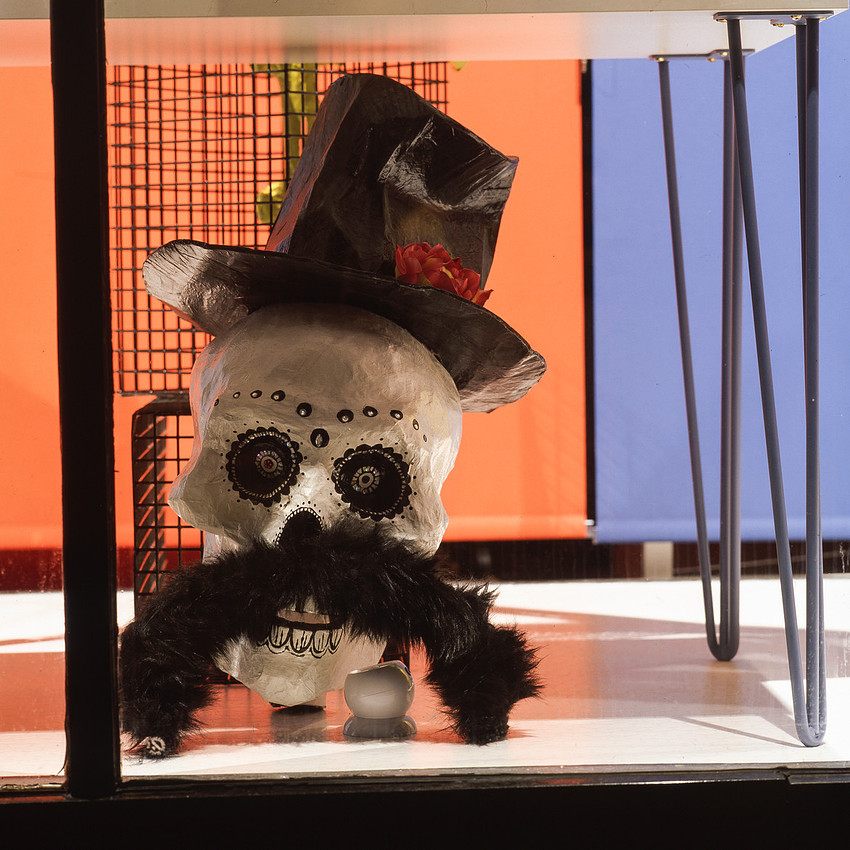
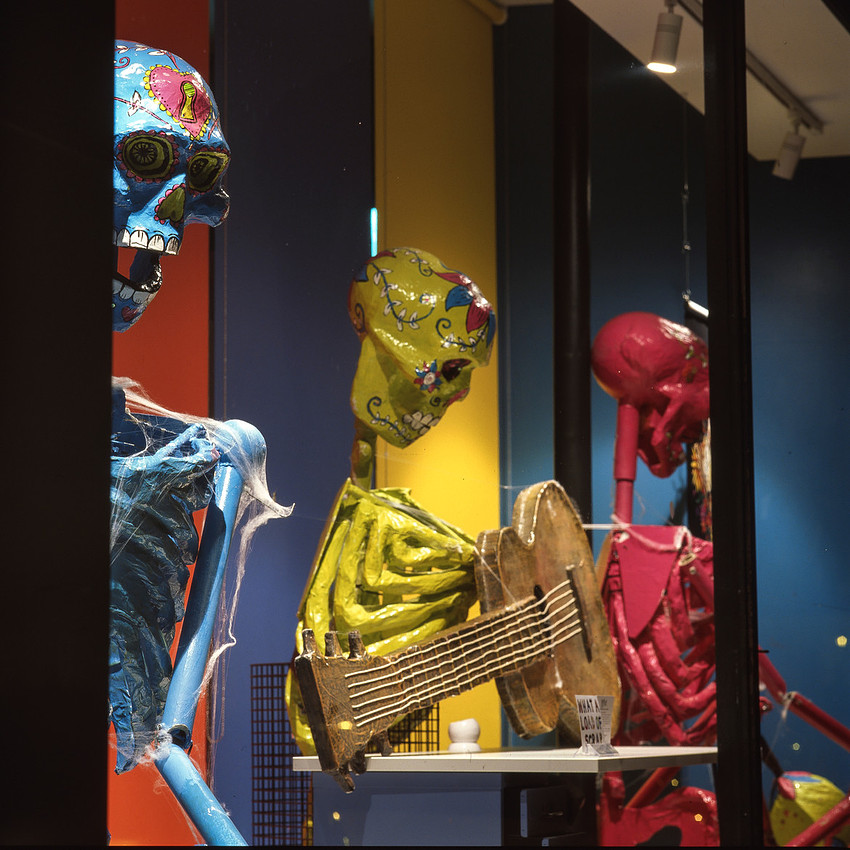
I was amazed at how the film performed in these shots, all of which had exposures less than 10 seconds. The colours are vivid and the blue tint that Ektachrome is known for in daylight has almost completely disappeared. There's plenty of sharpness but very little grain, which would look cool when projected. The whole experience was so easy, I cannot wait to get out there again and shoot some urban scenes at night. Unlike some of my blog posts, this doesn’t conclude with some deep spiritual revelation or lightbulb moment. What I realised in this discovery is that there is still so much to learn from something that isn’t cutting-edge technology such as slide film. I’d learned about reciprocity through making mistakes and analysing the possible causes. It didn’t bother me, but discovering that there are films that can get around it was a real step forward.
Thinking about shooting film for the first time? Found an old camera in the loft that you fancy trying? Why not have some beginner’s tuition to get you started. Drop me a line at [email protected] for more details.
“Make it more complex”, said nobody everAs I write this, we have moved into 2022 (Happy New Year, by the way) which for me is a bit of a mixed bag. I love the celebrations at the end of a year and even engage with some of the popular New Year’s resolutions – I probably have the same level of success of most other people. The tricky part of New Year for me is almost always my attempts at prioritising what I want to do for the next 12 months. This was something I didn’t have much of a problem with when it came to other people during my engineering career but when it comes to me, it’s always been a challenge that leads to a strange paralysis. 2021 had been a great year for change and I had developed new relationships, learned many lessons about how I wanted to operate in my business and delivered some great tuition sessions. As my old boss used to say “that was last year, Rich…it’s done mate”. Now I found myself planning this year and as usual, my state of confusion permeated through the first week of 2022. Then, something shifted. Last year, we took delivery of a beautiful, new, factory-built campervan. It was something we’d promised ourselves at some point in the future, but when the pandemic struck in early, we changed our plans to bring it forward. It has been magnificent so far, with us making the most of the summer and autumn with many trips away in it. The shift in my procrastinating about this year came from a small problem we had with the van earlier this week. Like all modern cars, the van has hugely sophisticated systems that control and monitor the health of its functions. One of these, we were told, had an intermittent fault that needs investigating. Just one of those things that can happen with any vehicle, new or second hand but it’s frustrating all the same. It got me thinking, though – How has everything become so complex? Of course, the answer is simple. The complexity of something like the system on my van is designed with the intention to improve our lives in some way; the function concerned reduces emissions that harm the environment, so that benefit is a clearer conscience. The complexity of the system only reveals itself when it goes wrong however, which is when someone with specialist knowledge is required to sort it out. In the case of photography, cameras are also becoming much more technically advanced and we see this most clearly in those that are built into mobile phones. I recently saw an advert for a major phone manufacturer (no names…etc) that was announcing a new function that digitally removes clutter from the image. It turns out that if you are taking that special holiday selfie next to one of the seven wonders of the world and somebody ‘photo-bombs’ it, you can now draw a circle around the idiot and have them surgically removed from your photo. Far from being a gimmick, this function allows the photographer to recover what might be a once-in-a-lifetime image and spare them from the disappointment of getting it wrong in the first place. The technology isn’t perfect, though. Removing something from a digital image requires sophisticated artificial intelligence that can use the area surrounding the object to extrapolate what it should look like. It always leaves some distortion at the pixel level that can only really be improved rather than eliminated. For most applications, the benefits outweigh the drawbacks though.
The irony of all this is that technological advances can have the effect of ‘dumbing down’ our knowledge. In the case of the van, I have no idea how this stuff works because the last time I serviced a car myself, I only needed a famous brand of workshop manual and some spanners. The investigation they are doing as I write this involves a laptop computer and diagnostics instrumentation – I’m not sure the spanners are needed until much later. In the case of the photograph, the ability to correct it afterwards could mean that we aren’t paying attention to the composition before we press the shutter button. It’s much simpler to recognise and consciously avoid ‘visual debris’ (whether it’s a tree ‘growing’ out of a person’s head or someone acting up in the background) than rely on technology to save the day. I was asked recently how much post-production I do in my work and my answer was, well, simple. I only adjust what used to be done in the traditional darkroom environment, which limits me to selective brightness (dodging and burning), contrast and, if the image is a film scan, dust removal. I don’t add or subtract anything and am not greatly fond of special effects etc. I’m not saying that it’s wrong to do that, of course – creativity shouldn’t be limited by ‘rules’. It’s just that I prefer to keep it simple. How does this all relate to 2022? Well, the key lesson for me here is to plan to achieve a small number of things to the best of my abilities rather than to spread myself too thin. If I take my time, concentrate on what makes something a success, I’ll not only be healthier mentally, but will continue to build on my achievements of last year. Keep It Simple. Let’s just hope I can get it together to settle in what those things are.
Interested in learning photography? My tailored tuition covers, amongst other aspects, the basics of composition and how to avoid the common mistakes. Drop me a line at [email protected] for more details.
|