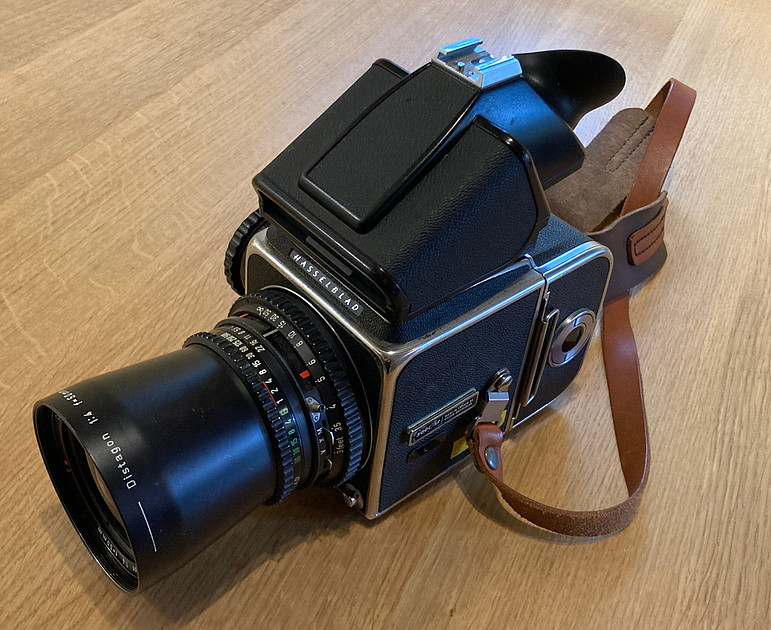
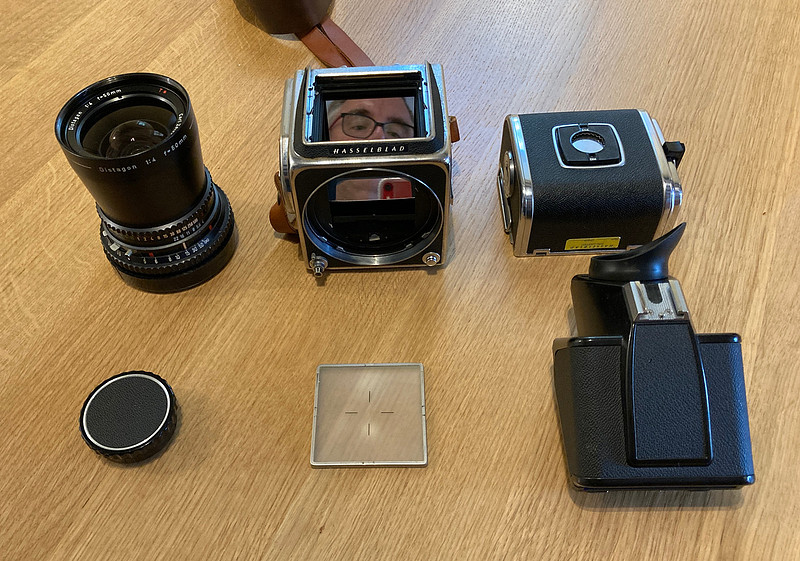
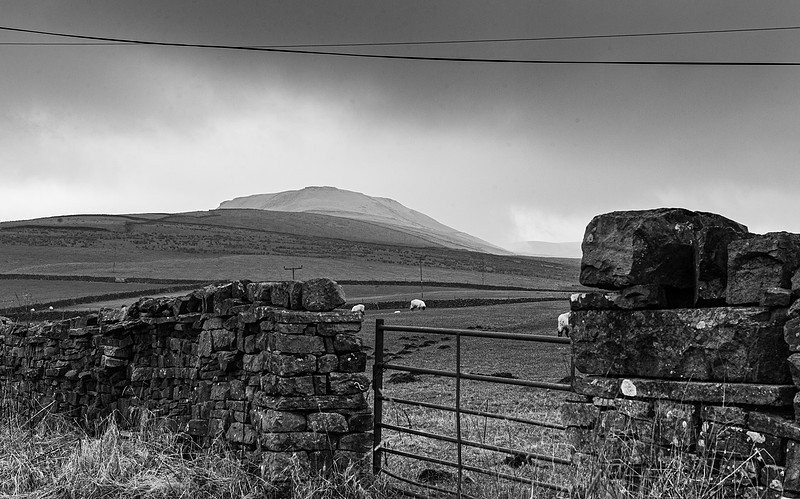
“Just write every day of your life. Read intensely. Then see what happens..."Ray Bradbury on writing Ok, so there won't be a post everyday, but this is where I'll be sharing short stories about my adventures as an artist and student. Check back here for the latest updates by clicking the subscribe button below. Blad Hassle - The Need to Always be PreparedAs I write this post, I am sitting at the garden table outside the idyllic cottage that we are staying in while on holiday in the North York Moors. It’s truly beautiful here and, under normal circumstances I would just be taking in the tranquillity and enjoying the warm, dry weather. However, this isn’t one of those “look at me, I’m having a wonderful time” posts that are so popular on social media. Instead, I am trying to cheer myself up a little and learn a lesson while I’m at it. This tale starts back at home, with me thinking about the landscape series I wanted to shoot away. I’d recently been learning about the subtleties of landscape in my current course, which opened my eyes to the proliferation of photographs of the aesthetic or picturesque. I covered this topic during a recent blog post that you can see here if you’ve not read it already. blog post My idea for a landscape series, was to capture the apparently futile attempts that people make to tame the landscape in some way and, in some cases, how nature takes it back from them. I wanted to shoot the images as documentary rather than picturesque, so no running water, strategically-placed ruined castles or beautiful sunsets lighting the rolling fields for me. The images needed to work together as a series that challenged the viewer to understand what they were about, while at the same time looking as though they belong together, which is easily achieved by using the same compositional approach. One of the early I had was to shoot in medium format and in a square composition. For those not in the know, medium format is a name given to images that are captured using a sensing area larger than 35mm but smaller than 4x5 inches. The term was derived principally for roll and sheet film that was available for a group of camera systems, the most common of which was 120 roll film that is 6cms in width. Shooting on a larger area has a number of advantages. The first is that the larger the sensor area, the higher the grain/pixel density for the size of image being projected by the lens, meaning that resulting photographs can be blown up in size without losing the detail. The second is that the lenses for medium format cameras create a different ‘look’ in terms of depth of field because they are designed to work with the larger areas. I know this isn’t a particularly technical explanation (I didn’t want it to be), but suffice to say, photographers refer to the medium format ‘look’, where the extra subject isolation and detail draws the viewer in. Truth is, a well shot medium format image is very beautiful indeed, far more so than a native 35mm frame. Now, I have a fairly large collection of medium format film cameras and 5 of them shoot a square format of 6x6cms onto 120 roll film. I have no favourites, but for this trip I wanted the flexibility of a system camera, so my Hasselblad V500c/m was the logical choice. It’s a legendary Swedish medium format SLR, popular with famous artists, wedding photographers and even astronauts, being the basic design for the cameras used on the Apollo missions. Those magnificent lunar surface and Earth rising shots? They were shot on a variant of the V500. It was also the first camera I bought when I went back to shooting film, so it should be the one I’m most familiar with, right? Not quite. Being the camera that took my medium format virginity, the Blad was quick to show me its quirks early on, some of which I’ve not seen in any other camera I’ve since collected. One of the great things about the camera is that it is completely modular. It can be easily stripped down to its sub-assemblies, which not only means that it can be easily cleaned and maintained, but there are a wide range of options for components like viewfinders, light meters, focusing screens, even the handle that winds the film. The individual film enclosures are swappable too, which was a huge benefit to the wedding shooting crowd, as it meant that they could carry several pre-loaded film ‘backs’ and have an assistant reload them as they swapped them out; picture a machine gun magazine but for a camera. The quirks of the design are intended to make sure that it performs properly when assembled, prevents mechanical damage or ruins the film being shot. No matter though, as after a few weeks of shooting the Blad, these were all well understood; back in 2016, that is.
The mighty Swede. Lenses with Carl Zeiss glass contain all of the controls apart from Shutter Release and Mirror Lock-up
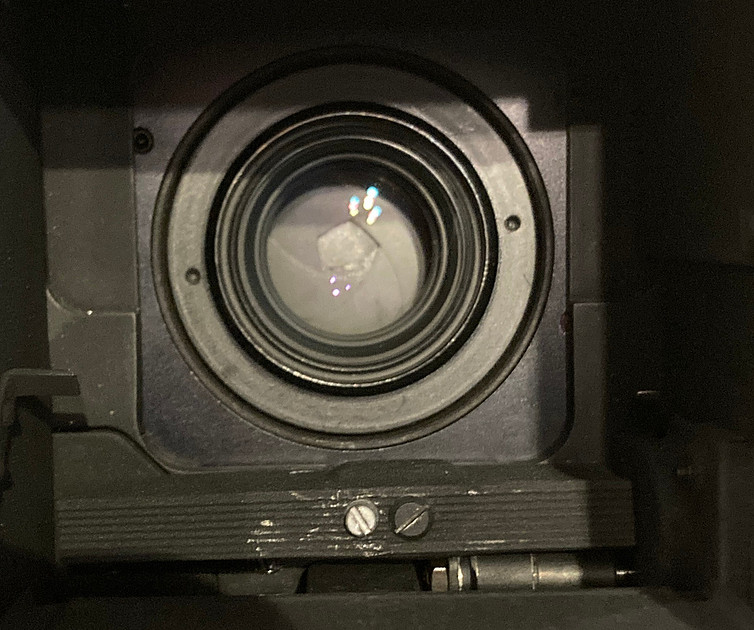
One of the ‘features’ of how the camera operates is that the winder (mine’s a knob rather than a crank), advances the film in the back, winds a spring in the main body, and also one in the lens. The modular nature of the camera means that the shutter and its speed control, are in the lens and not the camera (unlike most other SLR cameras), so it needs winding up at the same time as the mirror assembly in the body. All sounds ok, but in order to keep them synchronised, the camera must be wound (cocked) in order to fit or remove the lens. If you try to remove the lens when both springs are exhausted, you’ll find that they are locked together, only to be released when winding on to take the next picture. Quirky, but not a problem. Furthermore, if you wind the camera without the film back attached, they then get out of synch which, unless manually reset, results in an additional frame being advanced and a piece of film wasted. Believe me, the stuff is so expensive now, that wasting shots is painful. Again, I learned this the hard way in the beginning. Fast forward from that initial learning to this morning. I’d scouted the first images I wanted in the series while we were walking the other day and, as the camera is too heavy to walk long distances with, I resolved to shoot them properly on a different day. This morning, we loaded up and hiked up the incredibly steep Rosedale Chimney Bank, which has a heart-pumping 1 in 3 incline. When we got to the first composition, I set up the camera, metered the scene and pressed the shutter. The mirror in the camera dutifully flipped up, but the shutter didn’t fire. Strange. The camera and lens were now out of synch for some unknown reason and they were completely locked. Worse still, the issue had prevented the winder from releasing so that I could be turned to cock the camera for the next frame. I was left on a hillside with a large block of useless machinery. I quickly realised what was wrong and the gravity of the situation regarding fixing it. The fix for this issue involves the delicate process of resynching camera and lens with a watchmaker’s screwdriver to turn a tiny screw, that is right in front of the rear optic of a very expensive lens. Naturally, I didn’t have a screwdriver with me while in the middle of nowhere, even if I had been brave enough to attempt it. No option then, but to abandon the shoot altogether and trudge back down the hill.
Danger Close! The tiny screw that is perilously close to the back lens element. By the state of the anti-reflective paint, this has been operated before What had happened was that over time and lack of use, the lens I’d selected lost some of its spring tension. When it came to shooting that first frame, the two springs were completely out of synch, with the obvious result. Back at the cottage, the process of resynching was carefully completed, and the camera came back to life. The moral of this story? Technology, however clever, has some situations where it won’t perform as expected. This camera is nearly 40 years old and hasn’t had the maintenance regime that other machines of a similar vintage would have (there’s lesson 1). Secondly, knowing this might happen, I should really carry a basic toolkit with me when I go out with a camera like this. I still might not be able to fix it while out in a field, but I would stand a better chance. In the end, the light is still good so the Blad and I will be heading out again this afternoon. At least the exercise is doing me some good. New to photography or have you found an old camera like this one? Why not have some beginner's tuition to learn the basics? Drop me a line at [email protected] for more details.
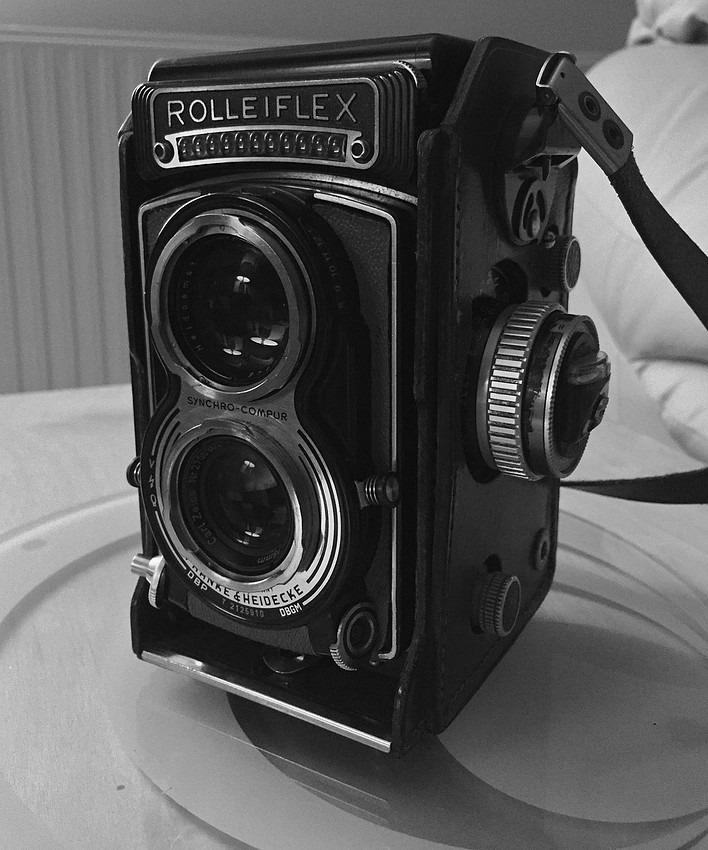
Mirror, Mirror in the CameraOver the past few years, I’ve sat back and watched most of my photography friends upgrade their cameras to mirrorless technology. I say ‘sat back’, because I’m still using my trusty Nikon D4 that I’ve had for the past 10 years. I collect old cameras, some of which are over 70 years old, but that doesn’t mean I’m some kind of luddite when it comes to photographic technology, far from it. The D4 was Nikon’s newest professional DSLR when it came out in 2012 and, despite not winning any prizes in the modern-world obsession with megapixels, it still holds its own in terms of image quality. As long as severe cropping isn’t your thing, it is still a fine camera and as such, I currently feel no need to change it. The progression to mirrorless does interest me, though. For the uninitiated, a DSLR (Digital Single Lens Reflex) camera has a single lens (duh!) which is used for both composition and acquisition. The camera achieves both by using a mirror that, when down, covers the sensor (or film) and directs light from the lens into the viewfinder so you that can see the scene. When the shutter button is pressed, the mirror flips up out of the way and allows the light to fall on the sensor when the shutter opens, making the image. This arrangement has been around for decades and was seen by many as the most convenient way to shoot, because what you see is essentially what you get. The alternative rangefinder and viewfinder cameras at the time relied on precise alignment of the viewfinder optics and a little guesswork to accurately compose the image, but they had the advantage of not needing a mirror. The mirror has always been seen as the SLR/DSLR camera’s Achilles’ heel, as the act of quickly flipping a mirror requires mechanical stabilisation, vibration damping etc to avoid any problems with blurring of the image. It also adds size and weight to the design of the camera body as well as making the shutter-release process noisy. When I’m shooting in burst mode, which fires the shutter at up to 10 frames/second, it literally sounds like a machine gun. Forget any ideas of being the next Cartier-Bresson and shooting in discreet pictures of people and events unfolding on the street, as they will almost certainly hear you. The great man used a selection of Leica rangefinder cameras, which I know from experience to be near silent. As the name suggests, mirrorless cameras don’t have the same arrangement as DSLRs, with the viewfinder being a direct, live preview of what the lens sees provided by the sensor itself. When the shutter is released, the sensor quickly switches off the preview mode and the image is made like any other camera. Removing the mirror means that camera manufacturers have been able to exploit advances in electronics to achieve smaller size, lighter weight, higher shutter speeds and burst rates, as well as using the most advanced sensors available today. All sounds perfect, doesn’t it? Well, not quite. There are some problems that I’ve noticed with mirrorless technology that means I won’t be moving to it any time soon. The first is that the systems use different lenses to their DSLR counterparts. There are several reasons for the difference, but the main one is that with the mirror mechanism removed, the distance between the lens’ rear optic and the sensor can be greatly reduced, which in theory makes for improvements in lens design where size and weight are concerned. I say ‘in theory’ because like everything, it’s not quite as simple as that. Suffice to say, the lenses are different and, in many cases, they are lighter than their DSLR counterparts. However, I have about £20k worth of excellent lenses for my DSLR that I’ve collected over the past decade, so what do I do with those if I move to mirrorless? To get around compatibility, Nikon have produced an adapter that allows DSLR lenses to work with their Z series mirrorless cameras (the same is true of the other major DSLR manufacturers). The drawbacks of the adapter are that it makes the now-slim camera rather bulky, even before the bulky lens is fitted. Also, in some cases there have been reports of the adapter’s interface affecting the available apertures and dramatically reducing the autofocus performance, particularly on some of the large telephoto lenses that I have. In my case then, I would have to trade in the lenses as well as my D4, which is essentially the same hassle as changing camera brand entirely. Add to that the fact that there are currently fewer lens options available for mirrorless, and it’s not looking like an enticing proposition. Another potential issue is the battery life. One of the interesting things about modern use of cameras is the way that phones have influenced how we compose photographs. We hold up the phone and use the screen to compose, focus and take the picture. Mirrorless cameras also offer some of that convenience with their reviewing screen, so it’s not surprising to see photographers taking advantage of it. All that screen time, coupled with the high-performance functions like burst-mode and enhanced videography, can quickly drain the battery. I was on a photography trip earlier this year and saw the issue first-hand as one of my friends had to keep swapping batteries throughout the day. Even using the dedicated viewfinder involves a small digital screen to be active during composition, unlike the optical arrangement of a DSLR. Sure, the mirror is moved electrically in modern DSLRs, but the manufactures have had a long time to refine the efficiency of that. Naturally, there are steps that can be taken to reduce mirrorless power consumption, but for me it’s an added complication when my camera’s batteries last for days at a time, no matter how much abuse they get. It might seem like an unfair comparison given that my D4 was designed for professional work and its batteries are enormous, but I suspect the same is true of my other, consumer DSLR. They say that life is a series of compromises, which is definitely true when it comes to the choice of camera gear. I really like where the mirrorless technology is going and the cameras my friends have been buying are spectacular performers. It’s true that when I want to shoot on the street, I’m forced to take one of my film rangefinders in order to be quiet, but that introduces a whole series of other problems. In Cartier-Bresson’s day, nobody paid him or his camera any attention as he walked around the streets. Today however, the sight of a Leica (particularly an M model) has fellow photographers coming over to ask about the camera. If it’s a Rolleiflex TLR like the one in the picture, the attention is exponentially increased. People are genuinely fascinated to see old gear like this (this Rollei was made in 1958) still being used, so want to ask lots of questions about it. A mirrorless camera would definitely be an advantage in that situation if I grew tired of it (I’m not, though – I love their interest).
My 1958 Rolleiflex T, a beautiful Twin Lens Reflex camera that always attracts attention In the end, it comes down to personal choice – how much effort we want to put into the upgrade vs. the potential payoff. For me, the balance isn’t right yet so any upgrade I’d make right now would be one of Nikon’s flagship DSLRs, the Nikon D6 or the D850. With the pace of technological advance, it may soon be that I won’t have any choice in the matter. Rest assured though, when the time is right, I’ll be a willing convert. Bought a new camera or found an old one in the loft? Get started with some personal tuition for beginners. It's tailored to your particular area of interests and can be delivered either in person or via video call. Drop me a line at [email protected] for more details. For more about Henri Cartier-Bresson, the father of street photography, visit www.henricartierbresson.org/en/
Just Keep SwimmingLast month, my wife and I left for a road trip to Austria in the camper. Ordinarily this would have been quite the adventure its own right, given that last time I drove in Europe, we were all one big happy family of nations. This trip was particularly exciting and nerve-wracking because my wife was competing in Ironman Austria. For those who don’t know the full extent of this madness, Ironman is a triathlon with the following distances: 3.9km swimming, 180km cycling and 42km running. In context, that last one is a full marathon. Needless to say, I’d been in awe of her commitment to training, as I am with all of our friends and family who have taken on such a challenge. However, it wasn’t until the end of the event, after some 15 ½ hrs of gruelling competition in 35°C heat, that I gained some sense of how it affects the mind as well as the body. She crossed the line to the sounds of the cheering crowd and the loud music as expected, but after she received her medal, she headed for the platform next to the DJ and started dancing! Why? Because the track was a favourite of hers. I couldn’t believe it. She had finished the culmination of many months hard training, the long journey and the intense heat and just fancied a boogie. When I asked her about it afterwards, she told me that she had no idea why, it just seemed like something to do. Fast forward to last Sunday and we found ourselves standing by a lake in the Cotswolds, with me about to start a challenge that I’d set myself nearly 2 years ago. I was going to swim 10km open water, in an event aptly described as ‘a marathon’. I’d had a false start last year, when training was interrupted by my falling down a flight of stairs (another tale entirely). This year, I had worked very hard to prepare for this day and it was finally here. Although nervous as we set off, I completed the first 7km without any drama – I was actually enjoying the experience. Then it started. The slight aches in my shoulders became stabbing pains. My calf muscles decided to cramp in unison, and I began to worry that with 3km still to go, I’d struggle to get to the finish. Here is where my conscious and subconscious went their separate ways too. I am normally someone who thinks they are aware of the level that is ‘doing my best’ and generally, when I reach that without completing something, I stop. It’s been a defence mechanism for most of my adult life against the risk of provoking my anxiety, something I’ve suffered from form many years. The idea is that if I don’t think something is possible despite my best efforts, pushing further is a bad idea. This is, of course, completely unhelpful nonsense. In the swim, my conscious mind had started to freak out, while my subconscious was on auto-pilot. Call it the inbuilt knowledge that I’d trained for this if you like. A friend of mine quoted the character Dory from Finding Nemo, with her chant of “Just Keep Swimming”, which I think was actually reciting during laps 8 and 9. Whatever the motivation, I just moved on to the next 1km loop, regardless of the pain I was in. When I reached the end, it was all matter of fact; no excitable celebration or emotional outburst, those would come later when the scale of the achievement had sunk in.
Tired but happy. Note that the clock is the time of day - I wasn't swimming for 13 hours! The golf legend Gary Player once said, “the more I practice the luckier I get”, which I think is a good description of all training and experience. I had recalled this quotation when I was fortunate enough to shoot the Malvern Pride event a few weeks ago. As the official photographer, it was up to me to represent the what the day meant both in terms of the struggle for equality and the celebration of self – no pressure there, then. As I began the shoot, I noticed a few errors creeping into my technical process, which led to some shots not being as I expected. My mind started to panic at the prospect of not doing a good enough job. Then I thought “hang on, I know photography and how to use a camera. Just relax and let your knowledge take over!”. Almost immediately, the shoot started to go well and I was really happy with the outcome. What I learned from this race was that I have the tendency to talk myself out of things when I subconsciously know that I am more than capable of doing them. Our subconscious is responsible for our basic instincts, which includes whether to stand and fight or run away. Stands to reason that it has some idea of how confident we are in a situation as well. I’m definitely going to listen to it more in future instead of letting my conscious mind run away with itself. As for the swimming, my plan to complete one of the toughest lake swims in the UK, the 18km Windermere One Way, within the next two years, is on track. Just need to make sure I am as ‘lucky’ as I can get. For details of personal beginners' tuition in photography, please drop me a line at [email protected] The Malvern Pride photographs can be found at: https://www.richperspective.co.uk/p82495918 My other work can be found in the gallery at www.richperspective.co.uk That’s nice, or perhaps not: The Beauty, the Picturesque and the Sublime in LandscapeI was recently chatting to a member of my family about my progress as a photographer, both in terms of leaving my previous career and my academic studies. I pointed out that I had changed a lot when it came to my own work, but also in how I view the work of others. I’ve never been shy in offering my opinion on a wide range of subjects, but when it comes to photography, I’ve had to learn to keep them to myself unless asked. This could be seen as my mellowing as I get older or it could be that I’ve just decided to stay away from artistic ‘judgement’ because I have developed a broader view of what for me, makes a ‘good photograph’. During our conversation, it was pointed out to me that the majority of people don’t look at photographs with a critical eye, that they simply like it or not, depending on their perspective or life experience. I’ve talked about this before in earlier blogs and my assertion was that there is nothing wrong with going with our immediate emotional reaction to an image. I’ve also made no secret of my contempt for what I call the ‘camera club mentality’ where work is often judged merely on its technical merit. My critical approach to looking at photographs is being shaped by what I continue to learn about visual codes and artistic genres through my study, which results in an appreciation of an image that is very personal to me. I realised that this is what I mean by keeping my judgements to myself. The discussion got me thinking about some of these critical ideas that I base my interpretations upon and my most recent research into the concepts of the beautiful, the picturesque and the sublime, which exist across the genres, but none more obviously than in landscape. When thinking about beauty, we all rightly believe what that means to us. We associate beauty with liking or loving something, a provocation of a sometimes-overwhelming sense of wellbeing. In landscape art, the idea of beauty was associated with nature and the elements in the natural world that create an almost primeval sense of wonder. Natural light, colour, texture and scale can all combine visually in landscape invoke a sense of beauty, but nature is also capable of creating a sense of fear and despair. If the landscape image contains treacherous rocks or violent weather, our experience changes. We still take a pleasure from viewing the image, but it is now an excitement at the danger or threat to our lives that might ultimately result in death. It might sound perverse, but this concept, known as the sublime, has been an important part of art history for centuries. It won’t be a surprise to learn that these are not simple categories that pictures can be placed in through some form of scientific analysis. Discussions about whether the natural world in the form of wilderness is actually real or whether human impact has practically eliminated it, have continued since the 18h Century. If you place yourself in wilderness, is it really still wild or at some level colonised? The idea of artists shaping and representing the aesthetic beauty of nature for their own purposes became the basis of the third category, the picturesque, which was conceived by the artist William Gilpin at the end of the 18th Century. Picturesque (as in a picture) imagery contains a romanticised notion of the landscape which often means idealised weather conditions and carefully placed buildings, structures or features in carefully constructed compositions. They are pleasing on the eye but don’t necessarily provoke any extreme emotions in the viewer. Not surprisingly, the majority of landscape photographs that surround us are picturesque and these tend to be what most people hang on their walls. A simple Google search of a famous location such as Durdle Door in Dorset provides us with many examples of the picturesque.
Almost every image is the same view, with only the weather and foreground details changing between photographs. We get no real sense of the natural formation of the cliff from them, nor the conditions under which it might have been formed over the millenia. The are ‘nice’ photographs, but personally they have little emotional impact beyond “I’d quite like to go there”. However, in the photographer the vision was unlikely to have been ‘you should go there’. They would have seen the rock formation and the lighting conditions and wanted to represent its beauty. The resulting image though, is directed by the idea of the picturesque which presents us modern photographers with a problem. The main issue with the idea of a beautiful or sublime landscape photograph is that it cannot really exist. As with the arguments about man’s impact on the wilderness, the landscape photograph is still driven by a specific observation by the photographer about the scene. The events leading up to the decision to shoot the picture may well contain elements of the sublime, but the image itself still tends towards the picturesque, i.e what makes it look good in a picture. The sublime then, is a visual code for analysis of elements that provoke the emotions, rather than a classification or specific artistic intent. It makes us think differently about the picture we are looking at and how it makes us feel. In preparing my thoughts for this post, I looked through my own collection for landscapes that could be considered sublime and found only one. Many years of considering landscape photography as the representation of something pleasing that I might want to print, have directed me, like everyone else, to shoot toward the picturesque.
Interested in taking up photography? Bought a new camera and don't know how to use it? Why not have some beginners' tuition that is tailored to your interests. Drop me a line at [email protected] for more details or have a look at my work at www.richperspective.co.uk for some ideas.
Artists Who Inspire Me: Julia Margaret CameronAsk anyone to name five famous female photographers and you’ll invariably get a list that includes Dorothea Lange, Imogen Cunningham, Diane Arbus, Annie Liebowitz and many others from the 20th Century. They’re all widely regarded as being hugely influential to many contemporary photographers of both genders in the fields of portraiture, street and documentary photography. It’s a much harder job to think of the influential women who pioneered photography from its very beginnings in the 19th Century though, which is a great shame because there definitely were some. The most important one to me, and who changed my perspective on portraiture, was Julia Margaret Cameron (1815 to 1879). Born into a colonial society family in Calcutta, she was what we might think of now as a socialite, moving in ‘celebrity’ circles and pursuing her artistic interests. After marrying and having children, the family moved to the Isle of Wight where Cameron, having been introduced to photography by astronomer Sir John Hershel, built a small studio and darkroom. As a relative newcomer to the new technology of photography, Cameron’s portraits were considered by many to be amateurish for a variety of reasons. The first was to be expected as everyone working in this relatively new medium was striving for the perfect negative on the wet plate (many were using the collodion process on glass plates at the time). They were using neck braces to keep the subject from moving during the relatively long exposures, ensuring the camera was as sharply focused as possible and using the best chemicals available to make the finished plate. Cameron was doing none of this and the result was that her images were soft in terms of focus and the exposures often damaged or inconsistently processed etc. The second main reason is something we still sadly encounter today, rampant misogyny. Most photographers of the time were men, so they judged Cameron’s work both as not being up to their standards, but also as no surprise, because of her gender. After all, the equipment was heavy and the processing tricky, perhaps too tricky for a woman. Of course, they were all as wrong as they were stupidly arrogant. Cameron was developing her own style and, as a consequence, her own voice. I can tell you that these two things are what we all strive for in photography and where, in modern times, the adage goes “there are not new ideas under the sun”, Cameron was at the forefront of a style of portrait photography that still influences artists over a century after her death. What made her special was how she represented in her photographs what she saw in her subjects. Sounds obvious, but where commissioned portraits in society were all about status and the projection of wealth or intellect, Cameron’s pictures subtly revealed something about the subject that, when combined with the viewer’s knowledge of the person, led them to their own interpretation. Her use of soft-focus, sometimes movement and subdued lighting all enhanced the visual context rather than distracted from it. A great example is the image she made of Hershel, which you can see here: https://www.britannica.com/biography/John-Herschel The picture deviates from the already traditional by having Hershel not look at the camera. His face is picked out by the lighting in a way that the rest of his figure blends into the background. His wild hair and slightly dishevelled appearance suggest a free spirit, while the piercing gaze points to a man of focus and learning. When we look at this image today, we can easily draw the connections with scientists such as Albert Einstein, who’s appearance was almost as famous as his academic achievement. Cameron also shot other famous friends like Charles Darwin and Alfred Tennyson and it’s in these images that we see similar attention to the personality of the subject over the technical grandeur of the studio portrait photograph. Cameron’s other work was heavily influenced by traditional paintings and sculptures of religious iconography, where she posed her models in a way to create a similar connected narrative. Although this sort of work was part of early photography’s growing pains, again Cameron’s focus on subject and not perfect technique makes her work stand out as dreamlike, almost how we imagine a ‘real’ telling of religious stories to be. So how has she inspired me? Well, firstly in her determination to pursue her art in the face of judgement and dismissal. While I don’t really have either of these issues on a regular basis, I think every photographer has some level of imposter syndrome. Cameron smashed through that and for me, she blazed a trail for photographers in general, but in particular the female artists that followed. Secondly, her work flies against the idea of technical perfection being the main consideration in a photograph. I see this every day with people sharing and critiquing images online and the dreaded ‘camera club’ mentality (as I see it), which often rejects what is considered to be not good technically. Photography challenges the viewer to interpret what they are seeing, both with what the artist might be trying to say with the inclusion of internal context, and with their own cultural and historical experiences. Yes, the image should not be so badly executed that this cannot happen or that it somehow jars with the viewer, but the obsession with perfect exposure, sharpness and abiding by the so-called composition rules is really not the point of the medium, as far as I am concerned. Consider Dorothea Lange’s Migrant Mother (1936), perhaps the most famous portrait photograph of the 20th Century. Look closely and you’ll notice that it is neither particularly sharp nor traditionally composed, and in fact it required the subject’s left thumb to be painted out in the final print (no Photoshop in the 1930s). Despite that, it’s still as provocative (and controversial) today as it was when it was commissioned over 85 years ago. So there you have it. These days, I am far more interested in making a photograph that says what I want it to and hoping that it challenges the viewer to create their own narrative from it. If it does that, I’m happy. I owe that way of thinking to this amazing innovator.
From the Polaroid series 'My Face', made in 2020 for my course
For more information on Julia Margaret Cameron: https://www.vam.ac.uk/collections/julia-margaret-cameron Dorothea Lange’s Migrant Mother (1936) can be found here: https://www.moma.org/learn/moma_learning/dorothea-lange-migrant-mother-nipomo-california-1936/ Interested in taking up photography or improving on using your phone on automatic? Why not drop me a line for details of my beginners’ One-to-One tuition at [email protected] or simply have a look at some of my photographs at www.richperspective.co.uk.
|