“Just write every day of your life. Read intensely. Then see what happens..."Ray Bradbury on writing Ok, so there won't be a post everyday, but this is where I'll be sharing short stories about my adventures as an artist and student. Check back here for the latest updates by clicking the subscribe button below. For the Love of HogIt’s no secret that my two main interests in life are photography (who knew?) and wildlife, in particular the humble hedgehog. I hadn’t seen a hedgehog for over 25 years and, like many, had thought them to be either extinct or so rare that there would be more chance of seeing a lottery win. That all changed in 2018, when we had our back garden landscaped. I’d like to say that it was our focus on making the design wildlife-friendly that made that first hog sighting possible, but it was in fact the new garage and driveway that enabled it to happen. One evening, my wife saw the garage security light come on and went to the window to see what might have triggered it. She was expecting one of the neighbourhood cats but there, trotting down the driveway, was a hedgehog. By the time she’d called me downstairs to see, it had ducked under the fence into next door’s garden and back in the darkness from whence it came. A minor ‘disagreement’ broke out, with me pointing out to my wife how long it had been since I’d seen one, but her being adamant that’s what she’d seen. As any combined engineer and photography obsessive would do, I bought a camera the next in order to settle the argument. The first night after the wildlife ‘trail cam’ was deployed on the garage drainpipe, there they were, not just the one and not just a single trip through our garden either. It appeared as though we were a thoroughfare for these mysterious little creatures and possibly had been for many years; the drive making it easier to get about. From that night, I started feeding them in an effort to keep them still long enough to really look at them. To cut a very long, 4 year story short, I now have around half a dozen different hedgehogs that visit my feeding station every year. I have worked with my local rescue to help hogs that have been injured, are visibly sick or too small to hibernate. Our garden has been a formal release space for those who’ve been previously cared for…etc…etc. It’s fair to say that it’s become an obsession. What I hadn’t fully appreciated in those early days, was their plight. That, and the subsequent knowledge I’ve accumulated on their physiology, lifecycle and behaviour since has helped me support them. It was particularly handy the other night when my wife was out on a run and discovered a tiny autumn juvenile wandering aimlessly around a busy local road. One swift rescue and weighing later (the latter is as tricky as it sounds) and I was concerned that this little female wouldn’t be big enough to survive the winter. I decided to house her overnight and seek advice from the rescue centre in the morning. I’d done this in the past, so had all the equipment needed to make a hedgehog comfortable. In the end, it was determined that she was actually on track to be the right size and weight by winter, so she spend the day sleeping in a quiet room, waking only to scoff the food I’d given her, and then was released in our garden that night.
Shortly before her release The whole event was hugely rewarding for me. But why? Why this particular animal? Contrary to popular belief, it has nothing to do with their ‘cuteness’. Hedgehogs are indeed cute, having consistently been recognised as Britain’s favourite animal, so don’t get me wrong, I adore them in the same way as everyone else. However, I support them the way I do, because of a sense of guilt. Guilt because the hedgehog is an endangered species, which is almost entirely because of human behaviour. Our continuing quest to build new houses, our use of pesticides that kill their food, our obsession with neat and tidy Chelsea Flower Show-like gardens with impenetrable fences enclosing them, have all contributed to the hog’s decline. Lack of food, lack of territory in which to find a mate, and having to share more confined areas with their main predator (the badger) is literally destroying the species. I’m not clambering onto a soapbox here; people are naturally free to do whatever they want. The point I am making is that saddens me that in a decade or so, we could be describing them to young children in the past tense, instead of showing them. The onky examples of the species will be the domesticated African Pygmy, which isn’t the slightest bit representative of its wild counterpart, despite what Instagram might have you believe. Truth is that unless we change some simple things, that’s where we are heading. Not a burning issue in the context of the climate crisis or the war in Ukraine of course, but it is evidence of a human behaviour that will ultimately drive other native species into extinction as well. Think of the hedgehog as a warning sign. A sign that I am personally paying attention to with the feeding, providing of habitat etc in my own area. As I said, the purpose of this post is not to preach, but instead would like to connect it with a new project that I’m working on. A while back, I was learning about landscape photography (I blogged about it at the time) and the different purposes that the genre serves. Wanting to explore this further, I began a project looking at the ongoing battle between us and the natural landscape, whether through demarcation, urbanisation or possession. What I had noticed was the way that nature eventually wins, once the human activity has stopped; think of the ruined historical monuments being reclaimed by vegetation, or the battlefields of the Somme. Nature is patient and long after we are extinct, it will be reclaiming its natural spaces from everything we create. My series isn’t intended to be depressing, though; it will take a closer look at what we might not notice, inspired in a similar way to the artists who formed the New Topographics movement in the 1970s. They were railing against the aesthetic and the picturesque impressions of the world that were found in art history, their work revealing our relationship with the natural world. My series will major on our attempts to control or restrain nature, with the varying degrees of success that go with them. I started work while on a recent holiday and decided to shoot the series on medium format film, which offers a different perspective (particularly in the 6x6 frame), on composition and includes what they call the ‘medium format look’.
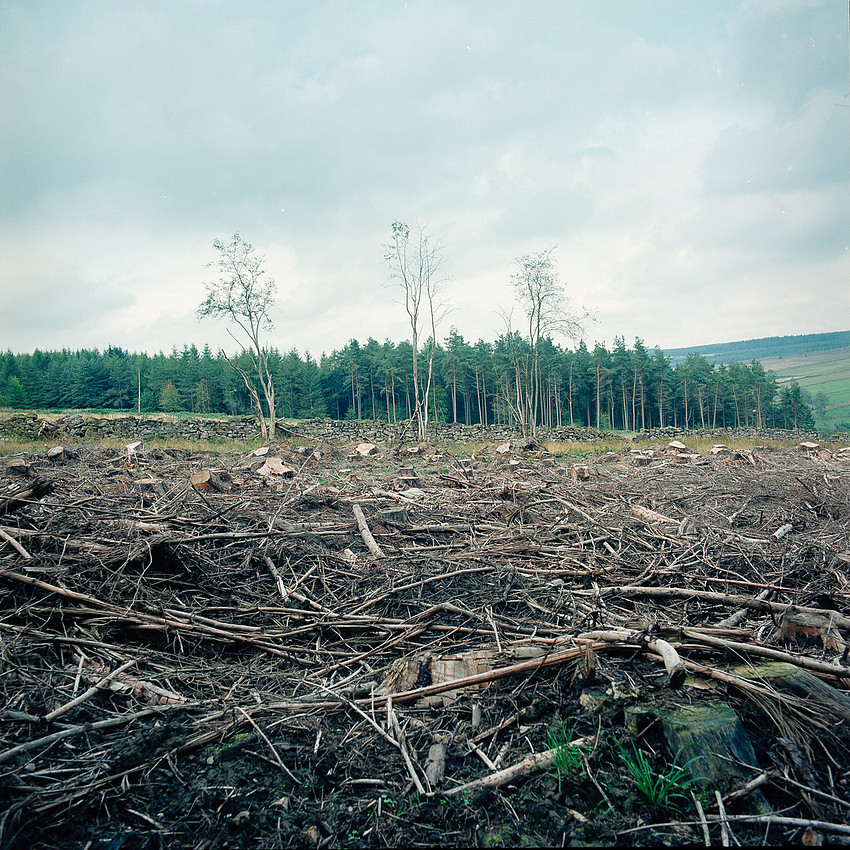
From my landscape series, as yet untitled My aim for the project is to really look at our environment in a way that hadn’t occurred to me previously. Perhaps, as it did with that very first hedgehog sighting, photography will encourage me to notice things that are less obvious than what I had assumed within my understanding. In documenting it, perhaps I can prove to myself that these things are real, much like that mysterious little creature that first captured my attention. For more information about hedgehog preservation: https://www.britishhedgehogs.org.uk For the New Topographics movement, https://www.tate.org.uk/art/art-terms/n/new-topographics
Leaving the brakes on: how creativity is held backI’ve just had some feedback on my latest degree assignment that has a familiar, and somewhat frustrating, familiarity to it. Unlike the classical déja vu, I really have heard this line before: “you appear to be holding back”. “Holding back what?”, I hear you ask. “The tide? The door? The years?” – if you’re too young to get that last one, I envy you. What my tutor meant was ‘holding back with my creativity’. I first heard something similar during the very first module, where, in my defence, I was still getting to grips with the idea of not thinking like an engineer. My work in that module was considered to be a bit formulaic, that is taking influences from artists that I liked and applying the lessons I’d been learning to my pictures. At the time, I felt this was rather harsh, given that I thought this was what ‘studying’ meant, hadn’t studied anything for nearly 20 years and I had a pretty good understanding of the fundamentals of photography. What more did they want from me? The answer, of course is pretty simple; the objective was to develop my own artistic ‘voice’. Since art is given to be the creation of something using imagination and skill that has some meaning or emotion, it stands to reason that the voice we seek is more about what we want to say, than how we say it. I understood the feedback that I’d received then, but why was I still apparently holding back now? At each point in my studies, and in my new life outside of engineering, I’ve tried to improve my approach to creating new work, so was I somehow failing? Well, no. I believe the answer lies in research, carried out back in 1968 by Professor George Land, for the recruitment people at NASA. He devised a test that could identify the markers for considering someone to be a creative genius. By means of validation, the test was then given to a group of 1600 children aged between 3 and 5 years old. Land and his team went on to test the same group every 5 years until they were 15 years old and compared the results. When the group were at their youngest, an astonishing 98% of them exhibited the signs of creative genius, but by the time they had reached 15, the number had dropped to just 12%. This staggering drop was further explored by Land, when the test was given to a group of around 280,000 adults. Within that group, the were just 2% that showed the markers. Land explained this by discussing divergent and convergent thinking, the former being the most common in young children. Divergent thinking is essentially the exploration of ideas and scenarios through imagination. It’s what children do when they play at being characters such as pirates, soldiers, Disney princesses etc. Along with imagining themselves in character, they visualise props and surroundings with whatever things come to hand, so that a broom handle might become a lightsaber, a towel might be a magical cloak, and so on. Divergent thinking doesn’t obey any inherent rules or constraints beyond our capacity to imagine. What happens as we grow up is that we are bombarded by convergent thinking, that is structured messaging about subjects we have to learn, or rules we need to follow. They become engrained in our personalities to the extent that we don’t realise them as affecting our behaviour. For example, I cannot walk into a house without taking my shoes off unless the owner keeps theirs on. This came from being told to remove my shoes when entering our house by my parents, who were pretty strict about it. It comes as no surprise then, that Land’s results reflect the shift from divergent to convergent thinking as we get older and learn more in keeping with the latter. Our need to imagine is replaced by tangible experience, whether applying a life skill like driving a car, or solving a problem in the workplace. In my case, I’m a generally compliant person. I loathe what I call ‘petty authority’ because of the attitude rather than the enforcement rules (overzealous security guards, traffic wardens with a superiority complex etc) and will rebel wherever possible. However, by and large I will do as I’m told if the reason is genuine and that attitude missing. My behaviour then, is a clue as to why I might be holding back. Instead of letting my imagination run away with itself on a particular project or theme, my mind is subconsciously thinking about whether the images are good enough to be seen, whether the viewer will interpret them a certain way as I intended, and whether I’m demonstrating my learning through the work. These self-imposed constraints make sense to me on some level, so I’m less likely to treat them like a traffic warden. When I think about it, most of the artists who inspire me are rebels. Whether using colour film when everyone else was shooting black and white (Meyerowitz), shooting banal everyday objects in recognisable settings (Egglestone) or revealing beauty in overtly sexual images that shook conservative America (Mapplethorpe), they all freely expressed themselves against the traditions. In doing so, they changed photographic art through imagining something different, inspiring others to follow suit. Such changes don’t come freely through divergent thinking alone, of course. They needed to gain the specific skills to make photographs, which undoubtedly needed traditional learning methods (convergent), but they also refused to be limited by other people’s ideas of what makes a good subject or image. They were not holding back.
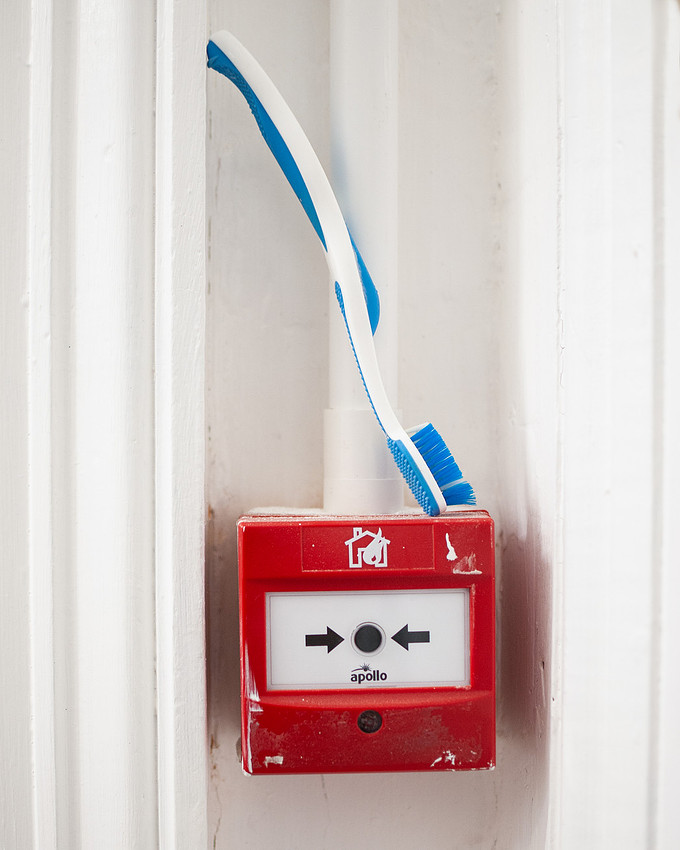
From a recent photography challenge reimagining the humble toothbrush The message then is to be more divergent, but how do you do that when pushing 50 years old? I’ve heard anecdotes of artists actually reverting to being a child, playing with toys etc and I know several very talented photographers who observe their young children’s play and try to relate to it. I’ve taken a slightly different route, recently embarking on writing a novel, whose story has been loosely floating around in my head for years. I don’t expect to get it published when finished, or indeed for it to be particularly good, but that’s not the point of doing it. The enjoyment I now get from imagining my characters, and the fictional world they inhabit, has been liberating thus far. I love the idea that the only real skills I need are to be able to write and to imagine, which takes me right back to being a child. I’ll just have to make sure I don’t throw any of those vintage temper tantrums when I don’t get my own way. Somethings do indeed need to be held back.
So many cameras, so many moreThose who know me well, will know that as well as being a photographer, a student, a would-be artist, and tutor, I am also a prolific camera collector. When I tell people that I have 52 cameras in the collection so far, the response I usually get is “why?” Sometimes, they run away and on occasion have been known to tell me of the cameras in their loft/basement/parents’ house etc. that I might be interested in. It’s all in fun, of course. I guess that everyone who collects something is subjected to being categorised as being a bit of a nerd, which doesn’t bother me greatly. The answer to the first question, is that I’m fascinated by the evolution of the camera. Photography as we know it has been around since the early 1800s, when Joseph Niépce conducted experiments with his new heliography process. His used a camera obscura to make his famous image, credited as being the oldest surviving photograph, View from the Window as La Gras (c 1826). The camera obscura had been around for many centuries before that; its origins dating as far back as ancient Greece. They are widely still used today, and I have a modern variant in my collection, that I’ve talked about before in Forget the Gear, Have an Idea(linked below). From the humble pinhole camera, the evolution of cameras kept in step with the evolution of the light-sensitive materials being used, from the heated bitumen of Niépce’s heliography, through Daguerre’s polished metal plates, to the modern films and papers pioneered by Kodak. Improvements in lenses and shutters offered photographers more flexibility in how they shot their subjects, as well as a variety of creative styles that we see in photographs today. Every camera manufacturer that emerged during the 20th Century wanted to add their own special design ‘sauce’ to their equipment, and it is this that got me started in collecting cameras of historical significance. That’s not to say that they are all of the highest quality or have the greatest lenses etc., they just need to have been important in moving photography forward in some way. Take the Nikon F (1959), for example. Here was a camera that offered a true ‘system’ for the first time in 35mm. The viewfinder prisms, focusing screens and even the film transport could be changed to suit a variety of needs. Not surprisingly, it rapidly became a choice for professionals and photojournalists, who up until then were probably shooting 35mm Leicas. It was so popular that it forced the mighty Leica to up their game, in order to survive. The F was the blueprint for 5 further variants, as well as many other derivative consumer models. I have an F in the collection and an F6, which was the last of the line. The latter looks and feels like my digital SLR cameras, so it could be argued that the DNA lives on, some 63 years after the first version.
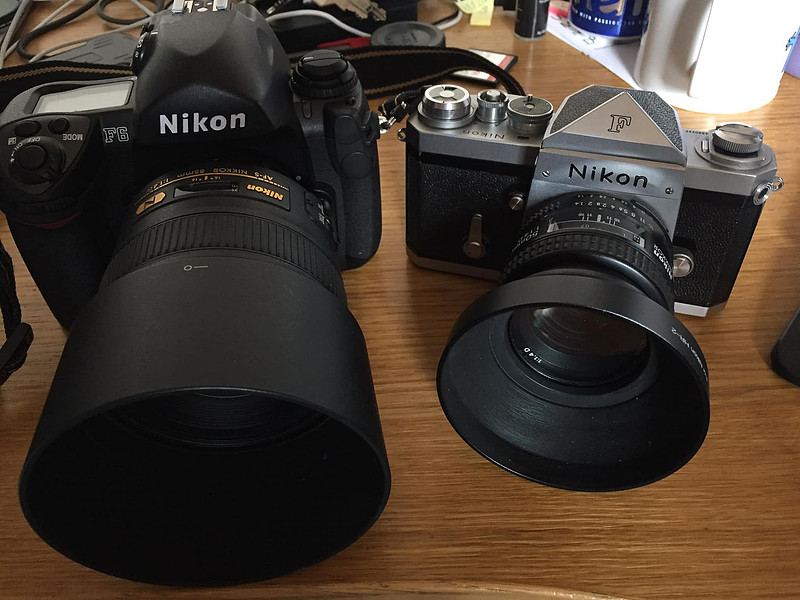
The first and the last - My 1960s Nikon F and 2018 Nikon F6 The other major manufacturers of the age were also blazing their own trails in 35mm, each time offering more reliability, compactness, lighter weight, better glass quality and, with the advances in electronics, more accurate metering. In the medium format world, the professionals were shooting Hasselblad, Rolleiflex, Mamiya etc., all offering something new, in similar way, as they evolved. It’s to be expected, of course because that’s how technology works, right? Well, not entirely. It is true that camera technology marches on at great pace – I talked about that in my recent blog about mirrorless. Cameras are becoming much more than they were, most notably in their ability to shoot video; a must if anyone wants to become a vlogger or professional videographer. All of this is not what I’m referring to. My concern is more about the concept of designing new film cameras, something I have mixed feelings about. I applaud the desire to make new cameras for the film community, but in some cases, I have a problem with what they are trying to produce. I regularly read about people seeking funding to make quirky or unusual cameras, some of which I don’t really see any merit in at all. Producing something that looks cool, operates in an unusual fashion, but has limited shutter speeds or poorly made lenses, doesn’t make any sense to me. It seems to be a modern misconception, that producing photographs that are the result of poor technique or a crappily made camera, is somehow creative. For me, this is not the case. In my view, creativity uses whatever is to hand that helps bring the creator’s vision to life; anything beyond doing that is embellishment. Simply producing something bad without knowing why, is not creativity as I see it. A new camera dedicated to this is certainly not needed. If you want to create strange or unusual images, use an unusual film, or buy a Holga. Holgas have been around for decades, are widely known to be poorly made, but produce those ‘interesting’ pictures that I’m talking about and are popular with film photographers. Whatever the motivation, here is my main gripe with ‘new badness’. We live in a world where natural resources are declining, in some cases at an alarming rate. We are facing changes in our natural world that ultimately must change our attitude towards energy consumption, manufacturing and waste. The millions of film cameras that were made during film’s golden age are still out there, many of them still in good working order and available to buy in online market places, in many cases for not that much money. They were all made to enhance the experience of photography in some way, whether from a usability or performance perspective, so why not pick one up as opposed to wasting money on ‘recreating’ them in the 21s Century? I want you to understand that I’m not just ranting against new technology going ‘all retro’, far from it. What I am saying is that I understand and welcome the revival of film photography, something that I only really rediscovered for myself 6 years ago. Anything that encourages people to take it up is a good thing, but I’d prefer the balance to be struck between our future global challenges and the need to be somehow ‘cool’. There are some fantastic cameras out there, just waiting to be used by a newcomer. In my case, around two thirds of the collection’s original owners are no longer with us, which I think about a lot whenever I take them out on a shoot. With me, they are being given an new life where the expectation might have been that they’d end up in landfill. This got me thinking, perhaps I’ve become a camera recycler as well as just a collector. Now there’s a thought.
Postmemory and the importance of the family archiveAs I write this blog, Britain continues to deal with one of those cultural and societal changes that is hard to put into context. Her Majesty Queen Elizabeth II passed away a couple of weeks ago at the age of 96, having spent 70 years as our nation’s monarch. Like many, I am deeply saddened by her loss, and like many, have been overwhelmed by the extent of the 24/7 media coverage of the aftermath, the alleged family feuds and hitherto unseen processes that take place in the accession of the new King. However, once the state funeral, with all its pomp and ceremony, had taken place I found myself thinking “what choice did the media have?” I mean, as an almost 50-year-old man, I’ve only ever known life under the reign of The Queen. Her name, image and influence has been woven throughout our culture in a way that frankly makes me feel a little lost. From EIIR phone boxes to coins and stamps, one of the Bond films and lots of music to her many Royal Warrants, she is still everywhere. Most of these things will naturally change over time, but for the foreseeable future, we’ll be regularly reminded of her because of these ordinary, everyday details. Away from the news, there have been some wonderful documentaries about her life and reign, and that was what prompted me to write this post. One of them, called Elizabeth: The Unseen Queen, fascinated me because it comprised old newsreel footage, home movies shot by her and her family, and audio recordings of her telling her own story. I already knew that she was a keen photographer and had seen the many pictures of her holding bespoke cameras made for her by the likes of Leica and Rollei, but I didn’t know that she used an 8mm movie camera as well. The footage that she shot on her trusty Kodak of her young family was revealing, but also hugely nostalgic. How could be nostalgic to someone who wasn’t even born when it was shot? The answer is because of the concept postmemory. Postmemory is a phenomenon where we ‘remember’ something from the previous generation to ours, whether a specific event or an emotional connection with a general time or place in history. We cannot physically remember it because we were either not yet born or present when it took place, but the knowledge that we do have creates a virtual memory so strong, that we become deeply affected by it. The term was first coined by Marianne Hirsch, a university academic in the early 1990s who has continued to quantify what it means ever since, through a number of historical events, most notably The Holocaust. The horrific industrial slaughter of Jewish families, unsurprisingly left those who survived with memories that nobody else can ever truly comprehend. These memories became stories that Holocaust survivors naturally passed through the generations in a way that would likely have been cathartic, but also driven by the need for the atrocity to never be forgotten. Descendents of the survivors continue to pass these stories on down through the generations, each time making the retelling more personal and more alive as they told their children. Hirsch was one such descendant, who realised that her Holocaust ‘memories’ were sometimes more vivid, more real than her actual childhood memories, which struck her as odd. She coined the term postmemory to describe these ‘memories that aren’t’, and when I think about it, my reaction to the footage of Queen Elizabeth can be explained by this theory. Postmemory is influenced not only by the familial stories we are told, but the images, news articles and even music of the time. When I see footage of 1950s England, I connect with it because I have a sense of those difficult post-war years, where prosperity had yet to return, old war allies were reverting to type, the development and proliferation of nuclear technology, etc..etc… I have this knowledge from many different sources, to such an extent that my recognition of the era is palpable. Add to that the fact that the current royal family is instantly recognisable (even when younger) for the reasons I mentioned previously, and I found myself deeply moved by the programme. You don’t have to be royalty to create powerful postmemory, of course. Alongside the personal stories that we tell the next generation, is the family ‘archive’. When I say archive here, I really mean a collection of photographs, whether or not they are organised formally as an archive implies. When I was growing up, I naturally had a camera and took pictures of my family – Who knew?. I wasn’t alone, though as other members of the family also had cameras and documented holidays, Christmases, Birthdays etc over the years. In those days, we kept the prints and negatives, sometimes putting them into albums that we could take out and look at from time to time. What we ended up with was a huge collection of pictures covering a substantial period of time, but we also had something that physically lasted. Even if lost for a few years, we could still rediscover our prints from time to time and be reminded of those special occasions. With the passing of time, these images act as an aide-memoire, but they take on a special significance when members of the previous generation who are in them are no longer with is. I look at the many pictures I have of my parents when they first got married and I feel like I know that holiday or that party or family gathering with their parents, as if I were able to step into the photographs. For me, this is why we should take pictures of everything.
My dear old Grandad Charlie, pictured getting Christmas dinner ready several years before I was born. My memories of him, his kindness and generosity and the house instantly transport me to that time and place Before everyone points out that in the modern world, we literally photograph everything from ourselves to our cups of coffee, the issue with the proliferation of digital images is that, unless we print them, they stay as 1s and 0s on a hard drive somewhere. There are questions about how long digital media lasts, because of the lifespan of the hardware that it’s stored on. With changes in technology and accessibility (the technical interfaces between devices etc), it could be that pictures we took 20 years ago might not be available to us at some point in the future. I find that a little scary, to be honest. We might not be able to preserve historical pictures without some effort, but I’m not trying to argue that film is the way forward - heaven forbid. What I am saying, is that we really should print pictures whenever we can. They don’t have to be framed and hung on the wall as art. They don’t even have to be that good, but just the act of being able to keep something for the next generation to own along with our tall tales, has got to be a good thing. There are many inexpensive options for portable printers that can wirelessly connect to our phones and quickly produce high quality prints on paper or, if you like a bit of nostalgia, on instant film. Just remember that in 50 years’ time, someone might be telling a story about you, just as with the documentary about Her Majesty. For that postmemory to be passed on, the visuals might just make all the difference.
Through the Squarish WindowThis year marks 10 years since London played host to the Olympic Games which, for me, was perhaps the most magical and unifying event I’ve ever experienced. Yes, it was expensive and yes, there were plenty of naysayers who couldn’t see the point, but when Games began in late July 2012, the overwhelming moods were of joy and excitement, coupled with the recurring thought “I wish I had tickets for that”. Ticketing for the event was through a nationwide ballot and when the registration window opened, my wife applied for pretty much every event going. At the time I thought she was quite mad, but soon changed my tune when the results were in. We had been offered lots of tickets, but most importantly, they included Saturday’s athletics event at the Olympic Stadium. Only with hindsight can we really appreciate what became known as Super Saturday. By the end of that day, the British team had won a slew of gold medals in track & field and Usain Bolt had set the stadium alight in the 100m. Our session was the morning, where there were less fireworks, but we were still able to see our heroes in action. At the time, I was just 2 years into my renewed interest in photography and using my first ever DSLR. I had yet to do any formal training to improve my skills, but I had the next best thing, all the gear. When we left for London, I had packed every piece of camera gear I owned. Camera, long telephoto lens, monopod, loads of memory cards etc…etc. I wanted to shoot everything, just as long as I could get into the events themselves. The London Games had been dogged by issues in preparation, one of which was the bizarre shortage of staff to man the entrances to the venues, an apparent recruitment and training miscalculation. To ease the embarrassment of the company who’d made the error, British Armed Forces personnel were drafted in to help. As we approached the stadium in Stratford, East London, I could see a large Army contingent checking bags. No chance, I thought. To my surprise, however, I was allowed to take my mountain of kit into the stadium with the simple instruction to ‘not get in anyone’s way or spoil their enjoyment of the event’. Result. I shot continuously throughout the day, with each exciting event yielding opportunities to capture a piece of history as they went. I was pretty rubbish at that time and my long telephoto lens was, at 300mm, not really long enough to get good frame-filling compositions. Still, I did get some shots I was (and still am) proud of. The thing is, when I reflected on the day immediately afterwards and in the years since, all I can really remember is taking photographs. For example, I can’t really recall the experience of the atmosphere when a ‘disguised’ Bolt snuck onto the track largely unnoticed. I had spotted him but was immediately consumed with taking a picture as he made his presence known. It occurred to me that this was a disappointing outcome to my Olympic experience and it was something to do with being a photographer.
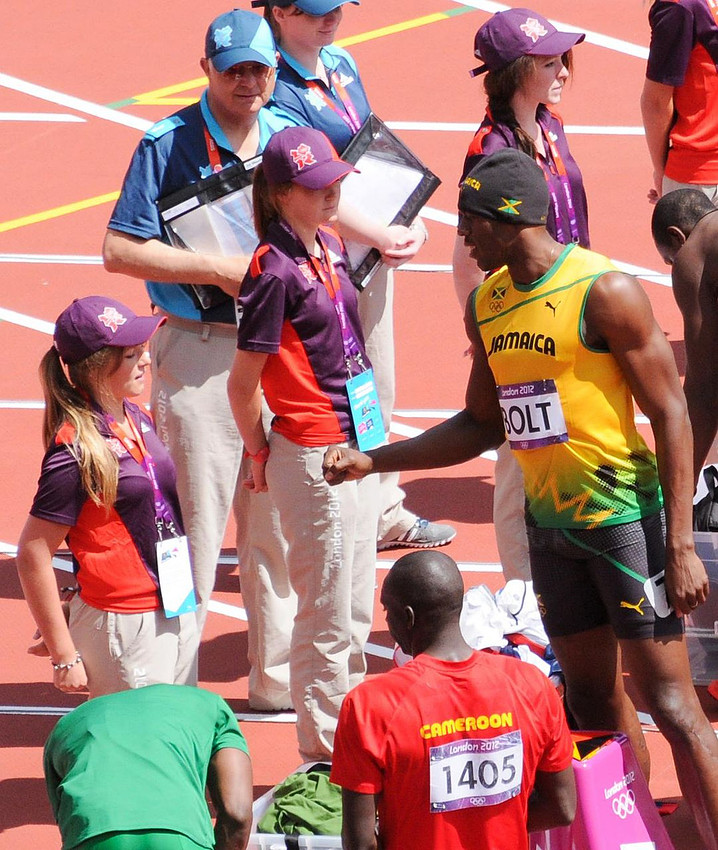
Usain Bolt offers a fist bump to his box carrier. He was the only athlete to show appreciation, as everyone else prepared for the race Fast forward to a Diamond League athletics meet in Birmingham a few years later. I now had my new camera and what I considered to be a better lens. I’d learned more about the basics of photography with regard to the technical camera settings and composition, so I thought this would be an opportunity to show off a little. The first hurdle was a conflict with the marshalling staff at the venue – long story short, they confiscated my camera and I only got It back from the head of security when I pointed out that they’d have to pay many thousands of pounds if it was lost or damaged by the muppets on the gate. Perhaps it was the stress of that confrontation or the memory of London, but once inside, I actually didn’t want to take pictures of the event. I just sat and watched instead. Why am I rambling on about all this? Well, I’ve been on holiday this past couple of weeks and during that time, I’ve visited many tourist attractions. Holidays present a challenge for me with my collection of 52 cameras, principally which one(s) to take with me. For this trip, I uncharacteristically chose to ‘travel light’. My Nikon D300 (that very first DSLR), which is light enough to carry around with me and good enough to do some of my study work on, and my Hasselblad that I talked about last week, were selected. I took the latter with me because I had a project that I wanted to shoot specifically on medium format film. This choice of minimal gear not only made my wife happier, but it also meant that I would be forced into accepting that I could not shoot every subject or setting that was presented to me during our trip. This started thinking about not taking pictures when it’s better to just watch what is happening, when we visited the wonderful National Centre for Birds of Prey, near the town of Helmsley. The centre had three flying sessions throughout the day, during which a variety of falcons, eagles and owls demonstrated their amazing aerobatic and hunting skills. As I didn’t have any of the right gear with which to shoot the display, I just watched in amazement with the other spectators. It then dawned on me how much we miss when we are focused on what might be about to happen in front of us. The camera gives us a perspective through a small rectangular viewfinder which, even with a wide-angle lens fitted, restricts our ability to see everything that our eyes would normally. In the case of the birds, a long telephoto shot of a bird in flight is much like any other and, while impressive details can be revealed, we don’t get any sense of its behaviour or plan of attack if we just see it flying within a narrow field of view. That’s not to say that I am against this style of wildlife photography, far from it. It’s just that when the action is fast and furious, our attention is all about the split-second decision to shoot rather than being immersed in the moment. By stepping back from this method of photographing we observe more, so that when a less frenetic moment presents itself, we can still get a picture.
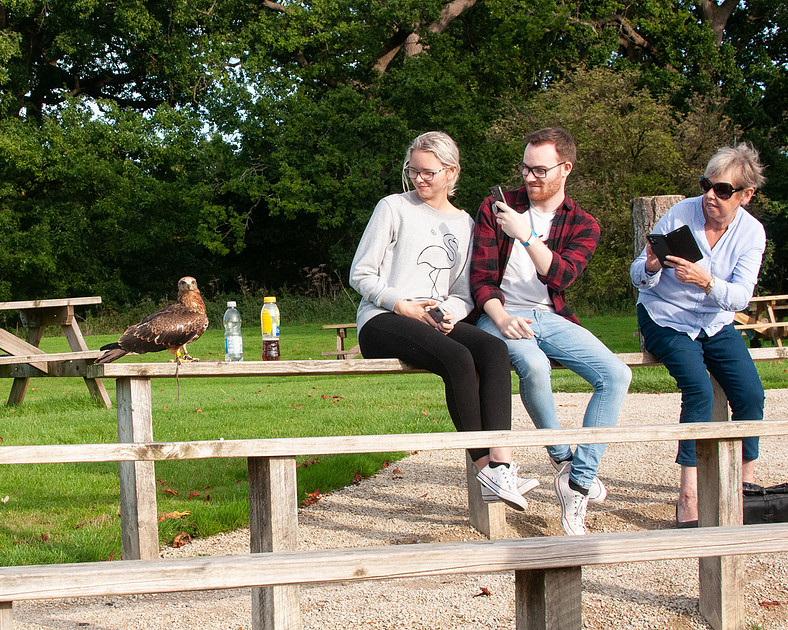
A mischievous Kite lands for a quick pit stop, photographed by the ubiquitous camera phone As with the Olympics, I was witnessing something really special only this time, without my camera, I was able to experience the anticipation of the action in front of me. We are continually surrounded by this phenomenon of ruthlessly capturing what we can from an event, because our trusty camera phones are always available to us. People visit the Museé du Louvre in Paris every day and take a camera-phone picture of the Mona Lisa, not because they believe it is a good representation of the painting, but just to say they were there. I often wonder what they do with the pictures beyond sharing them on social media. Do the print them or keep them as a screensaver on their computer? Doubtful. Perhaps if we consciously decided to just experience the moment once in a while, without the need to document it, we’d enjoy it more. Or perhaps our perspectives really are being more and more defined by a squarish window.
|