“Just write every day of your life. Read intensely. Then see what happens..."Ray Bradbury on writing Ok, so there won't be a post everyday, but this is where I'll be sharing short stories about my adventures as an artist and student. Check back here for the latest updates by clicking the subscribe button below. Style and Substance – the magnificent Rolleiflex TLRThe most common question I get when people learn that I’m a camera collector, is “do you have a favourite?” I’ve never been able to find decent answer to this question, beyond some pithy response about “having to choose between your children”. I have over 50 cameras in my collection after 6 years of researching and buying them. Choosing one that stands out as my favourite is a problem for me, because the motivation behind their acquisition is pretty much unique for all of them. It’s true that some were seen as exotic, some were an opportunity to explore a new format, and some had a specific connection to my past. I’ve been interested in photography for most of my life and follow in the footsteps of my father and grandfather before him. This means that I have childhood memories of both taking photographs, of my thumb covering the lens mainly, but also captured by particular cameras. In a perhaps futile attempt to answer the question about favourites, I’ve recently tried to document the thought processes that led to the collecting and I’ve concluded that in most cases, their story is the thing that initially piques my interest. It’s worth pointing out at this point that the story is often not mine, but the previous owner(s). Given that the majority of my collection is over 50 years old, it’s fair to assume that most of the previous owners are no longer with us. One of the earliest examples of this influencing my decision, was when I bought my rather wonderful Rolleiflex T.
My Rolleiflex T working in the studio. The name is covered with tape to preserve the selenium light meter and note the modern flash cable. Works perfectly with the studio strobes For those who’ve never used one before, Rolleiflex was the name of a high-end camera line made by German camera manufacturer Franke and Heidecke from the early 1920s, and were what’s known as Twin Lens Reflex or TLRs. As the name suggests, the cameras have two lenses, one that is used for viewing and one that has the shutter behind it. Like the Single Lens Reflex (SLR), the viewfinder’s focussing is achieved by reflecting the light coming into the viewing lens onto a ground glass ‘screen’. Unlike the SLR, which then moves the mirror out of the way so that the focussed light falls on the film, the TLR uses its ‘taking’ lens to make the picture without having any other mechanical movements. As both lenses are physically aligned and mounted on a single structure, they are focused together with a single control as with any other camera. TLRs tended to be medium format with 6x6 negative size, and Rolleiflexes were considered the premium brand, boasting high quality optics and precision manufacturing. In use, they are wonderfully quiet because of the lack of a big flapping mirror, and the viewfinder is accessed from above. By looking down into the camera rather than holding it to the eye, it didn’t draw the subject’s attention to the photographer. It also offered a slightly different composing perspective with the camera at waist-level, again very different from the traditional SLR. I first became aware of them after I saw an exhibition of Vivian Maier’s work in Chicago in 2012. Maier was a nanny who spent her time walking the streets shooting her Rolleiflex, often with the children she was looking after. As she blended into the background of daily life, most of her subjects were unaware that she was photographing them. Even when they were aware, there was something non-threatening about Maier herself as well as the waist-level camera. The story of her life, obscurity and being discovered as a photographer after her death is a fascinating one (see the link below). It was several years later than I came to own my own Rolleiflex, though. I was talking to my neighbour one day and she mentioned that her father had recently passed away and that he was a very keen amateur photographer. What followed was a question that I’ve become fairly used to, “would you be interested in any of his camera gear?” We arranged to get together to have a look through the box she’d collected from his house. When it came to the meeting, she couldn’t face the task of going through them, which when we think of it, is no surprise. We all associate something that our late loved ones did as hobbies with the tools or objects of that hobby. We might have memories of them using it or their teaching us how to use it, or we may just remember how personal the hobby was to them, which brings out a nostalgic sadness that is part of grieving. On this occasion, her husband stepped in to help. The box contained a lot of cameras, but mostly 35mm consumer kit that, while good quality, weren’t of interest to me. The two Leica 3s that were there were earmarked as heirlooms for her children, something that I thought very wise given their rising value. Then, in the corner of the box I noticed a small brown leather case. When he picked it out for me to look at, it was immediately obvious that this was a Rolleiflex. Before I could really look at it, he started pulling and twisting at its controls, which were more than a little reluctant to cooperate. One thing you never do with a mechanical camera is to force something. The older the camera, the more likely it is that some lubrication has dried out and delicate parts are subject to stiction that prevents them from moving. This can spell disaster, so this display of ignorance was not appreciated by me; I winced at every action to try to get it to work. When I was able to talk to the owner again later, it transpired that what she really wanted was for her dad’s camera to be used and cared for by another photographer. She didn’t know if it worked (neither did I now, of course) but she also didn’t want much for it. I bought it for the collection, with a view to get it repaired and back in use. Therein lay my next problem. Rolleiflex servicing isn’t all that common these days with the last TLRs being made in 2012 and the ‘T’ ending in 1976, so I struggled for a while to find an expert to take it on. Eventually I found a mysterious chap online who was reputedly a retired Rolleiflex service engineer with an excellent reputation for the quality of his work. His online presence was a mobile phone number being shared around Rollei owners like some dark secret. After some exchanges of texts, I sent him the camera. Within days, I received a call. “It’s Brian. How much did you pay for this, son?”, he said cheerily. That wasn’t a good start. Turned out that my new (old) camera had a long list of issues, some of which my neighbour’s dad had tried to fix himself. My favourite one, if that’s the right expression, was the very delicate moving-coil light meter, which upon realising was beyond his repair capabilities, he’d superglued back together to make it look tidy. My new friend Brian’s rather blunt question was aimed at determining whether I’d been ‘had’. When I told him what I’d paid, he got very excited. “Once this is repaired, you’ve got one hell of a camera for the money”, he said. He was right. The Rolleiflex T is a brilliant camera, even though it’s not regarded as the best in the line-up. Brian’s enthusiasm for the old camera was palpable, even asking about it when he later serviced my Rolleicord (a more basic version of the ‘flex), which I was gifted a few years later. Whenever I go out with the T, I regularly get questions from passers-by who are fascinated by its unusual appearance. Some people want to know if it’s ‘the Vivian Maier camera’, which is testimony to how her story has captivated photographers many years after her death. Fast forward 4 years and I’m still regularly using the Rollei. In fact, my current university assignment is being shot with it alongside my digital camera, so that I can get that medium format look that people bang on about. It might be 65 years old, but thanks to Brian, it’s the most accurate film camera I own in terms of speeds and focus. What’s most satisfying to know is that in its current state, it will keep producing photographs for many years to come, probably outlasting me. Who knows how many lives it may have if I continue to treasure it the way the previous owner did, minus the adhesive repairs of course. What I do know, is that I intend to make as much of my time as its custodian as I can. Some photographs made with my Rolleiflex T
Vivian Maier's work: http://www.vivianmaier.com
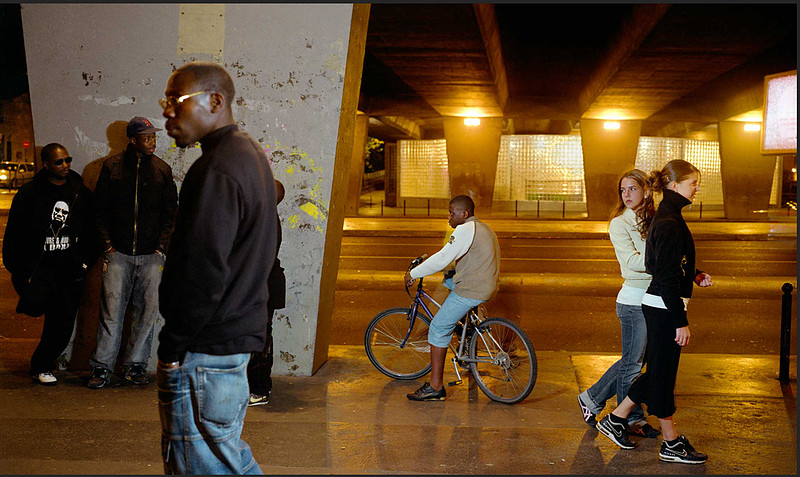
"Which is it?” How contexts can alter our interpretation of the genre of a photographSomething a little different this week, as I’m away for our annual break in London. I thought I’d share a recent critical essay assignment from my ongoing degree studies. It discusses my confusion over attributing photographs to a particular genre. Here it is: Critical Essay "Landscapes can show the infrastructure of power, can show the dividing lines of power. Sometimes we don't think of these as landscape, but they are, because that is the defining part of them". (Colin Pantall Presentation “The way we see...”, s.d., video timestamp 11m,50s) Pantall was referring to an image by Mohamed Bourouissa from his series Périphérique (2005-2008), which depicts groups of youths in what looks like an underpass. The classical visual codes that usually describe the landscape genre are missing. There is no apparent aesthetic beauty relating to the natural world, or a picturesque view attributed by the photographer. There is little to suggest that this image is about the setting, owing to the primary subject; events that are apparently unfolding in the foreground. At first glance, the image looks as though it belongs to Street Photography, a sub-genre of Documentary. How then, does Pantall’s identification of ‘power’, as a contextual element within the composition, make this a landscape? How do our considerations of the visual (internal) context affect our subsequent categorisation when we interpret as a single image and as part of a series (external context)?
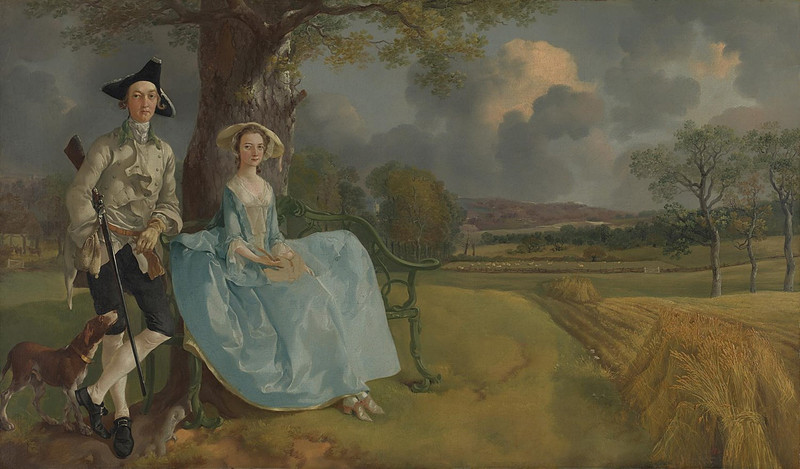
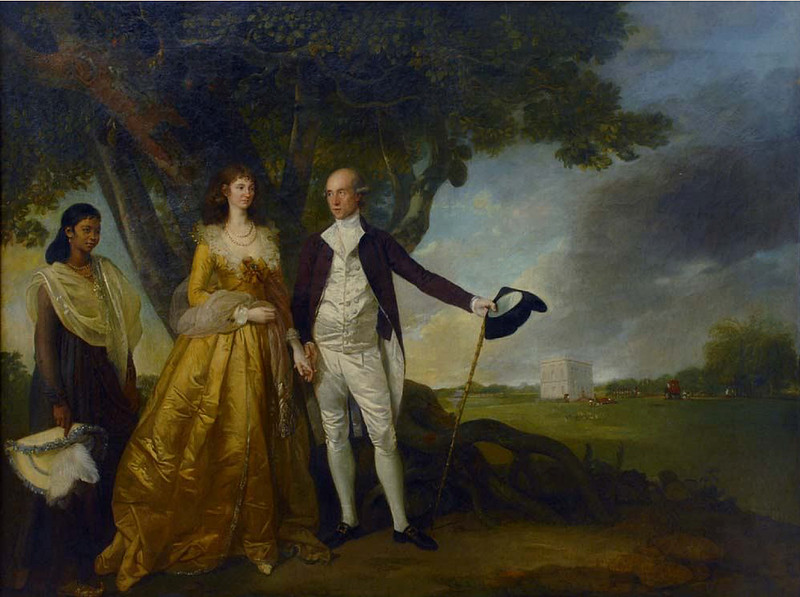
Figure 1 – From the series Périphérique (2005-2008), (Mohamed Bourouissa, s.d.) Barrett tells us that there are multiple interpretations to an image and that a critique is not intended to arrive at a single view. He goes on to say that the subject matter of any photograph is taken from a larger context which is both internal and external (Barrett, 2006, p.128). Using his CRIT approach to analysing images (Subject + Medium + Form + Context = Meanings), we can determine the following: the photograph shows two distinct groups of young people, one black and one white, each also being of different genders. The setting is an underpass of a major roadway, with the support structures and lighting visible. A group of black males stand next to one of the structures. The white girls appear to have walked past the men, one looking back at them, but both continuing to walk away. There are two other men outside of the main group, one on a bicycle and the other looking towards something out of frame. The landscape, in the traditional sense, is in the width and depth of the composition which is cinematic in aspect ratio. The use of space fits with the idea of a landscape being ‘a general coda’ for a whole range of cultural scenes (Bate, 2016, p109), this one being a city-scape. Indeed, any image from an urban environment would qualify owing to the predominance of architecture, concrete and artificial light. What prevents us from initially seeing the landscape in Bourouissa image is the dominant presence of main subjects, the people. The groups are staged in apparent confrontation, emphasised by the two groups maintaining eye-contact. The direction of the girls and the cyclist suggests an altercation has taken place between them; that sense of fear being clear on the expressions of both girls. Internal context suggests a narrative about racial, class or gender tension, of intimidation and prejudice, which is alluded to by the artist’s statement. “Confrontations, gatherings, incidents, looks, and frozen gestures all suggest a palpably dramatic tension. Readings of these images were inflected from the start by the violence of the 2005 riots in the French banlieues”. (Mohamed Bourouissa, s.d.) Any confusion regarding the image’s genre is further compounded by it being mise en scene, that is a carefully constructed composition, visually resembling the fantastical photographs of artists like Crewdson and Wall. The immediate interpretation becomes more a fictional storytelling instead of a representation of real events as would be expected in a street photograph. Those artists use landscape to direct mood, create a backdrop for the experience of the primary players in the scene, and to provide the viewer with signifiers to help create a narrative. Bourouissa uses the space within his scene to present a ‘battleground’, akin to his own experiences as an immigrant entering France from Algeria; this is borne out when we review the image as part of the wider series. Repeated visual themes of urban decay, waste, scars of violent behaviour become more obvious and the area of Le Périphérique, a ring road encircling and dividing Paris, becoming more recognisable as the boundary between societal groups. The contexts that Barrett refers to include the external, provided in this case by the image’s place within the series. Bourouissa uses repeated themes of the environment, the landscape, as an anchor for the stories, so it is critical that the other images are taken into account when trying to assign a genre to it. The image further conforms to the idea of landscape as three verities: geography, autobiography, and metaphor (Adams R, 1995). Bourouissa’s motivation was to represent his place and his friends in the work (Louisiana Channel, 2021), which covers the first two. The assembly of the image provides signs that are metaphorical battlegrounds, whether physical, psychological, or emotional. “Representation is, of course, ideological, but so is looking, since our engagement with what we perceive is subject to cultural currencies and preconceptions. The image is a statement of what was seen. We know that photographic vision is highly constructed. Nonetheless, photography significantly contributes to our sense of knowledge, perception and experience, and to (trans)forming our feelings about our relation to history and geography and, by extension, to our sense of ourselves.” (Wells L, 2011) By considering the image as landscape, we can connect with the cultural and ideological ideas of ownership and power woven through more traditional art from the genre. Works such as Gainsborough’s Mr and Mrs Andrews (c1750) and Johan Zoffany’s Warren Hastings with his wife Marian in their Garden at Alipore (c1784) both convey the sense of ownership of land. The former creates tension between the subject and the viewer in terms of the vastness of the wealth being portrayed, taking the form of positive social affirmation and of ‘showing off’, depending on what the viewer brings. This was intentional as at the time, such paintings (this one could be considered a portrait) were commissioned for that very purpose. Zoffany’s painting extends the tension to cover people as possessions; painted during the colonial occupation of India, the inclusion of the Indian servant further emphasises the Hastings’ power and ownership of everything around him. Unlike Bourouissa’s image, the visual elements of the landscapes, which include the aesthetic beauty of the open countryside, are more obvious upon first inspection. The external context provided by British history soon provide some viewers with the narrative about the relationship between the people and their space. The inclusion of people is similar to Bourouissa’s photograph, but there is more balance between the portraiture/landscape codes, than his portraiture/documentary equivalents.
Figure 2: Mr and Mrs Andrew (c1750) by Thomas Gainsborough
Figure 3: Warren Hastings with his wife Marian in their Garden at Alipore (c1784) Bourouissa’s photograph uses the landscape as the demonstration of power, only differing from the above in that it conforms to the notion of the sublime. Sublime landscapes introduce unease or fear in the viewing, whether a demonstration of the raw power of nature or something that might cause harm to life. Sublime is not limited to this genre, as demonstrated in Le Périphérique as it is the action within the scenes that provide the fear that this really is a war zone. Conclusion When considering the contextual significance of the space in this photograph, an argument can be made that the strength of the combined verities (Adams R, 1995) can direct the viewer to categorise it as landscape. The iconic elements used as mise-en-scène, help form a narrative that is familiar with a contemporary eye, asking what the conflict is about, but bringing preconceptions based on current affairs. The sense that some people have strayed where they shouldn’t, provides the geography, while the repeated contexts in the rest of the series builds the autobiographical and metaphorical. Whether considered landscape or documentary, the narrative of the image and the series that it’s taken from, remain the same, even if it’s classification may not be. It is for the viewer to form an opinion as to the relevance of classifying the picture, beyond its use for academic study. Figures Figure 1: Mohamed Bourouissa (s.d.) At: https://www.mohamedbourouissa.com/peripherique/ (Accessed 10/10/2022). Figure 2: One painting, many voices: Gainsborough’s Mr and Mrs Andrews | Stories | National Gallery, London (s.d.) At: https://www.nationalgallery.org.uk/stories/one-painting- many-voices-gainsboroughs-mr-and-mrs-andrews (Accessed 12/10/2022). Figure 3: E-Catalogue entry, VICTORIA::Home (s.d.) At: https://www.victoriamemorial- cal.org/home/content/en (Accessed 13/10/2022). References Colin Pantall Presentation (s.d.) At: https://oca.cloud.panopto.eu/Panopto/Pages/Viewer.aspx?id=7818fd51-11c1-4dec-b524- adc100b4b808 (Accessed 21/09/2022). Mohamed Bourouissa (s.d.) At: https://www.mohamedbourouissa.com/peripherique/ (Accessed 10/10/2022). Barrett, T. (2006) Criticizing photographs: an introduction to understanding images. (4th ed) Boston: McGraw-Hill. Bate, D. (2018) Photography: the key concepts. (Second Edition) London New York: Bloomsbury Visual Arts, Bloomsbury Publishing Plc. ‘I’m not a political artist. But it is political.’ | Artist Mohamed Bourouissa | Louisiana Channel (2021) At: https://www.youtube.com/watch?v=9k_z2B8DfWw (Accessed 10/10/2022). Adams, R.(1995) Beauty in Photography: Essays in Defense of Traditional Values. (s.l.): Aperture. Wells, L. (2011) Land Matters: Landscape Photography, Culture and Identity. (s.l.): I/B Tauris & Co Ltd.
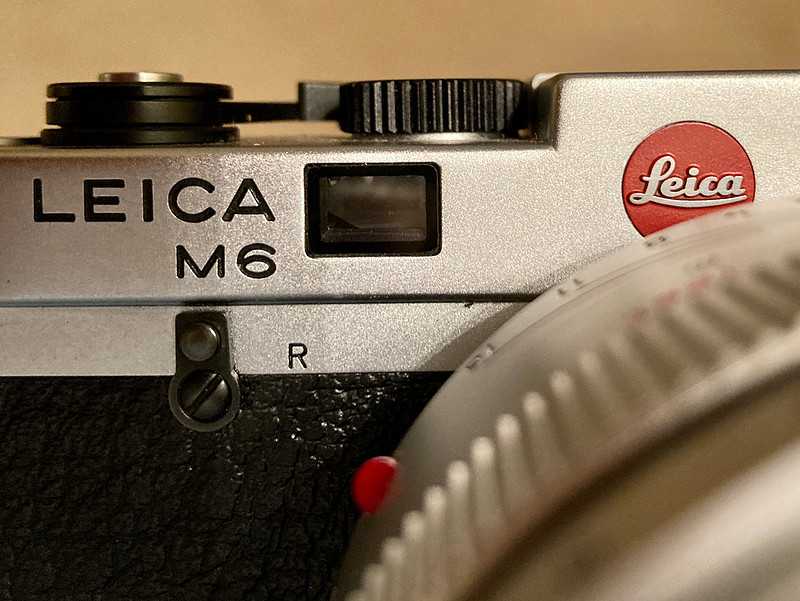
I Leica that very muchSomething happened in world of photography during the last couple of weeks, that I confess to being very confused about. Legendary camera manufacturer Leica announced a new camera in their iconic M series and, unsurprisingly, the buzz around it has been incredible. The Cult of Leica has been around for decades, with some of the most influential photographers of the 20th Century using them because, well they were the best available. These days there are many, more capable camera systems available from the other manufactures, that makes the brand less appealing to the jobbing professional; however, the cult remains. Leica cameras are still made to the highest quality standards, have superb lenses and the price tag to go with them, but they also have a substantial fanbase, which includes yours truly. In their line-up, the M is the one that most captivates us fanboys. When the first M3 camera came out in 1954, it was a lesson in great ergonomic design, something that was lacking in Model III that preceded it. Although great cameras in their own right, the III’s were complicated and a bit fiddly to use. They prioritised precision and accuracy over usability, where the new M3 was all about the latter. Everything on the new camera was within easy reach, the coupled rangefinder was now viewed through a single viewfinder window and anything that didn’t need to be there was left out. The experience was one of spending more time looking at your subject, and less time fiddling with the controls. I have two Ms in my collection, one of which is a 1957 M3; it remains one of my favourite cameras to use because it feels some simple. Over the years, the M design was updated and naturally became digital in the early part of this century, the current model (at least until very recently) being the M11. When the announcement of a new camera came, it was a surprise to learn that it wasn’t for an M12. Leica had decided to resurrect perhaps the most popular and revered M of them all, the M6.
The most famous of them all. Still a favourite of street photographers and cool people the world over Wait, what? Bringing back a 35mm film camera in 2022? That cannot be right. The other M that I have is an M6 from the 1980s and I completely understand the reputation it has. Apart from some technical and manufacturing differences, the biggest improvement was that M6 had a light meter, which the M3 didn’t. Now the photographer didn’t need to be a genius at calculating exposure in their head, or carry an external meter, like they did in the 1950s In addition to the meter, the camera was a significant update to the earlier models in that it was manufactured from cast zinc instead of machined brass so was lighter, and had a more convenient film transport that simplified the act of loading the film. Size and weight continued to be a key requirement for Leica as they moved into the digital age. Rangefinders have no mirror box like SLR/DSLR cameras, and in the case of the M, the shutters were made of rubberised cloth which made them both lighter and quieter than their metal counterparts. The task of improving the M series over the years, while maintaining what made the design special was, I imagine, akin to what a Formula 1 team might go through to increase performance of their car. I was still totally confused. As good as I think it is, I still couldn’t understand why Leica was choosing to bring it back. All of that technological advancement just to go back to a design from 1984? I started to look at the press coverage around the new camera and, sure enough the design is pretty much the same as the original model. Some improvements in the anti-reflective coatings in the rangefinder optics, an improved ISO selector and new leatherette on the camera’s body, didn’t sound that innovative to me. I thought about other possible reasons, beyond nostalgia or to be popular with hipsters, for Leica to deviate from its digital path, and some things started to occur to me. Firstly, it’s very easy in the modern age to jump to conclusions about technology, because of the pace of its evolution. When new tech takes over from old, we immediately assume that the latter becomes obsolete. It doesn’t occur to us that there are people who still use it. Take the so-called ‘vinyl revival’ for example. There are people who never stopped listening to music this way, and while they were not carried along by the age of the compact disc as the rest of us, they have continued to enjoy that unique listening experience. I was one of the crowd who couldn’t wait to get rid of the crackly, fragile plastic in favour of a system where I could easily cue a track, and even shuffle them if I wanted to. I was too young to care about the sound quality of vinyl compared to CDs; I just wanted convenience. When I bought my first digital camera in 2001, I had the same feeling of Thank God I don’t have to buy and process film anymore. There were people who didn’t jump to the new technology, which I was already aware of, given that I also have a Nikon F6 the collection; a digital camera manufactured for professionals right up until 2018! Like vinyl before it, there has been a renaissance for this film technology that isn’t perfect, but whose imperfections lend themselves to a different creative experience. Film is still expanding in its appeal, particularly with young people, who never previously had that experience of handling something physical that they made. The second thing that occurred to me was that some design ideas have an importance that isn’t measured on a technical drawing or in a spreadsheet. For example, the original M3 had a brass top and bottom plate, which somehow made handling the camera a pleasurable experience. By the time the M6 came along, this process was replaced by cast zinc for weight and presumably cost reasons. As a consequence, for all its strengths, the M6 doesn’t have that same tactile feel to it. The new M6 returns to the original brass manufacture, with Leica finding alternative ways to keep the weight down. Perhaps then, intangible things that make a design work are as important as the tangible technological advances. Many companies revisit their successful products and try to capture the essence of what made them special. Lamborghini has recently produced a new Countach to celebrate its 50th anniversary, the car bearing only an aesthetic resemblance to the original. Polaroid has re-invented its popular line of instant cameras, but with Bluetooth connectivity. What Leica has done, is to restart the production of a previous product, with the kinds of minor tweaks that leave us with a camera sharing more than mere DNA. They are, in essence the same camera. It was when considering this last point, that I realised something that increases my fanboy-ism considerably. My M6 is one of 175,000 units produced between 1984 and 2002, and its build quality means that many of them are still available to buy used. The prices of these cameras have been increasing steadily over the few years that I’ve owned mine, with a similar vintage costing over 50% more than I paid at the time. While owning the original is more cost effective than the new one (around $5k), getting the parts and having them serviced has been looking like a potential issue for the future, with only a handful of experienced companies left in the UK. The release of the new model so similar in design to the old, potentially ‘future proofs’ the vintage M6, meaning that we can continue shooting with this brilliant camera for many more years to come. Now, I Leica that very much.
Lemme tell you a storyAs I write, I’m doing my usual ‘pause for reflection’ following the recent completion of a critical essay for my course. To the untrained eye, these reflective moments could be interpreted as my having breathed a huge sigh of relief, and subsequently doing very little with my time. I would say that this is half right. As a man careering towards 50 years old, I’ve found returning to study rather challenging. Prolonged concentration needed for study, difficulties with retaining what I’ve read etc, frustrate me. However, my passion for all things photography and the problem-solving part of my mind work together to overcome this by practical demonstration. The problem with this recent assignment was that it was pure research, analysis, and concise writing; that last one being something that readers of this blog might not recognise. I don’t often write essays, and the prospect always transports me back to being at school, where I freely admit to doing the minimum to get by. Having finished this essay about how visual elements affect the assignment of genre to photographs, I was now looking forward to starting my Self-Directed Project or SDP; a single large photographic work to take me up the end of the unit. The project brief is completely open-ended, with the only requirement being to demonstrate an understanding of the course material thus far. In my moment of reflection, I started to think about storytelling, specifically within the visual arts. I was reminded of a throwaway remark made by Martin Scorsese during a press junket for his film The Irishman in 2019. He was asked what he thought about the recent crop of Marvel Comics blockbusters that were proving incredibly successful at the box office. “Many of the elements that define cinema as I know it are there in Marvel pictures. What’s not there is revelation, mystery or genuine emotional danger. Nothing is at risk. The pictures are made to satisfy a specific set of demands, and they are designed as variations on a finite number of themes” (Scorsese M, 2019) This quotation was a clarification that he wrote after the predictable explosion that resulted in his criticism of those films and, in fact, most other films being made for modern consumption. I’m not going to discuss whether I think he was right in his comments, although I do greatly admire his work. He went on to make other points about the future of cinema in the interview, which isn’t the point of this post either. Instead, let’s consider the art of storytelling. By its definition, the telling of a story is to convey some form of narrative, generally about people, their environment and the events they are involved in. For generations, stories have been told verbally and in writing. However, visual representations of stories have also been present in paintings for centuries. These different media have something in common when they are done well; they all demand the viewer or reader to bring their own ideas and experiences to the interpretation of the story. Our imaginations help us picture the characters, appreciate their emotions, and feel the joy or horror of their situation. If we look at Hieronymus Bosch’s famous The Garden of Earthly Delights (c1510), we are presented with three representations; of destruction of innocence, the subsequent short-term pleasures of man, and their dire consequences in the afterlife. The story is presented all at once, but in triptych, with each panel introducing a sense of time passing. The painter invites us to recognise ourselves and our future, linked to the religious iconography relating to damnation, that was a crucial part of many people’s lives during that era. These visual elements that we read when we look at a picture, were explained by the structuralist philosophers of the 1960s with the application of semiotics, taken from the historical study of linguistics. That’s a whole other post, though. When it comes to movies, there is a more significant challenge in presenting the visual elements. The action plays out before us in real time, which means that we don’t have the same opportunity to read the elements as we would in a painting or a photograph. A combination of a strong screenplay to define the story and clever direction, helps take the viewer through the story with just enough room to interpret what is going on, but without signposting the ‘meaning’. This is where I understand and agree with Scorsese’s comments. As I see it, the problem with the general superhero film genre, is that they are based on hugely complex comic books that weave a story from frame to frame, and let the reader take it all in. As the resulting film must be a constrained to a couple of hours in length, the screenplays have to compress the material to the extent that they become formulaic; there’s a lead-in backstory, character development, a desperate situation that needs a hero, a large fight scene and a conclusion where some closure is achieved. It’s not that the action isn’t exciting or the character development in anyway poor, it’s just that the frenetic pace and leading of the viewer through the story, leave little chance for the mystery, emotion and risk that Scorsese talks about. We are not given the space to ask questions about the characters, because everything is put in front of us. I believe this is one of the reasons that many comic book fans are not so keen on the cinematic representations, with some citing a lack of understanding of the characters. This is of course subjective and created from their personal interpretation of the visual context in the printed version. Everyone will see what they want to see. That imagination is bypassed when the film presents the same characters or storyline. A great example of building emotional tension can be found in Scorsese’s own Goodfellas (1990), where a single long shot presents the viewer with a sense lead character Henry Hill. The camera follows Hill, played by Ray Liotta, and his girlfriend walking through the back entrance and kitchen to the Copacabana club.
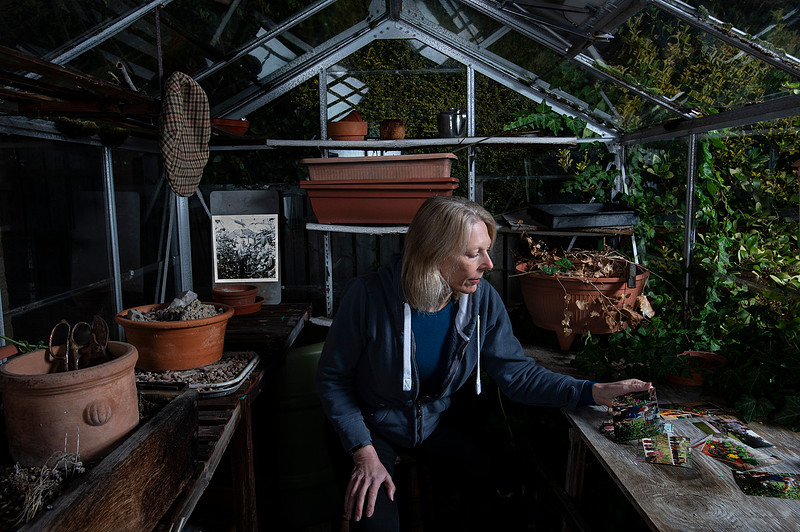
The route takes them through areas where people are busy working, with Hill choosing to interact with some and ‘tip money’ passing between them. Those who deal with him show respect, where those who don’t, defer and stay clear. Nobody really notices his companion. Once inside the club, where the powerful mob figures are, they jump the queue for a table, to the frustration of the other diners, and only when seated is the line delivered that concludes the scene. “What do you do?”, asks the girl. What makes the scene, apart from the single roving shot, is that all the details that hint at Hill’s power are there and we have time to notice them as the shot builds. In one relatively short piece of film, we see the progress he has made since the beginning, where he starts out in the mob. What it doesn’t do is dwell on that detail, nor does it signpost the way to the next scene. We have a sense of recognition of the gangland genre, questions about the characters and an anxiety about what all that power might lead. I think this is what is missing from the superhero films. The same principles of careful construction of a scene are used by artists like Gregory Crewdson and Jeff Wall to tell their stories, only with the same time to linger as in classical painting. They include enough visual references and symbolism for the viewer to draw some conclusion as to the meaning of the image. It will not be the same as the next viewer, but the skill in granting both freedoms to interpret and constraint in keeping to the artist’s general intention, sets these mise-en-scéne images apart from the other genres. My first attempt at this approach resulted in the picture below, which garnered a variety of different interpretations around the common theme of quiet reflection.
Sanctum (2020), by Richard Fletcher I found it the reaction of my viewers to be hugely rewarding as it was clear that the image resonated with elements of their own lives. When it comes to my SDP, I intend to incorporate these kinds of pictures to create a backdrop for the main subject; to let viewer read the story’s context rather than have it read to them. Wish me luck!
Bibliography Scorsese, M. (2019) 'Opinion | Martin Scorsese: I Said Marvel Movies Aren’t Cinema. Let Me Explain.' In: The New York Times 05/11/2019 At: https://www.nytimes.com/2019/11/04/opinion/martin-scorsese-marvel.html(Accessed 19/10/2022). The Long Take: Goodfellas (2009) At: https://www.youtube.com/watch?v=OJEEVtqXdK8 (Accessed 26/10/2022). Links https://gagosian.com/artists/gregory-crewdson/
Thinking about overthinking“What the hell am I doing?” That was the almost audible question that was spinning around in my head in the early hours of the morning recently when I woke in a sudden panic. I’m sure that you’ve all experienced something similar; a good day, followed by an apparently good sleep, interrupted by something that in turn prevents you from getting back to sleep. It’s in these moments that all our anxieties, no matter how trivial, start to whirl around in our minds like. washing machine on spin, further compounding the inability to relax. I am no medical expert, but I’m told that this reaction is caused by something triggering our sympathetic nervous system, which is responsible for our ‘fight or flight’ response. Our heart rate and blood pressure increase, and the brain starts to try to process what to do about the imminent threat, which at night manifests as mind-racing anxiety. This response originally evolved to save our lives, when presented with physical danger such as an attack from a wild animal or neighbouring tribe. Nowadays, our lives are so complicated that these threats can instead be the most trivial of issues we experience during the course of our day. Now, there are lots of reasons that led do my late-night soap opera that I won’t bore you with, suffice to say they included a whiskey, an ‘argument’ and a very beautiful, but upsetting autobiography that I was listening to when I went to bed. Topics included my abilities as a photographer, my self-assessment as to how good a husband I am, who I might be letting down in some way, whether I should stop ‘dreaming ‘and go back to work similar to what I did before, and so on. I know with my rational brain that such thoughts are ridiculous, but in the early hours, they were driving me to ‘make some decisions’. Fortunately, I understand the symptoms well enough to know that decisions should never be made when in that state. When I finally got back to sleep, it was for about 1/2hr before my alarm went off. That’s just typical. I felt pretty bad, but an early training swim at the pool brought me back to reality.
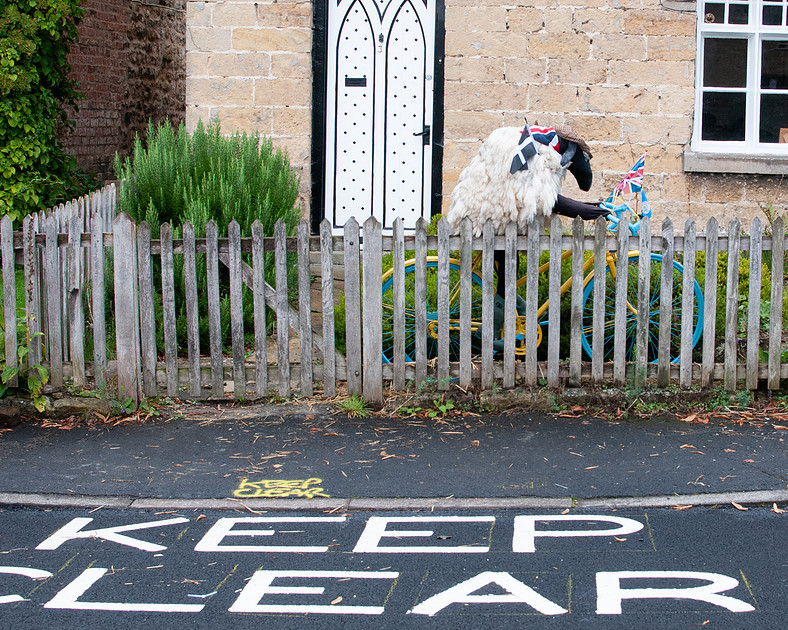
Night Terrors (2022) by Richard Fletcher I started to think about why those things and not, say the problems with our economy or the war in Ukraine, featured in my night-time anxiety. After all, those are really important world problems and in the case of the latter, pretty scary. The answer is pretty simple: neither of those things are at all under my control. The trivial shit that I was processing in the night was all related to something believe I should be able to control or could do better at. While I don’t consider myself particularly insecure, I have always been a serious worrier. The scale of my worrying varies from whether I remembered to lock the front door before going to bed, to whether that nagging pain is just indigestion or something more serious. I generally require evidential proof that all is well before the associated anxiety truly dissipates, in some cases lurching the other way to cockiness. My wife refers to this as ‘leaping tall buildings in single bound’. An recent example was during the preparation for our summer trip to Austria in the camper. At the last minute there were problems with COVID passports etc, but just when I thought it was all ok, a friend of mine pointed out that in order to drive in certain areas of France, we now needed a declaration of the emissions our vehicle produced. Even though I researched what he was saying, and I knew we’d be avoiding those areas, I was sufficiently worried to go through the process of registering with the French transport authority for the sticker to be displayed in the window of the van. The website was a pain; needing me to review the van manufacturers’s data, losing something in translation from French to English, only working with a particular web browser etc etc. At the end of the process, I was informed that the sticker would take a week to arrive in the post and that there was no electronic equivalent. We were leaving for France the following morning. At this point, I flipped from worried to “well, I’ve paid for the bloody thing now, so if they have a problem with no sticker, I’ll show them the evidence and if they don’t like that, they can stick it”. What an idiot. Thinking about my late-night drama, I wasn’t surprised to see my photography right up there on the worry list. While I acknowledge how much my photographic practice has developed over the past 10 years and I’m continually receiving affirming feedback about my work, I still have a worry that I’m not somehow good enough. This is partly just how I am, but it also comes from knowing some incredibly talented photographers, whose work amazes and inspires me on a daily basis. We are not in competition, but I look at their images and think “I wouldn’t have thought about that” or “that look is something I doubt could have achieved” etc. Of course, we are all very different personalities, so it stands to reason that we would have different ideas and approaches. We are also interested in different subjects and genres, which informs what we produce. It is the classic apples n’ oranges comparison. Rationally, I know that I’m a good photographer and a developing artist, but there’s something that drives me to be better. I need to remember that, not just when I’m working, but also when my brain is deciding whether I need to run or stand and fight a non-existent threat. When I left my job last year, I found that for several months that I could not relax at all. Every negative emotion related to walking away from my old company dominated the waking hours and sometimes the non-waking ones too. I had some sessions with a hypnotherapist, which was great help. My hypnotherapist talked about convincing that primitive part of the brain to stand down; there was no real danger, so no need to prepare to fight or run. We can do this by using our imagination to picture a positive outcome to the problem we face at the time. For me, the image of me receiving my degree and having my own exhibition (an ambition of mine for several years) that people actually want to see, featured in my thinking. Gradually, all of that self-assessment and panicky fear began to subside. It’s naturally a work in progress, and it needs to be paired with the traditional relaxation techniques such as breathing and stretching, but learning to control the response has been really useful. That’s not to say that we cannot decide to think about anxiety more constructively when we are awake. That particularly night’s excitement has prompted me to change direction with the business and with my own creativity. It has motivated me to plan more effectively and accept that some things won’t work as expected. As I mentioned in my previous post, letting go of being a grown-up and using our imaginations helps us be more creative. As I write this, I’m dealing with a fair amount of grown-up stuff, but also thinking about my next photography challenge and the next chapter of my book. It’s an antidote to overthinking and offers as much of an escape as is achievable while, say, waiting for my car to be repaired. Next time the late-night wobbles happen to you, make a note of the ‘topics’ you were fretting about and give them some rational thought the following morning. When you get the headspace to think about it and convince yourself of the reality of the situation, it should be easier to get past. Now then, did I leave the iron on?
|