“Just write every day of your life. Read intensely. Then see what happens..."Ray Bradbury on writing Ok, so there won't be a post everyday, but this is where I'll be sharing short stories about my adventures as an artist and student. Check back here for the latest updates by clicking the subscribe button below. Artists Who Inspire Me: Philip-Lorca diCorciaBack in 2014, my wife and I found ourselves locked in a tumultuous period of change. We’d both left jobs at a company that we’d been with for decades, we’d been on a huge adventure to Japan for Jayne to continue her quest for the 6 major marathons of the world and I was having a short break from work while my new company went through its security checks. During our break, we found ourselves looking for new places to check out. During a visit to my in-laws we stumbled across The Hepworth Gallery in Wakefield, near where they lived. I say ‘stumbled across’, because I’m ashamed to say that I’d never heard of it, even though it’s one of the most celebrated modern art galleries in the UK. Alongside works by sculptors Barbara Hepworth and Henry Moore, the gallery had a travelling photography exhibition by an American artist called Philip-Lorca diCorcia. I was unfamiliar with his work at the time, but that was not only remedied by the exhibition, but in the way that he has been an ever-present artist during my studies ever since. As we moved around the exhibition, we were introduced to two famous works, Hustlers (1993) and Heads (2002). Both were photographic ideas that I’d never seen before. In Hustlers, diCorcia had approached male prostitutes in Los Angeles, paid their usual fee but instead of a sexual encounter, photographed them in specially staged tableau images. I’ve mentioned tableaux before in this blog; a directional style of photography that is similar to the movies, where every detail of the scene, the props, lighting etc. is carefully managed by the artist. Hustlers placed the young men in everyday, almost banal situations with often dramatic lighting that conveyed a variety of moods. The resulting pictures are an ambiguous blend of the real person and the fictional setting, which leads the viewer to view them carefully in order to understand what’s going on. The reactions of his subjects to being photographed were, according to diCorcia, natural responses to the ‘assignment’. Many acted out personas that they may have used in their profession, while others became visibly frustrated at the time taken to shoot the picture; after all it was taking them away from being able to earn a living. It’s the ambiguity of the lines between what’s perceived as real and what is deliberately faked, which makes Hustlers an intriguing piece of work. I soon learned that this was a common thread throughout diCorcia’s photographs when we saw Heads. Here, the artist mounted strobe flash guns to the scaffolding of a building project over a street in Manhattan, with a very long remote control release to where he was sitting with his camera. As people walked under the scaffolding, he would take the picture. At first glance, the images look like they are entirely natural as with many that are shot within the street photography genre. However, diCorcia maintains that the subjects could have see him sitting there if they had been paying attention. They may not have noticed the flash, but there was no subterfuge in the act of taking the pictures. The resulting series is a mixture of the candid and the performance, with those who were aware reacting to being observed and those who were unaware, going about their day. Again, despite the their aesthetic similarity, the ambiguity between the two cases is what draws attention. It’s fair to say that I was hooked on diCorcia’s work from that day. Fast forward a few years, and I had to write a critical review essay on a photograph by a famous photographer for my course. My choice was from diCorcia’s East of Eden (2008) and it depicted a living room in an apparently expensive house with two elegant dogs sitting in front of a TV. The room, with its elegant and clean white décor, muted furniture and the immaculately coiffured dogs looked as though it belonged to a wealthy member of society. However, the dogs appear to be watching a scene from a pornographic film. The image, called The Hamptons, is part of a series that explores the decline in societal values and the loss of innocence during the time of the global financial crash of 2008, which coincided with the change of government (Bush Jr to Obama). Each picture in the series deals with aspects of morality, class division, political tension, and the idea of the decline of innocence, invoking Steinbeck’s famous novel of the same name, and its own biblical references. The Hamptons has a sinister, secretive feel to it, but has a humour to it as well. My review of the picture for my essay had me creating my own narrative for both the single image and the rest of the series. This is the key aspect of diCorcia’s work that appeals to me. He includes enough visual elements or contextual references that the viewer can recognise, without telling them what the picture is about. The viewer brings their own knowledge or experience to the picture and creates their own narrative. In my case, I recognise the western ideas of design and wealth, the pampered dogs and the immaculate elegance of the scene. I know enough about American society to recognise the sharp contrast of the pornography on the screen to the idealistic principles of family values, and the what the image might be saying about that period of history. The rest of the series weaves similar symbolism with the biblical and for me, its strength is that it demands that the pictures are given plenty of attention, rather than a casual glance. Philip-Lorca diCorcia isn’t the only artist to work in tableaux, of course. Gregory Crewsdon and Jeff Wall are famous for their hugely elaborate, almost cinematic images, while Nigel Shafran and Cindy Sherman explore identity through the staged portrait. However, diCorcia is my favourite of them. There is something about his use of light, stylish composition and his restraint that I really love, which has inspired me to work with my own tableaux. My recent series Modern Monsters is shot in a similar way, mixing self-portraiture, iconography and careful use of light. I have to say that I think the reason for resonating with diCorcia’s work so much, is that I get the combined satisfaction of the creativity in expressing an idea, with the technical challenge of making it look precisely how I want it to. I get much more of a buzz from this way of working than, say landscape or street photography. It’s definitely something I will continue to explore both in my studies and my own work.
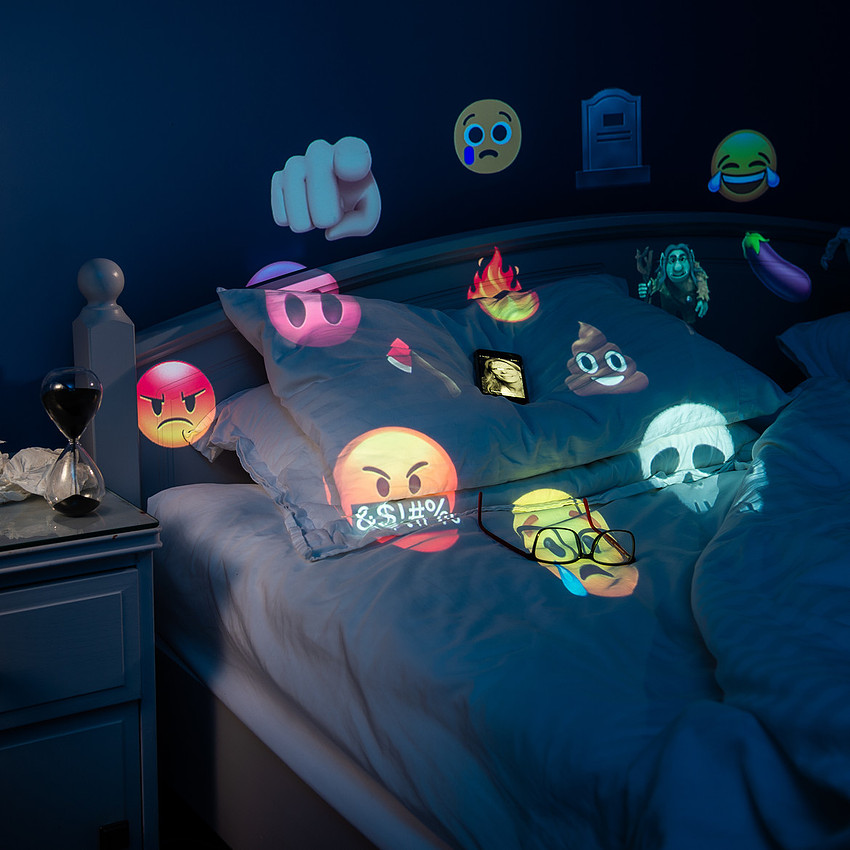
From the series Modern Monsters (2022), by yours truly My discovery of his diCorcia’s work has taught me another lesson too, that we never know where inspiration is going to come from. In my case, a chance visit to an exhibition in a new location, by an unfamiliar artist, planted a seed that I’m continuing grow nearly a decade later. Next time you’re on holiday, have a look at what’s on nearby. You may be surprised where it takes you. A couple of links to diCorcia's work: https://hepworthwakefield.org/artist/philip-lorca-dicorcia/ https://www.davidzwirner.com/artists/philip-lorca-dicorcia/survey The Copyright ConundrumA few years ago, I attended a management training course at work, which was all about problem-solving and efficiency. It was common for group business training to be delivered to people in roles like mine, and I learned a great deal from some of them. They were never a riot, though. One of the challenges for those presenting material to these kinds of sessions, was to keep it upbeat and light-hearted. If the presentation was straight after lunch in what was known as the ‘graveyard shift’, it became more important to add humour and interaction to make sure everyone was awake. On this particular day, a senior manager was giving their presentation during ‘the shift’ while we all awaited the arrival of the fresh coffee; that a tough crowd for sure. Lethargy wasn’t what was bothering me about the material on the screen, however. The slides were littered with Dilbert cartoons. Now, you must have been in a cave for the past 25 years if you haven’t seen or heard of Dilbert, the long-suffering engineer in a company surrounded by incompetent management, narrow-minded colleagues, and daft corporate processes. The cartoon, by Scott Adams has made us laugh, albeit uncomfortably at times, because the situations the eponymous character finds himself in are often very familiar to those who work in corporate office jobs. The slides that I was looking at were trying to inform as to ‘how not to motivate the team etc’ and used Adams’ humour to achieve their objective. During the welcome coffee break, I said to the presenter that I didn’t know our business had a licence to use Dilbert. What I received in response was a blank look. Eventually they said “it doesn’t matter, it’s public domain”. Therein lay the problem. Adams’ licences the cartoons to publications like newspapers and magazines, but he also has a licence for commercial use. If there isn’t a licence in place, the cartoons could not be used by a company like ours for any kind of commercial gain. Now, in fairness my employer was a huge business and I’m sure that licence existed somewhere in the vast structure of the organisation, but that’s not the point. The point is that if you look closely at social media or small online businesses, you’ll become aware of how many times people share photographs without considering the owner or creator. They are found on Google Images, so they must be ok, right? Well, no. Like the Dilbert episode, it’s most likely an infringement of copyright to use a picture you find while wandering the internet, if you don’t have permission to do so.
Copyright Claim, by Markus Winkler (via Unsplash) https://markuswinkler.de It doesn’t take a great deal of thought or expertise to recognise that the internet is a huge ‘place’ and as such, is very difficult to police in terms of copyright. There are also other aspects to consider, like how the image is being used. For example, in academic study in the UK, there is an exception in place that covers research and criticism. In my degree course, I analyse and write essays about famous photographs, and I reference them properly in the writing to make it clear that the source doesn’t belong to me. If I wanted to include them in my commercial work, I would need permission, which is the reason why I only include my own photographs in these blog posts for example. I’m not sitting in judgement of people who accidentally breach copyright, but I am acutely aware of how I would feel if someone nicked one of my pictures for their Instagram (I had a couple of instances of that last year) or other purposes without my permission. The reason for writing about copyright this week, is that I was accused of copyright infringement myself, falsely I might add. I had just finished my photographic series for the current module of my course, called Modern Monsters, which is ironically about online trolling. I chose to present the series as a video, hosted on YouTube, as I felt like this was the right context to set the project within. Over the slideshow of my photographs, I used the famous piano piece Gnossiennes No.1, by Erik Satie. As soon as the work was published, I was hit with a copyright infringement claim. Here’s the thing, there is an expiry date for copyright that is 70 years after the death of the creator, so Satie’s sheet music for Gnossiennes is no longer covered as he died in 1925. However, recordings of his work are covered by their own copyright as they were an interpretation of the original. The musician uses their own style to perform it, perhaps creates a variation or includes other instruments or even a full-blown orchestra. The moment they did that, they create something new, which is subject to copyright. In my case, someone believed that I had used their work as part of Modern Monsters. In fact, I’d carefully selected a recording that was subject to what is known as a Creative Commons licence, which means that the creator wishes it to be truly public domain. This claim should be resolved pretty easily on the basis that I have the proof that it’s baseless. However, the key learning from this was actually something else. The claim was made literally seconds after the video went live, which to me suggests that there are content creators using automatic web bots to look for potential uses of their property. Either that, or they were super-human or psychic. If bots are being used to scour the internet, then we should all be careful where copyright of online material is concerned. Next time you see that photograph that you like or a cartoon that makes you laugh, think about whether you can, or even should, share it. Chances are the idea of going viral would be appealing to an artist, but there will be people who rely on their work for an income who object and, if proven right, might consider legal action. The good news is that there are plenty of providers of imagery and music for content creators where copyright is handled by licencing or exemptions. I’m certainly going to be using them more in 2023 as I pursue some content creation of my own, but more on that in the coming weeks. For my series Modern Monsters, please visit https://youtu.be/OCouCCUDXog Looks Nothing Like You: Portraiture and the SelfieI was recently talking to a friend of mine about a job they were working on, when they told me a story that made us both laugh. He’d asked someone for a profile picture to include in an upcoming article and the image they sent back was, frankly awful. We couldn’t understand how anyone interested in creating an impression would knowingly offer a bad likeness, and not expect some sort of allergic reaction to it. The obvious answer might be found at the heart of the popular portrait style that we are surrounded by in our everyday lives, the ubiquitous ‘selfie’. I’m not a fan of this type of portraiture, principally because I’m really bad at taking them. There’s something about the dexterity required to frame and trigger the phone’s camera that I struggle with. If I’m with other people, to be fair the only time I bother to take them, my relatively short arms (for a big lad), means that my face always looks massive in the picture. Even if I successfully navigate all of that without dropping my phone, I never look particularly happy in the finished image.
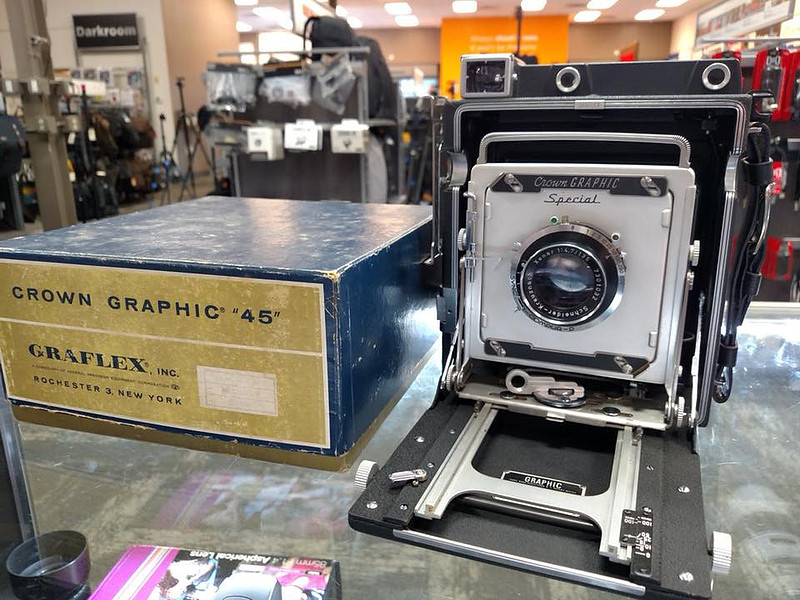
Never knowing what to do with my face Those who know me well, know that I have a ‘resting angry face’, which essentially means that I look incredibly grumpy when my expression is neutral, even if I’m not. If I’m unhappy about something, my face doesn’t really change, hence my propensity for pulling silly faces during selfies as a way of introducing something different. During the conversation with my friend, it occurred to me that something had changed in the past decade or so that resulted in the selfie becoming some form of social currency, and that in some cases we don’t seem to care greatly about how accurately they represent our likeness. This, and concept of the self-portrait, aren’t new of course. For centuries painters from all genres have, on occasion created portraits of themselves, either as a reflection of their status or a demonstration of their skill for ‘advertising’ purposes. People were much more likely to pay attention to you if they thought you could paint a good nose. Portrait paintings were popular with royalty and the aristocracy, because of the considerable expense that went into creating them. To have a portrait commissioned, you needed money, so naturally the finished product was a way of showing off your wealth to others. Another reason for its popularity was the creative licence that could be taken through the ‘collaboration’ between subject and artist. The painting didn’t need to be accurate but instead needed to represent the client as they wished to be seen. The story of how King Henry VIII accused Hans Holbein of embellishing a portrait of Anne of Cleves to make her prettier is legendary, even though unlikely to be true. In fact, the King was presented by an idealised portrait of Anne, which was an elegant, dignified portrayal of a potential English Queen, but that masked the other information known about her being dull, bad mannered and apparently lacking in personal hygiene. The portrait then, is a representation of a person how they wish to be seen combined with the intention of the artist or their commission. In the early days of photography, the idea of a technical process that captured light and shadow in a repeatable way, meant that its initial uses were primarily scientific. The two men credited with its ‘invention’, William Henry Fox Talbot and Louis Daguerre, were said to be frustrated by their inability to draw, so wanted a way of ‘capturing’ the natural world. Their processes for making photographs were seen by them to be a faithful representation of the subject, which led to the widely-accepted notion that ‘the camera doesn’t lie’. When photography started to be used for portraiture in the mid 19th Century, people believed that the picture was a factual representation of the subject. However, this was total nonsense, because although the process was technically repeatable, the subject could still present a persona and the photographer could choose the precise moment that the picture should be made; the habits of the portrait painters were alive and well in this new medium. Their complicity made it apparent that the camera actually lies all the time. The advances in camera technology (lenses, films, flash strobes etc) made it possible for the photographer to represent the subject however they chose to and, with the public’s unshakable belief of the medium being honest, got away with some proper corkers. Everything from 19th Century ‘ghost’ photography, achieved by double exposure but convincing enough to fool many intelligent people (including one Sir Arthur Conan Doyle), to the Farm Securities Administration which yielded Lange’s infamous Migrant Mother in the 1930s, caused photography’s ‘objectivity’ to be continuously challenged. That’s not to say this is bad thing, as it made it possible for photography to be seen as a creative tool. Like many photographers, I wouldn’t have bothered with the medium if it was purely aimed at science rather than being creative. Within the portraiture photography genre, the variety of combinations where the artist and subject collaborate, don’t collaborate, are aware of each other, are not aware etc., make it an ever-evolving art form. For example, In 1968 American photographer Tony Vaccaro plotted to capture an image of ‘the real’ Pablo Picasso. He already knew famous artist, so his plan was straightforward enough; spend time relaxing with him and choose the right moment. His problem was that Picasso was known to adopt conventional portrait poses whenever a camera was pointed at him, which generally frustrated photographers of the time. Vaccaro pretended to be uninterested in taking a picture as they drank champagne together at Picasso’s apartment, even pretending at times that his camera was broken. When Picasso lost interest and lowered his guard, Vaccaro shot his picture. The result was a picture of a man who wasn’t portraying the persona that everyone might recognise and was more how Vaccaro saw him. The famous image has since become a representation of Picasso that is adopted by the public, still seemingly believing in the honesty of the photograph. If we consider the original points about the selfie in this context, this idea of idealistic representation on the part of the subject and photographer makes sense. We take selfies to show something, whether it’s ourselves, the people we are with or where we are at the time. They often celebrate moment our lives, a night out or a holiday, and if we don’t like the result we can simply retake or delete them. We are both photographer and subject, meaning we have complete control over how the image comes out, self-editing before we show them to other people. It occurred to me that it doesn’t explain why someone would send my friend an image without caring about how they looked, though. Perhaps the answer to that question could have something to do with how photography has been democratised in recent years. Nearly everyone in the developed world has a smartphone with a camera and nearly everyone takes photographs with it. The proliferation of images on the many social media platforms and their continual refreshing, has led to them having a very short shelf life. For example, when Snapchat was launched in 2011 it was inconceivable that we would share pictures that were only available for a short time before being automatically deleted. However, now we have the social media ‘story’ which exploits this temporary existence with the purpose of enticing people to ‘stay tuned’ for more content arriving soon. Perhaps then, the selfie that isn’t perfect is just one in a long line that may or may not eventually be the likeness we crave; the less-than-perfect versions being discarded eventually because, well, they just don’t matter. If they don’t matter, perhaps our standards have dropped too because of that throw-away mentality. Whatever the reason, I now wonder what the great classical portrait painters would have made of this progression. Perhaps the right collection of Anne selfies would have changed the course of history and let Holbein off the hook. What I do know is that for now, I think I’ll stay behind the camera. A Matter of Pressure and TimeThey say that inspiration comes from the most unusual of places, and how this post came about is no different. I had just returned from the supermarket with a load of shopping and was in the process of unpacking the chilled items and putting them into the fridge. Our fridge is one of those massive American-style side-by-side models that is completely over the top and way too big for two people’s groceries. It’s a brilliant machine, but while it has some great qualities, there is a function that always bothers me even though I appreciate it being there. When either of doors is open for a while, an alarm sounds warning me to close them immediately. It’s not particularly loud, nor is it a particularly annoying sound, but as I was unpacking my shopping, and it started to go off, I wondered why it bothered me so much. The answer turned out to be a simple matter of time, or rather it being about to run out. While I do not suffer from OCD, which I understand to be a very debilitating condition, I do find these micro-deadlines rather stressful. The reality is that the interior of the fridge merely drops a couple of degrees while the door is open, but somehow with the current cost of energy and the desire not to waste it for the sake of the environment, that little alarm signals something more than “your food is gonna get warm”. It suggests that we I need to be more organised, pack my groceries with a view to better unloading, and not to waste time leaving the door open. We all have these ‘helpful’ warnings which are produced by modern technology, whose purpose is to make our lives easier by preventing us from forgetting something that might be important. However, what they actually do is present us with a logical condition; if we don’t act, there will be consequences. Those, however minor, might mean that we cannot achieve something that we want in the short term and potentially prevent us from revisiting it in the future. The effect is to frighten us into action, rather than act as a simple reminder. A more significant one than the fridge alarm that I’ve received from time to time, comes from the university that I’m studying with. The course is hugely flexible within each module, but each one cannot take more than 12 months to complete. As it’s a creative degree, most of us take advantage of the time available to learn more, which is how I explain the length of the course to people who say “couldn’t you just knock it out in 3 years?” I feel like the length of the study is making me a more knowledgeable artist than I would be if I did a full-time course at a traditional university. The difficulty is that with each increasingly challenging project, it takes more time to come up with an idea, explore how to shoot it and produce a body of work at the end. Therein lies the problem, which the university is quick to be helpful about. They continually monitor the elapsed time between coursework submissions, and if there is a longer period than expected, they send a reminder. It takes the form of an email asking if everything is ok, because they are naturally worried about missing the deadline for the unit…etc…etc. This has the effect of piling on the pressure, which is a good thing if you’re an engineer or accountant, but not if you’re trying to be a creative. Worse still, the email comes from an automated mailbox, so there isn’t even anyone on the line to reassure or vent at. Over the years, I’ve got used to them and am also acutely aware that getting stressed about it, makes me less creative and consumes more time. I’ve mentioned before that I cannot force the idea into fruition, and this has been evident in some of the work I’ve produced in the past. What it means these days is that every waking moment is consumed with some thought about what I’m working on, running in the background like a Windows Update. Sometimes ideas flow freely as my wife pointed out recently. We were out with friends and Jayne told of how she’d walk into the room and say “hello”, only to be greeted in reply with a torrent of ideas and thoughts about the current assignment. “I only said hello”, she added. On other occasions I’d have to console myself by knowing that even if I wasn’t shooting, researching or writing, at least I was using the available time to think, which goes some way to easing the pressure. Why am I telling you all this? Well, because even my mitigation strategy isn’t effective all the time; if we constantly thought about everything we were trying to do, it would drive us crazy. Instead, I wanted to highlight the importance of disconnecting from the modern world and its helpful reminders. One of the best ways I’ve found as a photographer is to go out with a pinhole, or better still a large format camera. I have 2 cameras in my collection that shoot 4x5 inch sheet film, one recent model made by Intrepid Camera and the other being an early 1960s Graflex Crown Graphic. The Graflex is a camera that everyone will recognise if they watch a movie set during that period, as they were the ones used by the press corps, stereotypically wearing trench coats and fedora hats. The camera is also well known in the world of Star Wars as their sidecar flashgun battery tubes were used as the prop for the original lightsabers in the first film in 1977. Fans of the films tend to buy the flashguns in order to make their own lightsaber handles, which means they are becoming increasingly rare.
My 1962 Graflex Crown Graphic 4x5 camera with its original box just before it was shipped from the US The escapism provided by shooting the Graflex is twofold. Firstly, the camera works like the old-fashioned box cameras of the early days of photography, with the image being composed and focussed on a ground glass screen and being upside down like with a camera obscura. This requires concentration and some imagination to make sure that the elements being photographed actually fit into the frame. Secondly, the camera has no electronics which means that metering with an external lightmeter is needed to determine exposure. This isn’t uncommon with old cameras, but the high cost of each individual sheet of film (around £5 for a good black and white stock) means that determining exposure is a job that requires great care. With all cameras, there is a single value of exposure, which is determined by a meter reading and the setting of aperture, shutter speed and ISO (sensitivity) accordingly. Whatever value the photographer chooses from metering, becomes a single setting on the camera and it will yield different results depending on where that reading was taken from and, in the case of film, the characteristics of the emulsion. Most film photographers meter using Adams & Archer’s Zone System from 1940 if they want to weigh up the lighting conditions and select an average exposure value for the scene. This involves looking for the middle tone of the scene, taking a reading and then determining the dynamic range by taking further readings of highlight and shadow. Once the range the light is known, the photographer can choose how they want the picture to look and set exposure accordingly. This all takes a fair amount of time, which when coupled with the operation of the camera, isn’t exactly a ‘point and shoot’ situation. This is what I love about it. I’ve been out with the Graflex and taken 4 sheets of film, all loaded and ready to go, and taken over 2 ½ hours to shoot them. I’m not sure exactly what happens, but the concentration and lack of digital distractions, social media and other crap, means that the time just whizzes by. That slow process is in itself relaxing and at the same time exciting, as the photographer is hopeful of getting everything right in the camera resulting in the perfect negative (we are a delusional bunch)
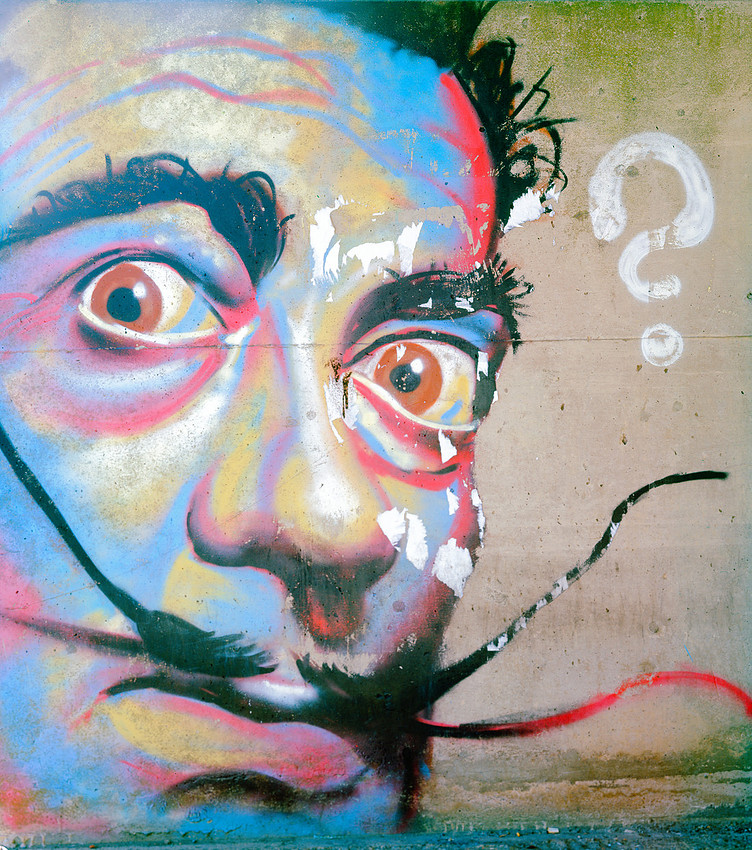
Salvador Dali graffiti mural, shot on 4x5 slide film. The resulting slide was so detailed that the client enlarged to a huge poster that was many feet high Now I’m not suggesting that everyone takes up shooting large format film cameras, but I am saying that self-isolating from the pace of the technological world, with its micro deadlines and constant reminders, is a healthy thing. I’ve found it to help calm my mind enough to overcome any creative roadblocks I might be having, which also means that I can meet the deadlines that are really important. It’s definitely something to think about. I’ll sign off there as my laptop is telling me I only have 10% battery life left before ‘computer armageddon’. What fun.
The Importance of Constructive Feedback for CreativesIt’s that time of year again, where I have a large deliverable project for my course, also known as ‘the longest degree course in the world’. As I progress through it, the creative assignments get progressively harder and require me to demonstrate the more and more learning from the coursework. This makes perfect sense of course, as by the end of the degree I should be expected to understand my own craft and produce work that has meaning the context of photographic art history. I’ve written about my imposter syndrome and highly developed skills in procrastination before, and nothing brings these to the fore more than producing a body of work in a specific, relatively short timeframe. It goes something like this: I find that the more I try to force an idea to fruition, the harder it becomes and the more I start to question whether this is ‘really me’ (imposter). I then try to relax and take my time, which means that progress slows to a crawl (procrastination). Although I have some techniques that I can deploy to control these negative responses to the brief, I find the best way of combating them is through feedback.
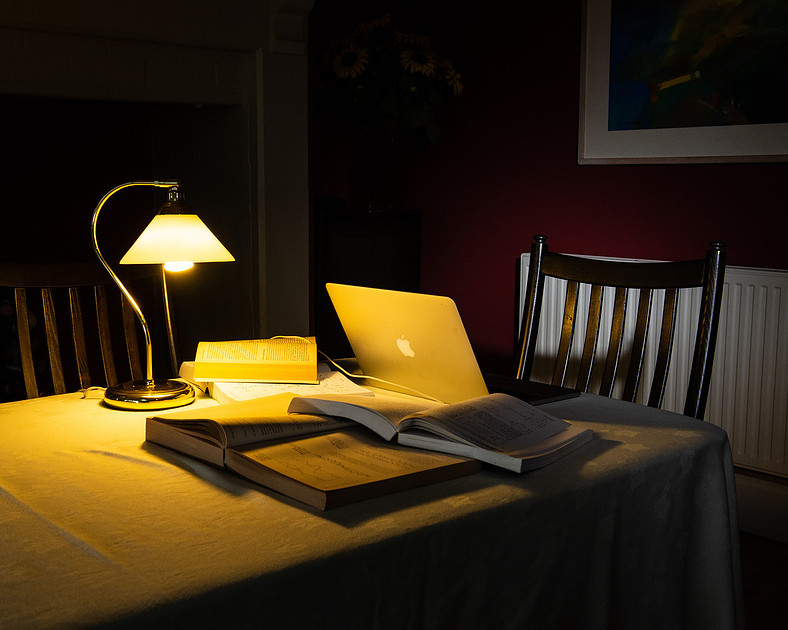
This image, showing the setup for a series last year, received feedback about the use of its two types of light. It helped shaped the finished picture Feedback is something we experience every day in some form or another, whether about something fairly trivial like the choice of clothes on a night out or something more serious like our performance in our job. The former is something we illicit based on trust; that which we build in relationships with our family and close friends. When we receive feedback in this way, it’s often both solicited and unsolicited, with the common objective that the person cares about us and is trying to help. It doesn’t make it any easier to take the feedback of course; how many times has a friend warned us off a bad relationship or criticised our behaviour on some occasion, and we haven’t appreciated it? If the relationship is a strong one, the feedback is somehow ‘safe’ and most of the time, moved on from. However, the second form of feedback which exists where the relationship might be built more on respect than love, is a different thing entirely. This is the type that we use in our professional lives, is more powerful and sometimes more difficult to accept. That’s not to say that it’s more important to us, but it is more likely to be solicited and more constructive. As an example, a critique of a piece of creative work such as a photograph or painting, will be balanced when another artist is asked for it, as opposed to a family member whose reaction might be ‘I like/don’t like’ that. The latter might not feel comfortable in saying anything at all, to avoid hurting our feelings. I love it when people 'like' my work, but that’s really more of an ego massage than a tool to help me improve. When it comes to avoiding my old friends imposter syndrome and procrastination, I’ve tended to ask other artists for their feedback as it helps me to overcome creative blocks and helps me move the project forward. The reason this works is that when you ask someone who is familiar with, or skilled in your area of creative interest, you had better be prepared for what comes back because it will challenge you to think about your idea or approach, whether you like it or not. In my previous life, I used to tell my team, and people that I mentored, that you could accept feedback or ignore it, but you cannot reject it. What I mean is, that feedback becomes a tangible thing. Our response might be to be happy or dejected, and our subsequent actions could be to embrace or ignore, but we cannot reject something we asked for because, well, we asked for it and therefore made it ‘a thing’. The person offering it needs to be objective though, in order to make the feedback useful. If they were to say something like “this doesn’t work, it’s just shit”, there is nothing the receiver can really do with it apart from be disappointed or angry. A mix of positive notes (understanding the idea, what you’re trying to achieve etc) and less positive ones (this element doesn’t fit, perhaps an alternative would etc) is what is needed. The definition of criticism is actual a structured critique of a work or subject, and includes both of these elements. It’s not, as commonly misinterpreted, a wholly negative thing as in “he or she can’t take criticism”, meaning that they are stubborn or closed off in some way. In the case of this project I am working on now, I hit what felt like a major roadblock fairly early on. My subject is the modern phenomenon of online abuse or ‘trolling', and how the word has more in common with its origins in Norse mythology than we might expect. I’m representing the subject by using portraiture (mainly self), and tableaux or mis-en-scene, which are constructed images that are directed rather than naturally occurring. I’ve had feedback before about being restrained or ‘holding back’ creatively, so this time I’m letting my imagination run wild. Sounds like a good idea, but actually causes me to worry more about whether I’m on the right track, letting my old foes back into my frontal lobe. This is where I’ve turned to the rest of my cohort, with whom I meet up fortnightly on Zoom. Feedback from these folks is based on their understanding of the course and how we arrived at this point, some having finished the unit already, but also their understanding of how I approach storytelling in photographs. By asking them, I have to steel myself to receive their feedback, but I know that they are essentially both trying to support my process and help make the series better. So far, they have been overwhelmingly positive, but all the time challenging my to think about what I want the series to say and how it will come together when I’ve finished shooting. The discussion, which takes place in amongst reviews of everyone else’s work, inspires me to alter the direction of my work, with some great ideas that I hadn’t thought about previously to consider. You may be wondering what the big deal is with the idea of asking for and receiving feedback, I mean it happens all the time and is surely an integral part of study, right? Well, here’s the point. My course is distance learning, with all of the reference material for each unit provided upfront. We have tutors, they provide feedback on our specific deliverables for marking, but beyond that contact is very limited. The students had to elect to form their own cohort group, run regular feedback meetings and structure them so that we help each other. The university is delighted that we are doing this, but they had no part in its creation. The key message here is that if you are struggling with a creative idea, nobody is just going to solve if for you. It's best to find people that you think may be able to offer constructive feedback rather than platitudes, support your ideas even if they don’t immediately understand them, and make sure you engage with what comes from them. Criticism in the true meaning of the word, is a powerful and positive thing that we shouldn’t be afraid of. I’m currently not sure whether the outcome of this project will be exactly where I thought it would be when I started it, but with the help of my peers, it will be much better than it would be with a single perspective on it. In doing so, I keep imposter syndrome and procrastination at bay when it comes to my studies. It just leaves me with the internal debate on what to have for dinner and whether I’m good enough a cook to make it. One day at a time, Rich. One day at a time.
|