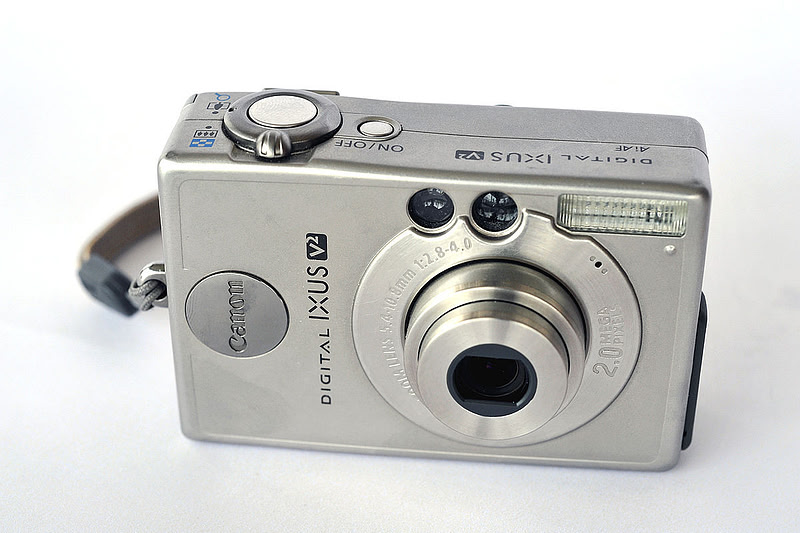
“Just write every day of your life. Read intensely. Then see what happens..."Ray Bradbury on writing Ok, so there won't be a post everyday, but this is where I'll be sharing short stories about my adventures as an artist and student. Check back here for the latest updates by clicking the subscribe button below. Old's Cool, ApparentlyI was chatting with a friend of mine recently about a classic track from the 1990s that I was looking for on vinyl. He owns an independent record shop in my hometown, so was the right guy to be talking to about it. I wanted to know if it had originally been released on vinyl when it charted in 1995, and the answer was yes, but that it was a fairly rare item. The reason? Well, the early 90s were dominated by the newly established Compact Disc format, which had signalled a decline in vinyl sales to the general public. Artists still released their work on the format for DJs etc., but the majority of us now listened to CDs. I vividly remember being very excited at the end of the 80s, when I purchased my first player, providing the ability to skip, shuffle and repeat my favourite tracks, without the hazardous manoeuvre that was ‘cueing’. CDs were much more robust, took up less space etc etc, but like all technology, it was eventually overtaken in popularity by the download. The conclusion to our discussion was that the single I was asking about hadn’t been re-released, as many classic 12 inch vinyls had, so if I wanted to listen to it I’d have to buy the album, which had been. The same afternoon, I was reading an article about the rise in popularity of early digital point-and-shoot cameras. Wait a minute, what?. While I’d got used to the idea of the re-emergence of audio cassettes, which stuck me as a little weird, and am anticipating the rediscovery of the mini-disc (which I still use in my studio), I hadn’t seen this coming at all. With my large collection of vintage film cameras, I consider myself to be a fairly ‘retro’ guy, but really? The cameras that were being referred to were the photographic equivalent of the CD. They introduced inexpensive photography to the masses, with no more pesky developing of film, and the advantage that you could store and organise the pictures on your computer. I bought my first digital point-and-shoot camera just before I got married in 2001. It was a Canon Digital IXUS V2, which as a collector, I now bitterly regret getting rid of. It was a beautiful design (see the below image), and boasted a whopping 2.1MP. It took pretty good images too, which for me was a bonus because I wasn’t into post processing at all at that point, and therefore wanted the finished article straight out of the camera. Eventually, I replaced it with another model, the IXUS 750, which increased the resolution to 7.1MP. They were both great compact cameras 20 years ago, but why would anyone want to use them now?
The beautiful Canon IXUS V2 (Image from WikiCommons) I guess the same question could be levelled at the audio world. Unless you’re using really decent equipment, playing music on an analogue format is a pretty poor experience. Audiophiles will tell you that there is more depth, warmth etc, and while that may be true, you need to spend some serious money to be able to detect those qualities, even before considering how good your hearing is. I love listening to vinyl because of the tactile nature of it, because it’s fragile and it draws me in to listening to a complete record; something that contrasts with my much younger self. All other things are secondary to me, and I think that is what is going on here. The younger generation is used to being surrounded by seriously good technology, whether it’s their noise cancelling headphones or the powerhouse camera in their mobile phones. These gadgets insulate them from having to be involved in any way, which is fine when we consider how chaotic their lives are. Taking time to engage with something on a technical or interactive level, is a luxury and perhaps the origin of these continually evolving trends as we older folk see them. If we consider these humble cameras in 2023, they sit between film and modern digital alternatives, both of which can be very expensive. Film and film camera prices have rocketed since I took it up again several years ago, and modern digital cameras are so pricey that they are often out of reach of young people. It makes sense to play with a camera that requires some effort to get the best from it, everything from settings to getting the right cables to learning post processing, rather than embrace something more costly. While I get the idea, are they actually any good? I’m one of the few people that don’t consider technically crappy photographs as ‘artistic’, which is why I have a pathological dislike for cameras like the Holga 120 or Diana, neither of which will ever likely become part of my collection. That’s not to be confused with cameras where a particular look is associated with the way they work, of course. I love Polaroid and pinhole photography for that very reason; the process is part of the result. Light-leaks, manufacturing defects and bad optics, though, are not for me. Fortunately, I still have my little IXUS750, so I thought I’d see for myself how it stacks up some 18 years after I bought it.
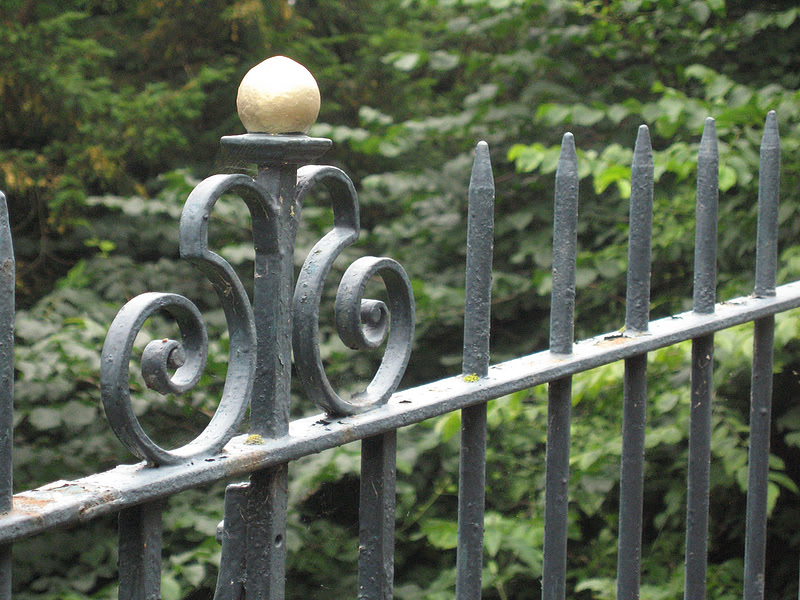
Macro mode, f/2,8, 1/160th, ISO400
Normal Mode, f/13, 1/200th, ISO400
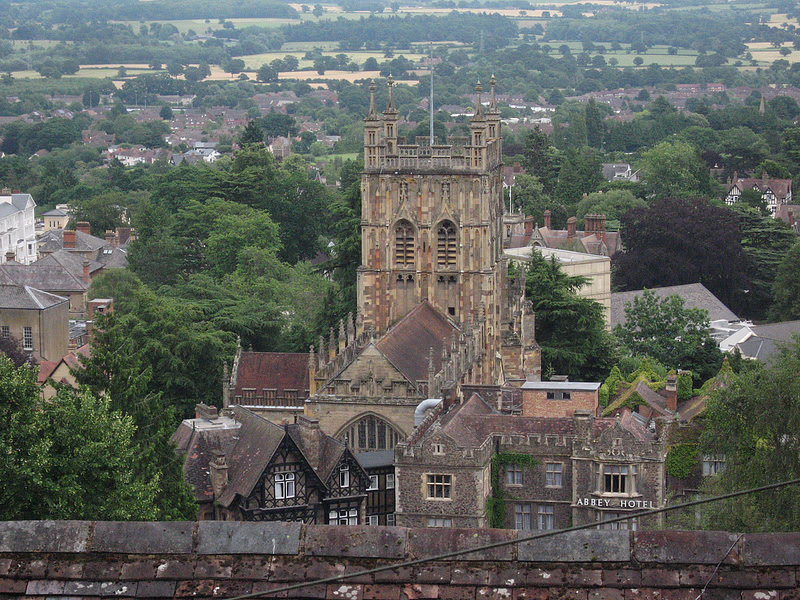
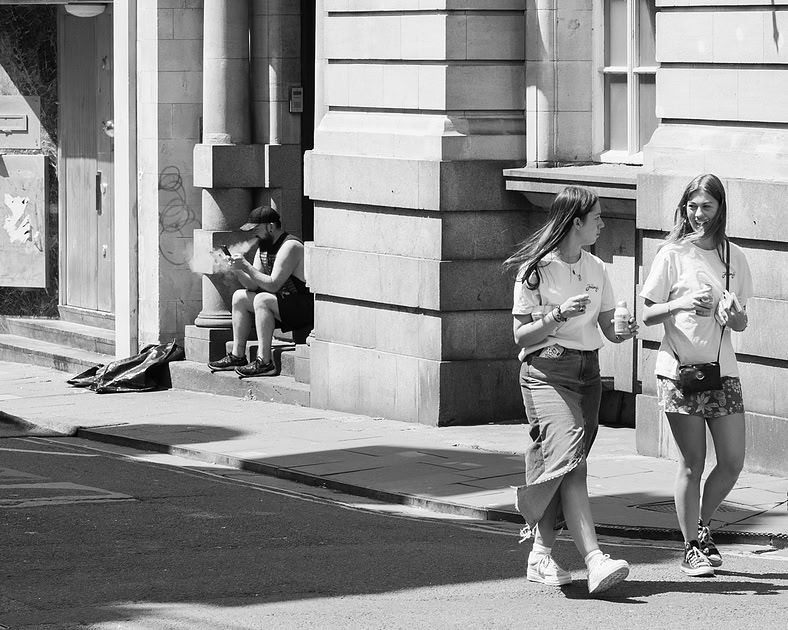
Portrait Mode, f/4.9, 1/400th, ISO400 The verdict? Surprisingly not bad. These shots are unprocessed jpegs straight from the camera. Its 7.1MP sensor yields an image size of 3072 x 2304 pixels, which is certainly big enough to print at A4 without any major degradation. The lens performance isn’t stellar, but nobody would really expect that. The sensor renders the colours well enough, although contrast and noise performance, particularly at its highest sensitivity of ISO40, is lacking. Again, this to be expected from a sensor of that period in a point-and-shoot. Put it this way, I’ve seen worse shots from an equivalent film camera despite those being so-called ‘full frame’. I’ve also seen plenty of mobile phone shots from the past decade that would be embarrassed by the little Canon. What surprised me when I took this camera out, was how enjoyable it was to use. The settings that can be changed are basic, so forget working the exposure triangle with it. What you do get are special modes for macro, presets for portraits, landscapes etc., as you would with a zone-focused camera. There’s White Balance adjustment, exposure compensation and a self-timer, all of which do the job. There is enough about it to be tactile and experimental, something that I personally cannot say about any phone. Best of all, the IXUS750 can be had for under 50 quid, which I actually think is a bit of a bargain. Perhaps then, the renewed interest in this old tech does actually make sense for those looking to escape the constant battle for megapixels, 8K video and novel ways to upload to Instagram. It occurred to me that my generation is fortunate enough to have lived through some landmark shifts in technology, encapsulated by the digital revolution in personal computing, imaging and music. We are also fortunate, in my opinion, to witness the acknowledgement of those past innovations for what they were, by a generation not old enough to remember the first time around. Call it nostalgia, or call it curiosity, I think it’s pretty cool. I also love the idea of appreciate and ‘re-use’ over ‘replace’, something that is more environmentally conscientious than vinyl or film photography appears to be in the 21st Century. As far as I’m concerned, they should keep it going. If they could just unearth the mini-disc, that would make me a very happy man. That Elusive DevilAs I write this post, I am sitting in a deckchair, next to my campervan. We’re away for the weekend, so that I can continue my training for the 12km swim that I am doing next month. The campsite where we are staying is blissfully quiet, so my only real companions this morning are the birds, singing in the trees overhead. My wife has gone for a run, most of the other campers don’t appear to have surfaced yet, so I feel like I have the place to myself. When these moments present themselves, which isn’t all that often, I tend to go into a reflective mood. This morning is no different. Today’s subject? Preparedness. This weekend actually started on Thursday, when my wife had to go to her office in Bristol. I love Bristol for many reasons, but principally for its chilled-out vibe and the opportunities it presents for people watching. As a photographer, people watching is usually a segue into the genre of Street Photography, which has been popular since the 1930s. Perhaps the most famous street photographer of them all was Henri Cartier-Bresson, who’s concept of The Decisive Moment, revolutionised the whole act of composing and shooting some action unfolding before us. In layman’s terms, the decisive moment is an instant in time when something is captured, where nothing in the frame has been nor will be repeated either side of it. Everything in the composition has a role within the picture, with nothing superfluous to describing the moment being included. The viewer is presented with all the visual references needed to make sense of what the picture is, and derive some meaning from it. There are many famous examples of the decisive moment throughout photography and it’s a notion that is regularly reassessed and challenged by artists to this day. That’s not what I was reflecting on, however. My wife and I had come up with a plan, where we would drive to her office on Thursday, I would spend the day in Bristol, and after she’d finished her work we would head straight to the campsite near Cirencester, which is closer than it would be to return home first. I’d decided that this was an opportunity to experiment with some street photography, by using a slightly longer focal length lens than is usual. The genre usually involves a small 35mm camera with a 28, 35 or 50mm lens fitted, in order to capture the action and whatever visual context is elsewhere in the scene, that will encourage the viewer to look at the whole frame. 28 and 35mm lenses are considered ‘wide-angle’ in terms of field of view, so are perfect for capturing those details, with the only drawback being that you have to get close to the subjects. Street photographers who use these focal lengths tend to be pretty confident people, because alerting the subject(s) to them being photographed not only potentially alters ‘the moment’, but their reaction could become aggressive it they took exception to it. For example, Bruce Gilden used to literally push his camera and flash gun close to the faces of his subjects, while shooting on the streets of New York. Most people either flinched or forced themselves to ignore what was happening, but some reacted angrily. Using a short focal length introduces some risks then, but the payoff is that wide angles offer interesting perspectives when shot closeup, while preserving more of the background context. 50mm is what’s known as a ‘normal’ lens for 35mm cameras as it closely represents what the human eye sees in its central field of view. Cartier-Bresson used 50mm on a variety of Leica cameras, stating that he saw it as an extension of his eyeball. Although these are traditions that date back 90 years or so, there’s nothing to stop someone using a longer focal length for street photography, and that is what I wanted to do. There were a few good reasons, of course, the first being that when shooting digitally, my options are not all that great for this genre of photography. My DSLRs are really noisy, with a mirror flapping up and down every time a picture is taken. The best way of drawing unwanted attention to what you’re doing, is to use a camera that screams “look at me!”. I have many film cameras that would do the job, but I didn’t really want to shoot film on this occasion, because I still have a backlog of developing get through before I return to that medium. The only digital camera without a noisy mirror was my compact Sony which, although quiet, has no viewfinder and needs to be composed using the rear screen. Again, if you don’t want to draw attention to yourself, best not use a camera where you’re waving your arms in the air like some demented chimpanzee. Another more technical reason was the separation that can be achieved when using a longer focal length at a wider aperture. Separation of the subject from background, where the latter details gradually blur out of focus, doesn’t fit the traditions of street photography or indeed Bresson’s decisive moment. It does help draw the viewer to into the key subject in the frame though. Again, traditional approaches didn’t mean that I couldn’t experiment with it a little. I chose an 85mm f/1.4 lens to go shooting with, which traditionally used for portraiture. The advantage of this lens, apart from its speed, was that I could compose from a comfortable distance with a setup that, from the subject’s perspective, looks like I’m shooting something broader, because it doesn’t look telephoto. My plan was simple enough: walk around the city observing anything around 20m or so away from me, shooting with an aperture between f/4 and f/8 to get that separation of subject from background, but leaving enough of the latter for the image to make sense. The day was great fun, as the sun was shining, and everyone in the city appeared to be having a good time.
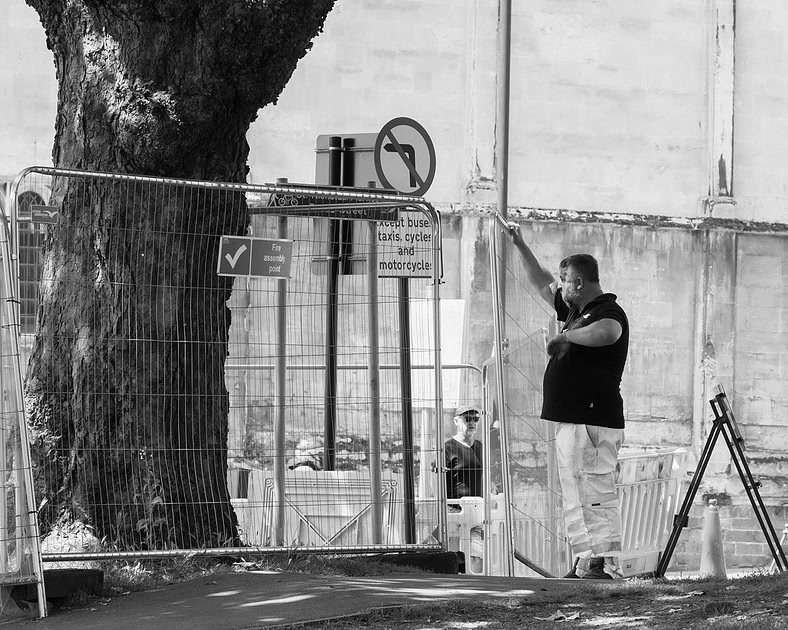
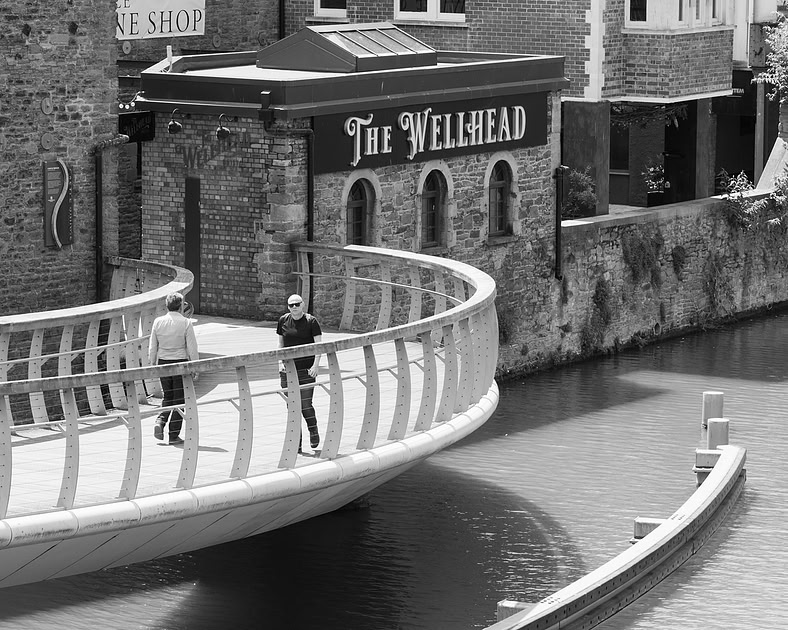
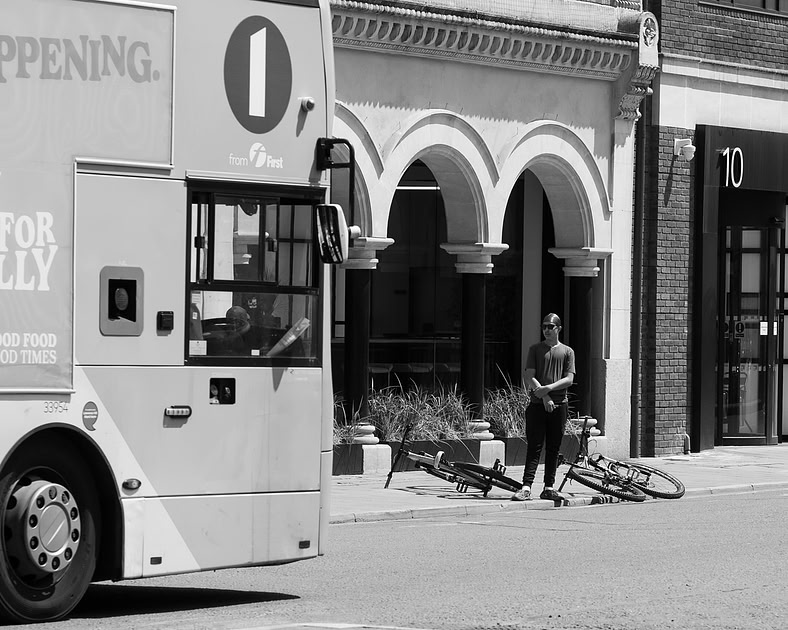
All photographs: Nikon D300, 85mm f/1.4, ISO250, Yellow Filter However, when I returned to the van to edit the pictures, that’s when I realised that my seemingly careful planning of the shoot was somewhat lacking. My old DSLR uses a Compact Flash memory card, which is generally used less and less in modern digital cameras, most manufacturers now choosing to favour smaller SD cards instead. I have a card reader, but which I’d forgotten to bring with me. In the event of this occurring (it does more frequently than I’d like), I can download the images from the camera directly, using a mini-USB cable and adapter for my MacBook, which has only USB-C compatible ports. Of course, I had brought every conceivable cable with me in my camera bag, for connecting lots of other devices, except for that type. Now, in the grand scheme of things, the ability to download and edit pictures immediately after shooting isn’t really all that important. It was frustrating though, and it led me to reflect on how I tend to approach things these days and the conclusion was ‘increasingly lazy when considering the finer details’. I’ll have an idea for a project, plan it to a point and then get shooting. While you can’t plan creativity to the n’th degree, the practical details appear to get lost in my haste to get to the part that I most enjoy about photography. What I find interesting is that I didn’t used to be this poorly organised in my previous career, where the smallest details needed to be captured and understood. You couldn’t design a solution to a problem, for example, without carefully having planned how to validate that it works, both predictably and reliably. You cannot just rush to what you believe the end goal is in an engineering environment. Of course, coincident to my reflections here was the terrible news of the loss of five people aboard the Titan deep sea submersible. With the realisation that the worst scenario has now happened, the questions have immediately started circulating about the machine, the robustness of its design and its suitability for the use in one of the harshest environments on the planet. It is wrong to speculate about such things while investigations are ongoing, and I won’t do that here. However, as human beings we cannot help ourselves but ask ‘what if’ and ‘if only’ when something in our plans, whether trivial or serious, goes wrong. What I’ve realised is that I sometimes focus too much on ‘letting go’, a criticism levelled at me by a few of my university tutors previously, in order to be creative and make photographs, leaving the other more mundane details to take care of themselves. Perhaps I should be planning the practical side more to begin with, and give myself the space to create afterwards, rather than think of it as a single process. As Burns said “The best laid schemes o' mice an' men, gang aft a-gley”, which make sense. However, Nietzsche put what I see to be the counter suggestion, “The Devil is in the Detail” and I think he may have been on to something there. Let Me Take Care of That for You. Considering Artificial Intelligence in Photography“As far as I am concerned, this is not photography”, some opinionated guy said to his bemused friends. A lively discussion followed, before everyone decided that the meeting had overrun, and it was time to stop. This happened last week on the regular call that I have with my fellow students. The guy? That would be me. We were discussing a topic that, unless you’ve been living in the wilderness for the past year, has been a regular news item on almost every news outlet; that of Artificial Intelligence, or AI. We got onto this slightly controversial chat because one of our group had uploaded an AI ‘photograph’ for our image challenge, just for the fun of it. The conversation that followed was fascinating to me because my strong, and not particularly humble, opinion was met with some great arguments in support of the technology. Our group is made up of very talent photographers, each with different experiences, genres of interest and styles of learning, which results in us all learning from each other. After this call, I was left reflecting on what AI really means for the creative arts and whether I will ever likely use it. Artificial Intelligence, outside television and the blockbuster movie space, has been around for decades. The idea of using machines to learn and think was postulated by Alan Turing, widely recognised as the father of modern computing, in his 1950 paper Computing Machinery and Intelligence, a lengthy debate about whether intelligence can be truly ascribed to a machine and how it might be tested. Turing was limited by the technology of his time which though, unknown to most civilians, included computing machines that he developed during his code-breaking work in the Second World War. With the evolution of computers, came the inevitable continuation of AI research, and eventually it started to become part of our everyday lives at some level or another. We have the obvious examples, such as satellite systems in our cars, that can plan optimal routes and automatically adapt them with changing traffic conditions, smart speakers that can recognise voice commands, shuffle music that we might like etc., but we also have the more subtle uses too. Social media, for example, uses sophisticated learning algorithms to present us with recommendations and tailored advertising based on what it they see as our interests. We also have plugins for commonly used software like, well, Adobe Photoshop. Being a regular user of its sister program for many years, Lightroom, I’ve seen the tools become more sophisticated, but its only recently that they added AI in the shape of noise reduction to the suite. This kind of software has existed for a few years in other produces like Topaz Denoise AI, but it was only this change in my own workspace where I noticed the considerable difference in performance to how I was working previously. Prior to the current version, reducing noise in a photograph was a process of trial and error, selecting the pixel size, deciding how much detail to preserve, masking etc. Without using batch editing, it could be a fairly time-consuming process. The new version presents the simple option of ‘how much do you want?’ as a percentage and takes care of everything else. I used it for the first time a couple of weeks ago and, despite causing my elderly Macbook Pro some pain, it yielded impressive results. So, AI for supportive tools that take more and more workload off is brilliant and harmless, right?. Well, maybe not. In his paper, Turing said of the objections to machine intelligence “The consequences of machines thinking would be too dreadful. Let us hope and believe that they cannot do so.", referring to the idea that ‘thinking’ machines could eventually lead to our subjugation or, worse still, our destruction. Such fears have been creative fodder for the movie industry, with such films as Terminator, or the scarily realistic Ex Machina. The news items that are around us daily, talk of people getting ChatGPT to write something that is passed off as original, or as in the context of my student call, creating ultra-realistic images that could be mistaken for actual photographs. The image that was submitted in our photo challenge was created by an online AI research platform called MidJourney, and in essence it works by using a series of text descriptions, similar to metadata, to create an image. The software can also analyse an existing image to determine a set of text descriptors, and this is what my friend did to respond to the challenge’s brief. He got MidJourney to analyse our ‘theme image’ and then used its own description as the information for it to create a new image. When I was preparing to write this blog, I asked him to do the same with one of my photographs to see how close to the original it might be and, as I hope you agree, the results were remarkable.
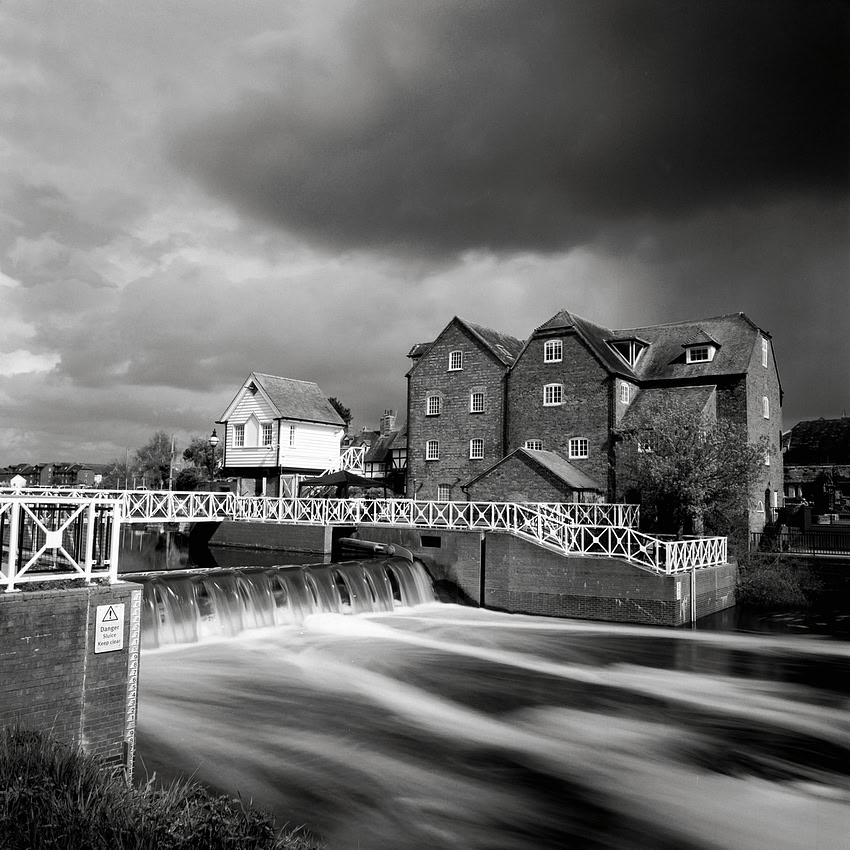
Abbey Mill, Tewkesbury, by Richard Fletcher This photograph was shot with on film using a square format medium format camera. Apart from dust removal and small adjustments to create the final photograph, it’s pretty much as shot.
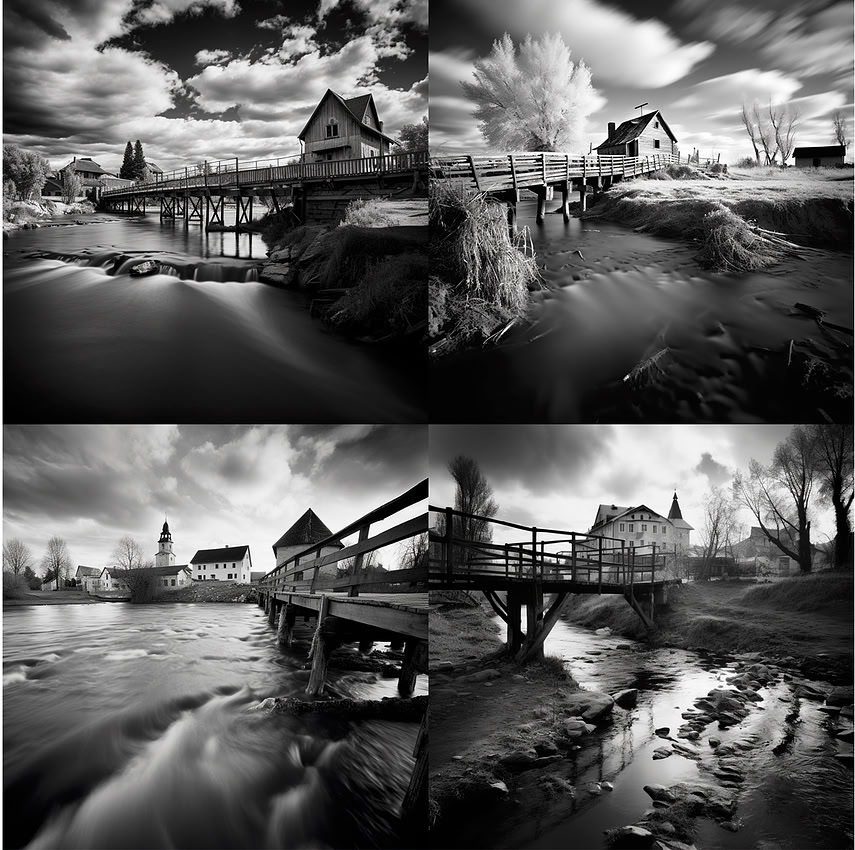
MidJourney created a number of versions for me to choose from and I’ve included the ones that best represents the original. We see a building on a bridge, over a fast moving river, set in dramatic stormy conditions, much like mine. The key elements work, such as the long exposure of the water, the light is coming from a consistent direction, the look and feel of contrasty black and white photography, and the aspect ratio. I think it’s a pretty good effort with relatively little actual data. Did I have an epiphany when I saw these, to the extent that I re-evaluated my opening comment? Well, not really. I certainly do not see this as ‘photography’ because the term inherently means ‘drawing with light’. I don’t see photography in the traditional terms of being pure, truthful or incorruptible, because that’s all frankly nonsense. Artists have been using photography to subvert stories or perspectives on the world since its conception. We’ve been able to modify images to create rhetoric and alter narratives with ease as digital camera and editing technology has advance. At its heart, though, it is a medium that represents what a real object or situation, even if the artist conceptually plays with how that representation might be interpreted by the viewer. What I acknowledge after this exercise, and with some further prompting from my fellow friends, is that AI’s birth as a creative tool is very similar to that of photography, which suffered derision and suspicion from the painters of the mid-19th Century. It evolved into a creative art in its own right because an artist used a tool to be creative. All that has changed in the case of AI is the ability to create in a non-visual way. The output is digital art, which is still art if it speaks to people about something related to the human condition. If the spark of creativity comes from a different source and the computer does the leg work, who really cares? After reading an article about how the use of text influences the context of a photograph, something the viewer is unaware of when looking at an AI image, I got to thinking about how this technology might work when in the hands of a true wordsmith. If, for example, a poet were to write the text descriptors, what would the resulting image represent? Would the AI be able to articulate, in some form, the poet’s ideas visually? If a brilliant writer like the late, great Terry Pratchett had used AI, would we have a different sense of wonder when thinking about his fantasy realms? Where would this ‘intermediate’ interpretation leave the ideas that Barthes’ postulated in The Death of the Author, where the burden of interpretation shifts to the reader (or viewer in this case)? Sometimes, as in the case of William Fox Talbot, experimental technology unwittingly takes our skills in other areas to whole new levels. Fox Talbot was a frustrated sketch artist, who used a camera obscura to help guide his pencil, before wanting to find a way to permanently freeze the image. His technical mind created one of the inventions acknowledged as the beginning of photography, the silver and salt process. Could a similarly inventive person take AI and digital art into a whole new direction by trying to overcome a creative problem? I think so, which is why my perspective has shifted from where I belligerently started. Yes, there are valid concerns about where AI images could find their way into a chain of evidence or derail a criminal prosecution. It will undoubtedly get the ‘Fake News’ brigade excited too, who are keen to present a ‘truth’ that could do with some much-needed credibility. Then again, if we need technology to protect core values like our courts, schools, media, etc, that will need to be developed alongside. The media portrayal of the evil genius waiting to take over the world has been with us throughout the work on the human genome, the development of fertility treatment and genetic engineering of vaccines for so long that we are naturally afraid of anything new and complicated. For now, I think AI is actually a potentially powerful tool, as long as we see it for what it is and what it is not. Also, the engineer in me can’t help but want to play with it myself, now that I’ve seen that potential. As a photographer though, I’m not interested in it forming part of my work, choosing instead to happily shoot with my ever-growing collection of film cameras. The former may influence the latter in the end, though. If that happens, I guess I’m going to Photography Hell. Could someone put the kettle on when I get there? Link to the article about AI and Text: https://www.lensculture.com/articles/gregory-eddi-jones-49-23-considering-technology-ai-and-photography My thanks to Mark Racle for driving MidJourney and to my fellow students for widening my gaze.
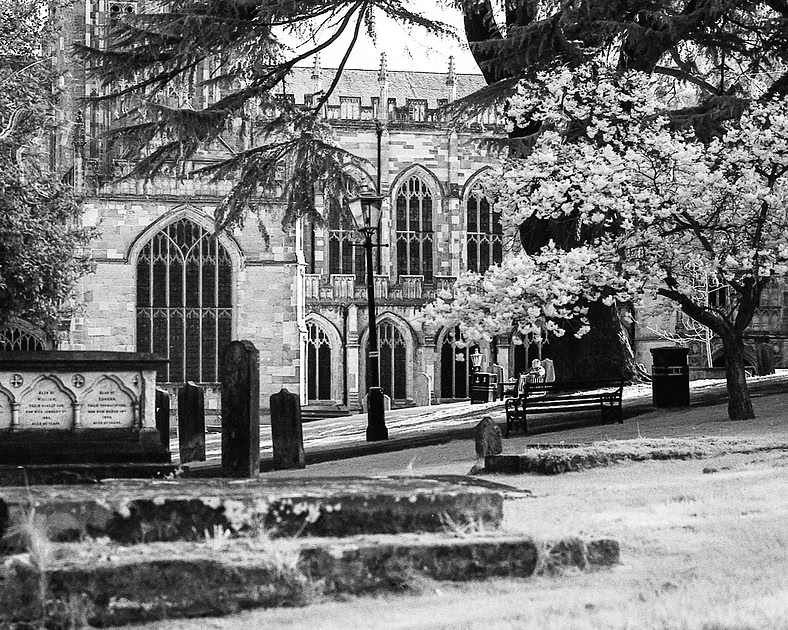
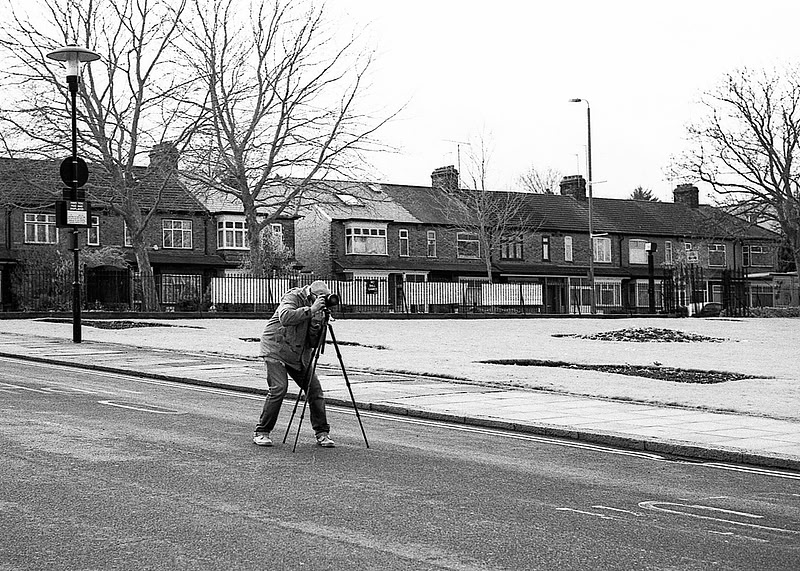
Never Gonna Give You UpThis week I find myself contemplating a photography decision I made a couple of years back. If anyone thought this post was a Rick Roll, a link to Mr Astley’s 1980s smash hit, I’m sorry (not sorry) to disappoint. No, the decision I refer to was covered in End of the Aerochrome Road, where I tried, and failed, to get some decent images from the magical and incredibly rare film stock, Kodak Aerochrome Colour Infrared. I’d stalked that film for several years, finally parting with a large sum of money for 3 rolls of it in 35mm, which went straight in the deep freeze. Why was this film so special? Well, Aerochrome was sensitive to light just beyond the end of the red region of the visible spectrum, called the near infrared. The arrangement of the film’s layers and the dyes that formed in processing, meant that some properly funky colour shifts appeared in the final slide. It was developed for ‘military and commercial’ applications and it’s easy to see why. Used properly, the film highlighted some subjects better than others owing to the way IR light was reflected from them. Man-made objects appear easily discriminated from the natural vegetation, which in turn stood out from water and so on. Being able to see man-made structures hidden in vegetation has obvious military applications, but the film was also used for environmental surveys, where the types of vegetation could be observed. Years later, it became a creative tool, most notably when Richard Mosse documented the conflict in the Congo on 16mm movie film (linked here). The main problem with Aerochrome is that it’s easy to get it wrong. First, there’s the choice of which filter to use to block out large parts of the visible spectrum. Then there is the matter of focus, which is slightly offset from where we would focus in the visible. Most of all, though, the issues of the film being expired (it was discontinued in 2008) and loading the film in total darkness present significant challenges. If you don’t compensate for the degradation in sensitivity because of the former, you can easily get underexposed slide film, which is frankly the worst thing in film photography as far as I’m concerned. Compensating for expired slide film is not quite as straightforward as for negative film, which typically involves overexposing by around a stop of light for every decade past the expiry date, depending on who you listen to. Slide film is notorious for having little in terms of exposure latitude, so overexposure is a veritable minefield. Too much, and the highlights become washed out and, because of the film is positive, unrecoverable. Finally, forget to load in darkness or at least incredibly low light and, well, you’re royally screwed. All but that last one happened to me on all three rolls of film that I had. I knew that it had been stored correctly from supplier to my freezer, sent the rolls to a company that specialised in handling IR film for processing, and shot it in a professional SLR that I knew was able to handle it, my Nikon F6. It was a disaster. With the increasing rarity of Aerochrome and the eyewatering prices to match, I decided to call it quits. Then by chance, as I was looking for some sheet film in my stock, I noticed a film that I’d completely forgotten about, Rollei IR400. This is a film that, like Aerochrome, is sensitive to light in the near infrared, although nowhere near as much. It’s black and white, and more importantly, it’s still in production. What if I had a go with this stuff instead? Thing is, I’d had shot Rollei IR400 previously, which explained why I had some in my freezer. Unfortunately, in an experience similar to its colour cousin, I didn’t do the best job with it. I was still fairly new to shooting film at the time, so I thought it would be much the same as any other stock. I did some research, picked up a Leica IR filter, which is a very dark red colour, and cockily started shooting anything I could find when the sun was out. Pretty soon it became apparent that I’d been caught out by focus and metering. There are a few problems with shooting IR in a modern 35mm SLR camera, the first being that if there is autofocus, it probably won’t be able to ‘see’ through the dark filter (dark red or orange are the popular ones), so you need to focus without the filter in place, then add it afterwards, remembering to switch off any autofocus system before pressing the shutter button. That amount of faffing pretty much rules out handheld shooting. You could, like me, use a rangefinder, where composition and focus are not achieved by viewing through the lens. The second issue is as I said before, focus is slightly offset for IR, so simply focusing for visible light will introduce some tiny error. Most photographers get around this by buying older lenses that have IR focus distances marked on their barrels or using a small aperture, say greater than f/11 to provide a larger depth of focus. Me? I just went ahead and shot that film wide open, which meant that quite a few of my photographs were blurry where I’d missed focus altogether. Some might call this ‘creative’, but I call it a bit shit. When it came to metering, there was another error that I made. Rollei IR400 is rated, well, at ISO400, which is pretty fast. However, when you slap a dark piece of glass in front of the lens, the light has to work much harder to get to the film, hence a dramatic drop in the equivalent film speed. In fact, with an R72 filter the attenuation of the light is around 6 stops, which drops it to around 6.25. I had the Leica IR filter, I couldn’t find any attenuation information for. I could easily have measured it, but I am, frankly, lazy. I metered my shots at anywhere between 12.5 and 25, so ended up with plenty of underexposure and ‘crusty’ grain, neither of which I am a fan. Here’s the thing, though. None of that mattered when I first saw the flawed images. Black and white IR film is just stunning. Like the colour version, the contrast between the luminance of different surfaces, like water, ground and the sky is huge, but in this case it presents as tonal rather than shifted colour. Clear skies tend towards black, foliage brilliant white and man-made structures ghostly. Speaking of ghostly, try shooting a portrait with this stuff and your subject takes on an other-worldly glow. It’s a great film stock if you fancy making some ‘authentic’ Victorian-style ghost photographs, although nobody is fooled by that anymore.
Malvern Priory (2017)
Leytonstone (2017), featuring some dangerous measures to get 'that shot' Since my disastrous foray into colour IR, I’d pretty much given up on this type of film. However, I’ve developed (pardon the pun) so much as a photographer in the years since those first rolls of Rollei, that I’m excited to give it another go. I’ve bought an R72 filter that will fit most of my modern Nikon lenses and have loaded some 35mm into the F6. Something must have subconsciously told me not to quit, because for some reason I had bought some Rollei 4x5 sheet film at some point, which I can shoot in my Crown Graphic. I am excited to see how those special tones come out on a large format scale, once I’ve mastered shooting the smaller version. I say mastered, but in all honesty, predicting exactly how different subjects will reflect light in the near-IR band is a little hit and miss. It’s what separates these film stocks from the more conventional and is why some photographers see it as an ultimate creative tool. As we enter the summer in the UK, I now just need to go out and find some subjects and experiment with it. So, as Rick would say, “we know the game and, we’re gonna play it”. Well, for now, at least. I’ll share whatever comes of it in a few week’s time.
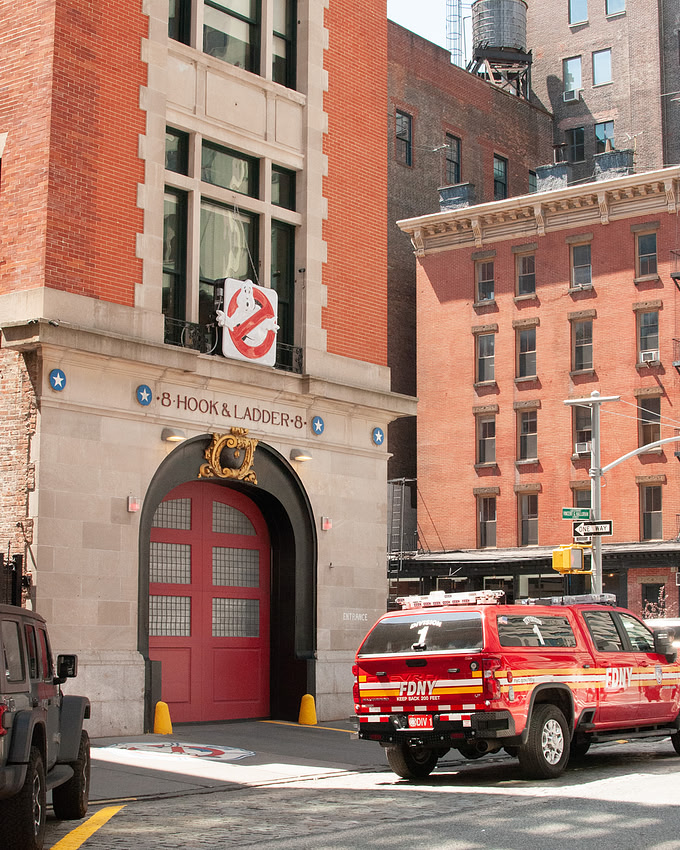
I Ain’t Afraid of No ChangeAfraid of change? Of course I am. Perhaps ‘afraid’ is the wrong word, but I am definitely a creature of habit who is apprehensive of change. Some people are excited by it, citing that old idiom “a change is as good as a rest”. They relish the adventure, which I understand but don’t really relate to. I’m happy if an activity or situation that I enjoy, remains the same because it gives me a sense of comfort and familiarity. There is one area of my life, however, where I welcome change of all kinds, and that is in the art world. What started me on this train of thought was an exhibition that I visited in New York last week. The Gustav Klimt: Gold In Motion exhibition at Hall des Lumières was a different look at the work of the great Austrian painter in an immersive show with several other artists. The gallery, which is in an former bank, opened last year and this was its first and rather unusual exhibition. The show was a complex curation of animations of the artists’ works that dynamically projected on all of the walls and floors of the huge gallery space. Visitors sat on small benches placed around the space, which meant that they were part of this digital canvas throughout the presentation. The accompanying soundtrack further reinforced the idea of it being immersive, and I can honestly say that it was the most remarkable exhibition I’ve ever been to. What interested me was the way that images of Klimt’s work, which are themselves captivating in their combining of traditional portraiture and the symbolism of still life, were presented as a moving picture. What this does is effectively transpose Klimt into something new. In one sequence, the famous Pallas Athena (1898), which depicts the Greek goddess Athena in golden battle armour, is introduced one element at a time. First came her helmet, then just the eyes, which hold a very expressive gaze, followed by the rest of her face, and then figure. Seeing the painting this way is not necessarily as the artist intended it to be viewed. Instead, we are looking at the animator’s vision for the painting, which is then curated by the exhibition directors to appear within a wider sequence with accompanying drama added by the soundtrack. The impact on me was to elevate the drama of the original painting (which you can find here) and to draw particular attention to how Klimt had represented Athena’s gaze, which is one of defiant strength. When we left the exhibition, we resolved to visit the Neue Gallerie in the Upper East Side, which was founded to showcase Austrian artworks that had been recovered after the Nazi looting during the Second World War. This gallery contains several of Klimt’s work, including perhaps his most famous painting Adele Bloch-Bauer (1907) which you can see here. I was surprised at how I viewed these works, i.e., everything presented at the same time, with the animation and the details that I overlooked previously. This got me thinking about how enriching it was to see art presented in more than one way, but also how there is a great deal of reluctance toward and almost protest against it. I was reminded of the furore the blew up around the BBC’s reinterpretation of the story of Queen Anne Boleyn last year, in which the principal characters were played by black actors, and the ongoing debate about the race and gender of the next James Bond actor. While I understand that the internet gives everyone an opinion on everything, and that these views will undoubtedly cause friction and anger in others, I think it goes beyond the simple refusal to accept change. When we see a powerful piece of art that provokes a memorable response in us, whether intellectually or emotionally, that memory lasts a very long time. For lovers of history, the story of Anne Boleyn is a factual event, even though there is a great deal of artistic licence in the seemingly factual telling of her story. Since her short life is subject to documentary evidence and eyewitness accounts, we automatically assume that it must be told ‘truthfully’. However, her story has been told and retold for nearly 500 years. Each telling of that story is an interpretation of the events by teachers, historians and, of course, writers. Similar to Magritte’s The Treachery of Images (1929), "This is not Anne Boleyn, but a representation of her", So with this in mind, why not reimagine the story with a cast of black actors? Can we not re-interpret a story without being accused of ‘wokeism’ or being a ‘snowflake’ (two expressions that I loathe intensely, incidentally). The same goes for James Bond which is, at its heart, a piece of literary fiction. Similar protests about the choice of actor for that role happened when Daniel Craig took the role back in 2006. Cries of “you can’t have a blond, blue-eyed man play this character” echoed around the internet, but now, 17 years later Craig is almost universally accepted as a great characterisation of the famous super spy. In short, we might not like a reinterpretation, we might reject it on the basis of perceived inaccuracy or just not like a specific detail about the work, but art is supposed to provoke some form of reaction. It is the very definition of art’s place in the human experience. Job done then, I reckon. After we left the Hall des Lumières, we walked around the corner to another reminder of the power of art and memory, the famous Hook and Ladder 8 building in Tribeca. This was the exterior location for the Ghostbusters headquarters, first seen in the 1984 film.
Who ya gonna call? The FDNY, naturally. This fire station is actually called Ghostbusters HQ on Google Maps I was 11 when the film was released and I vividly remember the hype and excitement among my peers about going to see it. We were excited by the visuals, the logo, the special effects etc and the apparently endless merchandising aimed at our age-group was mindboggling (it was the 80s after all) Now, aged 50, I was standing outside their HQ, which bears the large sign and some painted artworks on the pavement outside, despite being a working fire station. Having thought about the Klimt exhibition, I wasn’t at all surprised to see a steady throng of Ghostbusters fans of all ages, taking selfies outside this building that they had a strong connection to. The release of 3 films since that original in 1984 has cemented the iconic references in many people who on this day, like me, were really happy to see the place. Ironically, the franchise also included a non-canon film with an all-female cast, a reimagining that I personally thought was pretty lazy, to be honest. Nevertheless, I was able to choose not to go and see it and am similarly able to decide not to condemn it either. The negative reaction in me was valid and I guess that’s what I’m getting at. We should all take in art in whatever form it takes, whether classical or original, reimagined or a homage to, and extract from it whatever we can. Whatever our reaction, we should respect it for what it is and if possible, learn something from it as I did with the Klimt exhibition. For me, it’s an aspect of change that I ain’t afraid of.
|